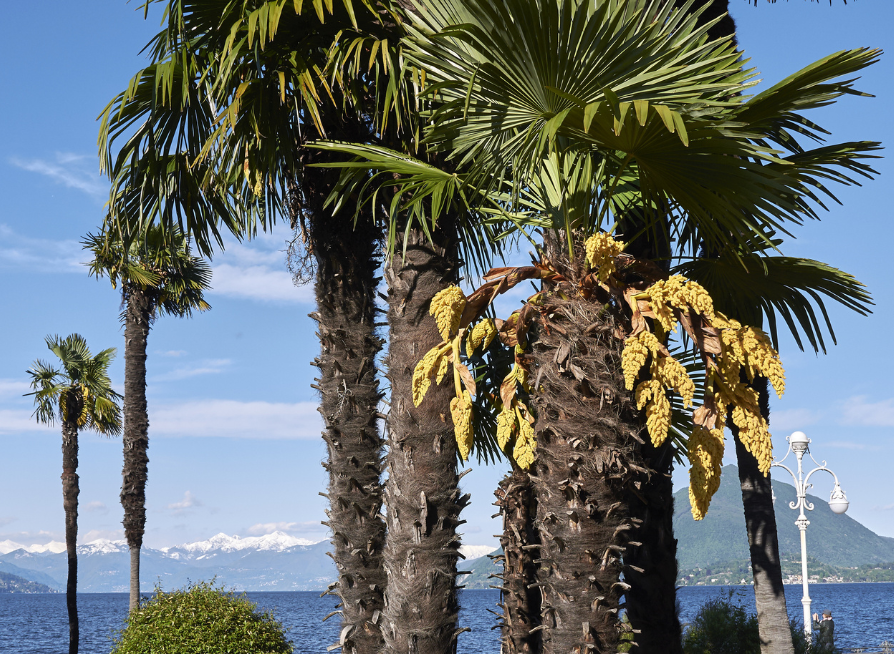


Windmill Palm Tree Seeds | Chusan Palm | (Trachycarpus fortunei)
Windmill Palm Tree Seeds | Chusan Palm | (Trachycarpus fortunei)
Hardy enough to surprise you. Tropical enough to stop you in your tracks.
Trachycarpus fortunei, the Windmill Palm or Chusan Palm, is the most cold-tolerant large palm in the world, a striking, fiber-trunked tree native to the mountain forests of central China that brings unmistakable tropical character to gardens where palms have no business surviving. The trunk is slender and upright, wrapped in dense brown fiber that insulates the growing point against freezing temperatures, topped with a crown of large, deeply divided fan-shaped leaves that fan outward in perfect symmetry and rustle dramatically in the wind. Windmill Palm has been cultivated in European gardens since the 1840s when plant explorer Robert Fortune brought it from China, and it has since proven itself in maritime climates from the Pacific Northwest to Scotland to the British Columbia coast, surviving temperatures well below zero Fahrenheit when properly established. Mature trees develop a shaggy, architectural beauty unlike anything else in the temperate landscape, growing slowly and steadily into trees that can eventually exceed 30 feet. If you are looking to buy Windmill Palm seeds or grow Trachycarpus fortunei from seed, this is the palm that genuinely, reliably survives in cold climates and transforms any garden into something unexpected.
- Survives temperatures as low as 5 to 10 degrees Fahrenheit, making it the hardiest large palm widely available
- Fan-shaped leaves up to 3 feet wide create bold tropical texture in temperate and maritime climates
- Distinctive fibrous trunk develops striking shaggy character as the tree matures
- Fragrant yellow flower clusters emerge in spring on established trees, followed by clusters of blue-black fruit
- Long-lived and slow-growing, developing into a dramatic specimen tree over many years
Things you probably did not know about Windmill Palm
The fibrous sheath wrapped around the trunk is not bark but rather the remains of old leaf bases. As each frond ages and is shed or removed, it leaves behind a fibrous, burlap-like material that clings to the trunk for years. This persistent fiber serves as natural insulation, protecting the vascular tissue beneath from rapid temperature fluctuations during winter freezes and thaws. Growers in marginal climates sometimes leave old fiber intact deliberately, as it provides measurable cold protection to the trunk and growing point during extreme weather events.
Trachycarpus fortunei grows naturally at elevations above 7,000 feet in the mountains of Hubei and Sichuan provinces in China. Far from being a lowland tropical species, Windmill Palm evolved in cool, misty mountain forests subject to occasional snow cover and sustained cold. This montane origin is the biological reason for its cold hardiness, and it also explains why the palm thrives in cool, wet maritime climates that would stress many other palm species. In its native range it grows alongside temperate broadleaf trees in conditions more similar to the Pacific Northwest than to Florida or the Caribbean.
The Windmill Palm has a centuries-long relationship with Chinese material culture. The fiber harvested from the trunk sheaths of Trachycarpus fortunei, known as 棕 in Chinese, has been used for thousands of years to weave rain capes, hats, ropes, brooms, and brushes. Palm fiber rain capes were a standard item of rural dress across southern and central China through the 20th century, prized for their water resistance and durability. The fiber does not rot easily, resists moisture, and has a natural resilience that made it ideal for wet-weather clothing before the availability of synthetic materials.
Seed germination in Trachycarpus fortunei is strongly influenced by freshness, and viability drops significantly with age. Unlike many tree seeds that tolerate dry storage for months or years, Windmill Palm seed germinates most reliably when sown within weeks to months of harvest. The seeds contain endosperm that desiccates and loses viability relatively quickly under dry storage conditions. Fresh seed sown into warm, moist medium at temperatures of 75 to 85 degrees Fahrenheit typically germinates within 4 to 12 weeks, while old or improperly stored seed may fail almost completely. This is why sourcing fresh, properly handled seed makes a meaningful difference in germination outcomes.
Growing Details
- Botanical Name: Trachycarpus fortunei
- Seed Treatment: Sow fresh; soak in warm water for 24 to 48 hours before sowing; germination temperature 75 to 85 degrees Fahrenheit
- USDA Zones: 7 to 11, with established plants tolerating brief dips to Zone 6 in sheltered sites
- Soil: Well-drained, moderately fertile soil; tolerates clay and sandy conditions; avoid waterlogged roots
- Light: Full sun to partial shade; tolerates more shade than most palms
- Height: 20 to 40 feet at maturity
- Spread: 6 to 10 feet crown spread
- Growth Rate: Slow, typically 6 to 12 inches per year; patience is rewarded
Give it a sheltered spot, good drainage, and a few years to establish its root system before facing a serious winter. Once a Windmill Palm is settled into the ground, it builds cold tolerance with each passing year, and the tree standing in your garden a decade from now will be both hardier and more beautiful than the seedling you planted.
FAQ
FAQ
Do you pre-stratify the seeds?
Most of our seeds are not pre-stratified. We ship them unstratified so you can control germination timing based on your local growing season. We sell to all 50 U.S. states and Canadian provinces, and since each region has different planting windows, pre-stratifying would risk seeds germinating in transit or before you're ready to plant.
True stratification requires cold, moist conditions, which can lead to premature sprouting or mold if not timed properly. To avoid this, we store most seeds in dry cold conditions to preserve viability — but this does not initiate stratification.
Do any of your seeds need to stay moist? (Recalcitrant seeds)
Yes — some species we offer are recalcitrant, meaning they must remain moist to stay viable and cannot be dried out. Examples include: Chestnut, Hazelnut, Paw Paw, etc.
These seeds are shipped in moist cold storage and are clearly labeled on the product page when applicable. Please refrigerate immediately upon arrival and follow included care instructions.
Do you ship internationally?
We currently ship to the United States and Canada only. Unfortunately, we cannot ship to other countries without a phytosanitary certificate, which is required by most international customs agencies.
If you're interested in shipping outside North America, please contact us. Note that a phytosanitary certificate typically adds $60–$80 USD per seed type and must be arranged in advance.
Shipping & What's Included
Shipping & What's Included
Shipping & Packaging
Hand-packed in resealable zipper kraft paper seed bags
Stratification and planting instructions included with every order
1 free bonus seed pack included with every order
Ships within 3–5 business days via USPS
Return Policy
Return Policy
Due to the nature of our products, we do not accept returns on seeds.
However, if your order arrives damaged or incorrect, please contact us within 7 days and we’ll make it right.