

White Spruce Tree Seeds | Canadian Spruce | (Picea glauca)
White Spruce Tree Seeds | Canadian Spruce | (Picea glauca)
Built for the cold. Built for the long run.
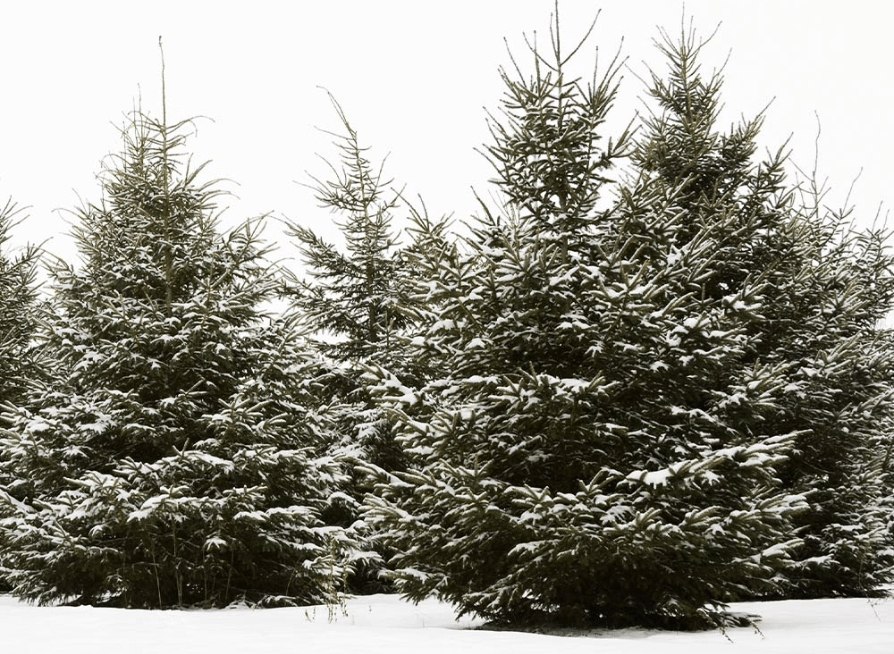
Picea glauca, the White Spruce or Canadian Spruce, is one of the most widely distributed and ecologically dominant conifers in North America, a tall, densely pyramidal evergreen that forms the backbone of the boreal forest from Alaska to Newfoundland and south through the northern United States into the Great Lakes region. It is a tree of genuine toughness, thriving in climates that push the limits of what woody plants can survive, tolerating temperatures below minus 50 degrees Fahrenheit, thin rocky soils, coastal wind exposure, and the crushing weight of heavy snow loads that would split less structurally sound trees. The foliage is short, stiff, and blue-green to gray-green, carrying a distinctive sharp, resinous scent when crushed that is immediately recognizable as the smell of the northern forest. Mature trees develop a classic narrow spire form that holds well through decades of growth, making White Spruce one of the most reliably pyramidal conifers in cultivation and one of the most widely planted for windbreaks, shelterbelts, and wildlife cover across the northern plains and Great Lakes states. If you are looking to buy White Spruce seeds or grow Picea glauca from seed, this is the cold-climate conifer that performs where others simply cannot.
- Exceptionally cold hardy to Zone 2, making it one of the most reliably winter-proof conifers available for northern gardens and landscapes
- Dense, narrow pyramidal habit provides year-round structure, privacy screening, and windbreak function without pruning
- Blue-green to gray-green foliage with a distinctive sharp resinous fragrance carries ornamental appeal through all four seasons
- Produces abundant small cones that are a critical food source for crossbills, pine siskins, red squirrels, and other boreal wildlife
- Highly adaptable to a wide range of soils including clay, sandy loam, and shallow rocky ground across a vast natural range
Things you probably did not know about White Spruce
White Spruce is one of the primary trees defining the treeline across the North American subarctic. At its northern limit, Picea glauca grows in a stunted, wind-sculpted form known as krummholz, German for crooked wood, where trees that might reach 80 feet in sheltered boreal forest are compressed into sprawling mats inches tall by the combined forces of desiccating winter wind, ice abrasion, and the physical impossibility of growing above the insulating winter snowpack. These krummholz forms can be hundreds of years old despite their small size, and they mark the precise boundary where the boreal forest transitions to open arctic tundra, a boundary that is measurably shifting northward as climate patterns change.
The wood of White Spruce has been the primary material for Indigenous peoples across the boreal north for thousands of years. The roots of Picea glauca, thin and flexible when freshly harvested, were split and used by Cree, Ojibwe, Dene, and other nations to sew birchbark canoes, baskets, and containers in a technique requiring roots of extraordinary consistency and length. The wood itself was used for lodge poles, sleds, and tool handles, and the pitch was applied as a waterproof sealant on canoes and as a wound dressing and adhesive. The young shoots were boiled to make a vitamin C-rich tea that provided critical nutrition during late winter when scurvy threatened, a use documented across multiple cultural groups spanning the entire range of the tree.
White Spruce produces chemical defenses against insect attack that vary measurably depending on the level of local pest pressure. Research has documented that Picea glauca trees in areas with a history of spruce budworm outbreaks produce significantly higher concentrations of defensive terpenes and phenolic compounds in their foliage than trees from low-pressure populations. This within-species variation in chemical defense has been studied as evidence of local adaptation and has practical implications for seed sourcing, as trees grown from seed collected in high-pressure areas may show meaningfully different pest resistance than those grown from seed collected in areas with little budworm history.
The cones of White Spruce open and release seeds within weeks of ripening, making seed collection timing critical. Unlike the serotinous cones of jack pine, which require fire to open, White Spruce cones ripen in late summer and release their winged seeds quickly, often within days of cone maturity. Squirrels harvest cones in enormous quantities before they open, caching them in middens that can contain thousands of cones and serve as natural seed banks. Cone crops are highly variable from year to year, with heavy mast years separated by multiple years of sparse production, a cycle that affects the population dynamics of seed-eating wildlife across the boreal forest.
Growing Details
- Botanical Name: Picea glauca
- Seed Treatment: Cold stratification recommended, 30 to 60 days at 34 to 40 degrees Fahrenheit in moist medium; surface sow or cover lightly after stratification
- USDA Zones: 2 to 6
- Soil: Adaptable to a wide range of soils including clay, loam, and sandy ground; prefers moist, well-drained conditions but tolerates periodic wet or dry spells once established
- Light: Full sun to partial shade; densest form and best growth in full sun
- Height: 40 to 80 feet at maturity
- Spread: 10 to 20 feet
- Growth Rate: Moderate, 1 to 2 feet per year under good conditions
Plant it where the winters are long and the wind is real. White Spruce does not need coddling, it needs cold, space, and time, and the tree it becomes over decades, dense and dark and perfectly formed against a winter sky, is one of the most quietly satisfying things you can grow in a northern landscape.
FAQ
FAQ
Do you pre-stratify the seeds?
Most of our seeds are not pre-stratified. They are stored under dry, cold conditions to preserve viability without initiating stratification, allowing you to time germination for your local growing season.
The exception is recalcitrant seeds. Because these seeds must remain moist to stay viable, they are kept in moist, cold storage and are therefore in a pre-stratified state. Depending on how long a particular batch has been stored, some may arrive with an emerging radicle and be ready to plant immediately. Radicle development is not guaranteed.
Please refer to the individual product page and included growing instructions for species-specific requirements.
Do any of your seeds need to stay moist? (Recalcitrant seeds)
Yes. Some species we offer, including Chestnut, Hazelnut, and Paw Paw, are recalcitrant and must remain moist to stay viable.
Please refrigerate these seeds immediately upon arrival unless they have already developed a radicle. Seeds with an emerging radicle should be planted promptly.
Do you ship internationally?
No. We currently ship within the United States only.
We previously shipped to Canada, but tariffs, duties, and import fees resulted in customers receiving significant and unpredictable additional charges upon delivery. Because we cannot reliably calculate or absorb these costs, we have suspended shipping to Canada.
At this time, we do not ship to Canada or other international destinations.
Shipping & What's Included
Shipping & What's Included
Shipping & Packaging
• Hand-packed in resealable kraft paper seed bags
• Stratification and planting instructions included on every seed pack
• Ships within 3–5 business days via USPS within the United States and U.S. territories
Return Policy
Return Policy
Due to the nature of our products, we do not accept returns on seeds.
If your order arrives damaged, contains incorrect items, or is missing items, please contact us within 7 days of delivery so we can resolve the issue.