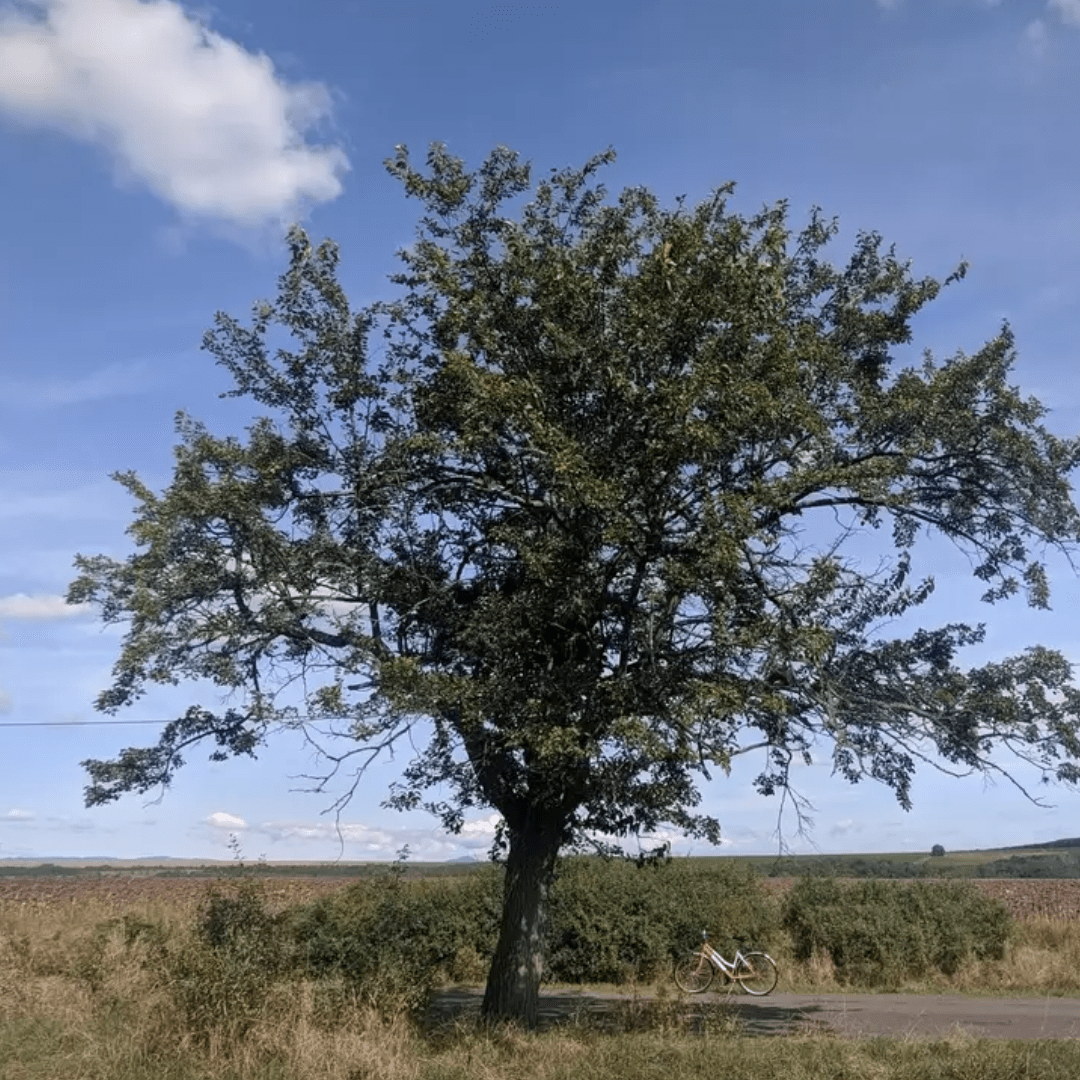


White Mulberry Tree Seeds | (Morus alba)
White Mulberry Tree Seeds | (Morus alba)
The tree that built the silk road. Now growing in your yard.
Morus alba, the White Mulberry, is one of the most consequential trees in human history, the sole food plant of the silkworm and the tree whose cultivation drove the entire silk industry that connected China to Rome and shaped the economies of civilizations for over 5,000 years. It also produces prodigious quantities of sweet, mild white to pink-purple berries that ripen over a long season and are consumed by birds, mammals, and humans with equal enthusiasm. Fast-growing, drought-tolerant, and adaptable to conditions that would stress most fruit trees, the White Mulberry earns its place in any productive landscape. If you are looking to buy White Mulberry seeds or grow mulberry trees from seed, this is one of the most productive edible trees you can establish in a warm-climate garden.
- Produces enormous crops of sweet, mild berries relished by birds, wildlife, and humans
- Extremely fast-growing, reaching fruiting size in 3 to 5 years from seed
- Drought-tolerant and adaptable to a wide range of soils and conditions once established
- The sole historical food plant of silkworms, the foundation of 5,000 years of silk production
- Self-fertile, producing fruit without a second tree nearby
Things you probably did not know about the White Mulberry
China kept the secret of silk production under penalty of death for over 2,000 years. The cultivation of silkworms and the process of producing silk from their cocoons was a state secret in China from approximately 2700 BC until the 6th century AD. Anyone caught attempting to smuggle silkworm eggs or White Mulberry seeds out of the country faced execution. The monopoly on silk production was one of the most consequential trade advantages in ancient history. The secret finally escaped when two Nestorian monks allegedly smuggled silkworm eggs out of China in hollow walking staffs around 550 AD.
The berries stain so deeply that silk dyers in medieval Europe used them as a colorant. White Mulberry berries, despite their name, often ripen to pink, lavender, and dark purple, producing juice with strong staining properties. Medieval European dyers used mulberry juice to color cloth and the berries were eaten as a food dye across the ancient world. The staining is persistent enough that handling ripe fruit without care will mark clothing for days.
It was extensively planted across North America in the 19th century to establish a domestic silk industry. Multiple attempts were made in colonial and early American history to establish commercial silk production in North America using White Mulberry. None succeeded on a commercial scale, but the widespread planting of White Mulberry for these ventures naturalized the tree across much of the eastern United States, where it now grows freely along roadsides, forest edges, and disturbed ground.
The fruit ripens over a period of weeks rather than days. White Mulberry does not ripen all at once like an apple or peach. Berries on the same branch ripen progressively over several weeks, which means a single tree provides fruit to birds and wildlife over an extended period rather than a single brief abundance. This sustained production makes it one of the most valuable trees for continuous wildlife support during early summer.
Growing Details
- Botanical Name: Morus alba
- Stratification: Recommended, 30 to 60 days cold stratification
- USDA Zones: 4 to 8
- Soil: Extremely adaptable, tolerates poor, dry, or disturbed soils
- Light: Full sun to partial shade
- Height: 30 to 50 feet
- Spread: 30 to 40 feet
- Growth Rate: Fast, 2 to 3 feet per year
Plant it where the birds need summer fruit and where you can reach the low branches. Keep a cloth nearby. The berries are worth the stains.
FAQ
FAQ
Do you pre-stratify the seeds?
Most of our seeds are not pre-stratified. They are stored under dry, cold conditions to preserve viability without initiating stratification, allowing you to time germination for your local growing season.
The exception is recalcitrant seeds. Because these seeds must remain moist to stay viable, they are kept in moist, cold storage and are therefore in a pre-stratified state. Depending on how long a particular batch has been stored, some may arrive with an emerging radicle and be ready to plant immediately. Radicle development is not guaranteed.
Please refer to the individual product page and included growing instructions for species-specific requirements.
Do any of your seeds need to stay moist? (Recalcitrant seeds)
Yes. Some species we offer, including Chestnut, Hazelnut, and Paw Paw, are recalcitrant and must remain moist to stay viable.
Please refrigerate these seeds immediately upon arrival unless they have already developed a radicle. Seeds with an emerging radicle should be planted promptly.
Do you ship internationally?
No. We currently ship within the United States only.
We previously shipped to Canada, but tariffs, duties, and import fees resulted in customers receiving significant and unpredictable additional charges upon delivery. Because we cannot reliably calculate or absorb these costs, we have suspended shipping to Canada.
At this time, we do not ship to Canada or other international destinations.
Shipping & What's Included
Shipping & What's Included
Shipping & Packaging
• Hand-packed in resealable kraft paper seed bags
• Stratification and planting instructions included on every seed pack
• Ships within 3–5 business days via USPS within the United States and U.S. territories
Return Policy
Return Policy
Due to the nature of our products, we do not accept returns on seeds.
If your order arrives damaged, contains incorrect items, or is missing items, please contact us within 7 days of delivery so we can resolve the issue.