

Western Snowberry Tree Seeds | (Symphoricarpos occidentalis)
Western Snowberry Tree Seeds | (Symphoricarpos occidentalis)
White berries through winter. Native ground cover that feeds everything that walks or flies past it.
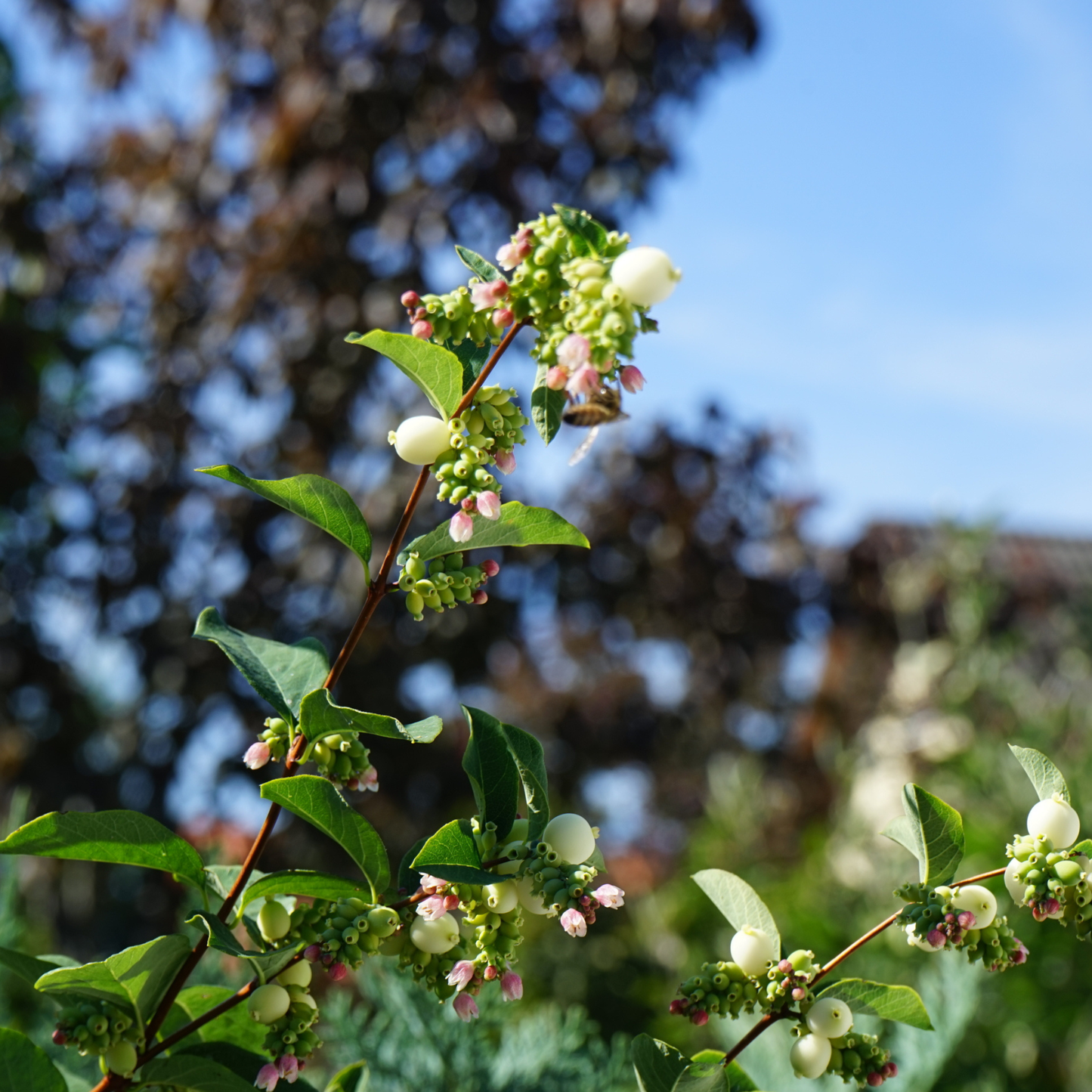
Symphoricarpos occidentalis, the Western Snowberry, is one of the most wildlife-productive native shrubs of the Great Plains and Rocky Mountain region, a low-growing, thicket-forming native that produces clusters of waxy white berries that persist through the entire winter and provide critical food for grouse, pheasant, deer, elk, and numerous other species during the months when other food sources are buried under snow. It spreads aggressively by root suckers to form dense stands that provide nesting cover for ground-nesting birds and escape cover for small mammals. It tolerates drought, alkaline soils, and exposed conditions that would stress most shrubs, and it grows where little else will in the short-grass prairie and intermountain west. If you are looking to buy Western Snowberry seeds or grow this native shrub from seed, this is the plant that turns a difficult dry site into productive wildlife habitat.
- Clusters of waxy white berries persisting through the entire winter, critical wildlife food in cold months
- Spreads by root suckers to form dense wildlife thickets providing nesting and escape cover
- Extremely drought-tolerant and cold-hardy, thriving on dry, alkaline, or exposed sites in zones 2 to 7
- Pink bell-shaped flowers in summer attractive to native bees and hummingbirds
- Native across the Great Plains and Rocky Mountain region, one of the most ecologically important native shrubs of that landscape
Things you probably did not know about the Western Snowberry
The berries are mildly toxic to humans but not to wildlife. Western Snowberry berries contain saponins that cause vomiting and diarrhea in humans if consumed in quantity. Deer, grouse, pheasant, and other native wildlife consume them without apparent harm, either because they metabolize the saponins differently or because they eat smaller quantities. The toxicity serves as a deterrent to human and large mammal consumption, leaving the berries available for the wildlife species that depend on them through winter.
It was used medicinally across virtually every Plains tribe. Western Snowberry was one of the most widely used medicinal plants of the Great Plains Indigenous nations. The berries, leaves, and roots were used for a remarkably diverse range of complaints including eye washes, skin treatments, fever reduction, contraception, and venereal disease treatment, reflecting the depth of traditional botanical knowledge developed through centuries of observation and practice.
The white berries were used as a body paint by some Plains tribes. The waxy white berries of Western Snowberry were crushed and the white pigment used as a body paint for ceremonial purposes by some Plains nations. The color, which is naturally bright and persistent, was valued for its visibility and was one of a limited range of naturally available white pigments in the Great Plains environment.
It is one of the first shrubs to stabilize disturbed or overgrazed sites. Western Snowberry spreads rapidly by underground runners onto bare or disturbed ground and is one of the primary pioneer shrubs used in rangeland and prairie restoration plantings across the Great Plains. Its ability to establish on degraded alkaline soils and spread into adjacent bare ground makes it one of the most practical tools available for restoring native shrub cover to damaged sites.
Growing Details
- Botanical Name: Symphoricarpos occidentalis
- Stratification: Required, 90 to 120 days cold moist stratification
- USDA Zones: 2 to 7
- Soil: Extremely adaptable, tolerates dry, alkaline, rocky, or poor soils
- Light: Full sun to partial shade
- Height: 2 to 5 feet
- Spread: Spreading by root suckers to form thickets
- Growth Rate: Moderate to fast once established
Plant it on a dry, difficult slope where nothing else establishes and let it spread. The grouse will find it before you realize it has taken hold.
FAQ
FAQ
Do you pre-stratify the seeds?
Most of our seeds are not pre-stratified. They are stored under dry, cold conditions to preserve viability without initiating stratification, allowing you to time germination for your local growing season.
The exception is recalcitrant seeds. Because these seeds must remain moist to stay viable, they are kept in moist, cold storage and are therefore in a pre-stratified state. Depending on how long a particular batch has been stored, some may arrive with an emerging radicle and be ready to plant immediately. Radicle development is not guaranteed.
Please refer to the individual product page and included growing instructions for species-specific requirements.
Do any of your seeds need to stay moist? (Recalcitrant seeds)
Yes. Some species we offer, including Chestnut, Hazelnut, and Paw Paw, are recalcitrant and must remain moist to stay viable.
Please refrigerate these seeds immediately upon arrival unless they have already developed a radicle. Seeds with an emerging radicle should be planted promptly.
Do you ship internationally?
No. We currently ship within the United States only.
We previously shipped to Canada, but tariffs, duties, and import fees resulted in customers receiving significant and unpredictable additional charges upon delivery. Because we cannot reliably calculate or absorb these costs, we have suspended shipping to Canada.
At this time, we do not ship to Canada or other international destinations.
Shipping & What's Included
Shipping & What's Included
Shipping & Packaging
• Hand-packed in resealable kraft paper seed bags
• Stratification and planting instructions included on every seed pack
• Ships within 3–5 business days via USPS within the United States and U.S. territories
Return Policy
Return Policy
Due to the nature of our products, we do not accept returns on seeds.
If your order arrives damaged, contains incorrect items, or is missing items, please contact us within 7 days of delivery so we can resolve the issue.