

Water Tupelo Tree Seeds | Cotton Gum | (Nyssa aquatica)
Water Tupelo Tree Seeds | Cotton Gum | (Nyssa aquatica)
The swamp giant. The tree that stands where nothing else will.
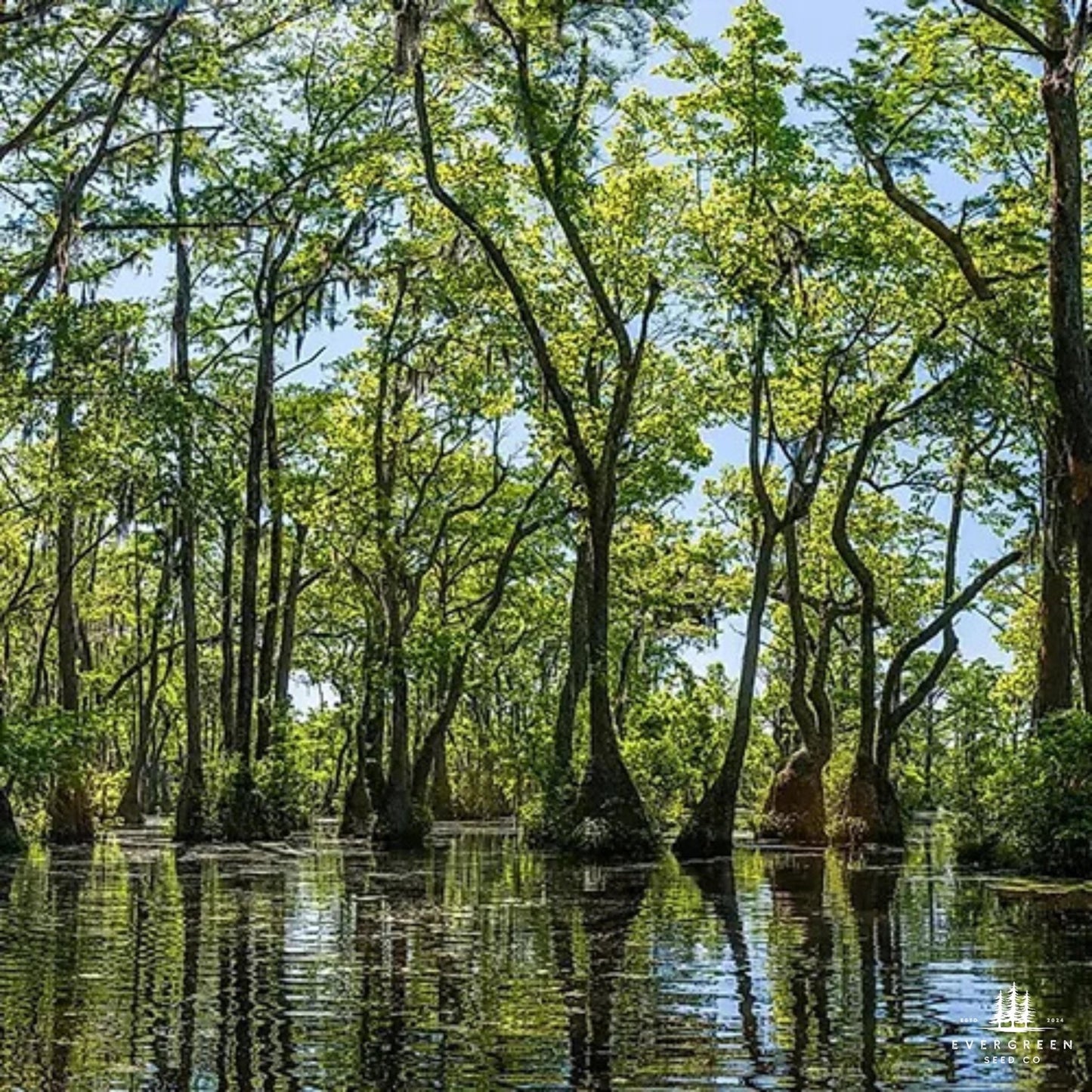
Nyssa aquatica, the Water Tupelo, is the most flood-tolerant large native tree in North America, growing with its base submerged in standing water in the cypress-gum swamps of the southeastern coastal plain where no other canopy tree of comparable size can survive. It develops a dramatically swollen, buttressed base that anchors it in the unstable, anaerobic muck of permanent swamps, and it rises from this base into a straight, clean trunk that carries a relatively narrow crown above the water line. In fall the leaves turn brilliant scarlet and orange before dropping, creating a color display that reflects off the black swamp water beneath in one of the most visually dramatic scenes available in the southeastern forest. The small, dark blue fruits it produces are consumed by wood ducks, bears, raccoons, and dozens of bird species. If you are looking to buy Water Tupelo seeds or grow this swamp native from seed, this is the tree for the permanently wet site where nothing else establishes.
- The most flood-tolerant large native tree in North America, growing in permanently submerged conditions
- Dramatically swollen, buttressed trunk base anchoring the tree in unstable swamp muck
- Brilliant scarlet and orange fall color reflecting off swamp water, one of the most dramatic fall displays in the Southeast
- Critical wildlife tree, fruit eaten by wood ducks, bears, raccoons, and numerous bird species
- Produces the nectar for tupelo honey, one of the most prized specialty honeys in the American South
Things you probably did not know about the Water Tupelo
The buttressed base develops specifically in response to flooding. Water Tupelo trees grown on dry land develop normal, unbuttressed trunks similar to other hardwoods. The dramatic swollen base that defines the species in its swamp habitat develops as a response to permanent flooding, producing wider, denser wood tissue at the base that provides both physical stability in soft substrate and possibly improved gas exchange in anaerobic soil conditions. The same genetics produce completely different trunk forms depending on whether the tree grows in water or on land.
Tupelo honey made from Water Tupelo nectar commands the highest prices of any American honey. The tupelo honey of the Apalachicola River basin in the Florida panhandle, made primarily from Water Tupelo and Ogeechee Tupelo nectar, is considered the finest American honey by many connoisseurs and commands prices three to five times higher than standard commercial honey. The unique fructose-to-glucose ratio of tupelo honey causes it to resist crystallization almost indefinitely, a characteristic that is physically unique among American honeys and adds to its premium value.
The wood floats even when green because of its low density. Water Tupelo wood has an exceptionally low density for a hardwood, comparable to balsa in its ratio of strength to weight. This low density in a large tree was exploited historically for dugout canoe construction, as the wood was easier to hollow and light enough to be handled more easily than denser hardwoods. Indigenous peoples of the southeastern swamp regions used Water Tupelo extensively for canoe and boat construction.
Standing dead Water Tupelos become the most important nest trees in swamp ecosystems. When Water Tupelo trees die and the soft wood begins to decay in the permanently moist swamp environment, they develop cavities rapidly that become critical nesting sites for wood ducks, owls, and other cavity-dependent species. A standing dead tupelo snag in a southeastern swamp is ecologically equivalent to decades of other cavity-tree recruitment and is one of the most valuable single structures in that ecosystem.
Growing Details
- Botanical Name: Nyssa aquatica
- Stratification: Required, 90 days cold moist stratification
- USDA Zones: 5 to 9
- Soil: Tolerates permanent flooding, saturated soils, and standing water, also grows in ordinary well-drained conditions
- Light: Full sun to partial shade
- Height: 50 to 100 feet
- Spread: 25 to 50 feet
- Growth Rate: Moderate, 1 to 2 feet per year
Plant it in standing water if you have it or in the wettest spot on your property. It will establish where everything else has already failed and provide canopy, wildlife value, and fall color for the next two centuries.
FAQ
FAQ
Do you pre-stratify the seeds?
Most of our seeds are not pre-stratified. They are stored under dry, cold conditions to preserve viability without initiating stratification, allowing you to time germination for your local growing season.
The exception is recalcitrant seeds. Because these seeds must remain moist to stay viable, they are kept in moist, cold storage and are therefore in a pre-stratified state. Depending on how long a particular batch has been stored, some may arrive with an emerging radicle and be ready to plant immediately. Radicle development is not guaranteed.
Please refer to the individual product page and included growing instructions for species-specific requirements.
Do any of your seeds need to stay moist? (Recalcitrant seeds)
Yes. Some species we offer, including Chestnut, Hazelnut, and Paw Paw, are recalcitrant and must remain moist to stay viable.
Please refrigerate these seeds immediately upon arrival unless they have already developed a radicle. Seeds with an emerging radicle should be planted promptly.
Do you ship internationally?
No. We currently ship within the United States only.
We previously shipped to Canada, but tariffs, duties, and import fees resulted in customers receiving significant and unpredictable additional charges upon delivery. Because we cannot reliably calculate or absorb these costs, we have suspended shipping to Canada.
At this time, we do not ship to Canada or other international destinations.
Shipping & What's Included
Shipping & What's Included
Shipping & Packaging
• Hand-packed in resealable kraft paper seed bags
• Stratification and planting instructions included on every seed pack
• Ships within 3–5 business days via USPS within the United States and U.S. territories
Return Policy
Return Policy
Due to the nature of our products, we do not accept returns on seeds.
If your order arrives damaged, contains incorrect items, or is missing items, please contact us within 7 days of delivery so we can resolve the issue.