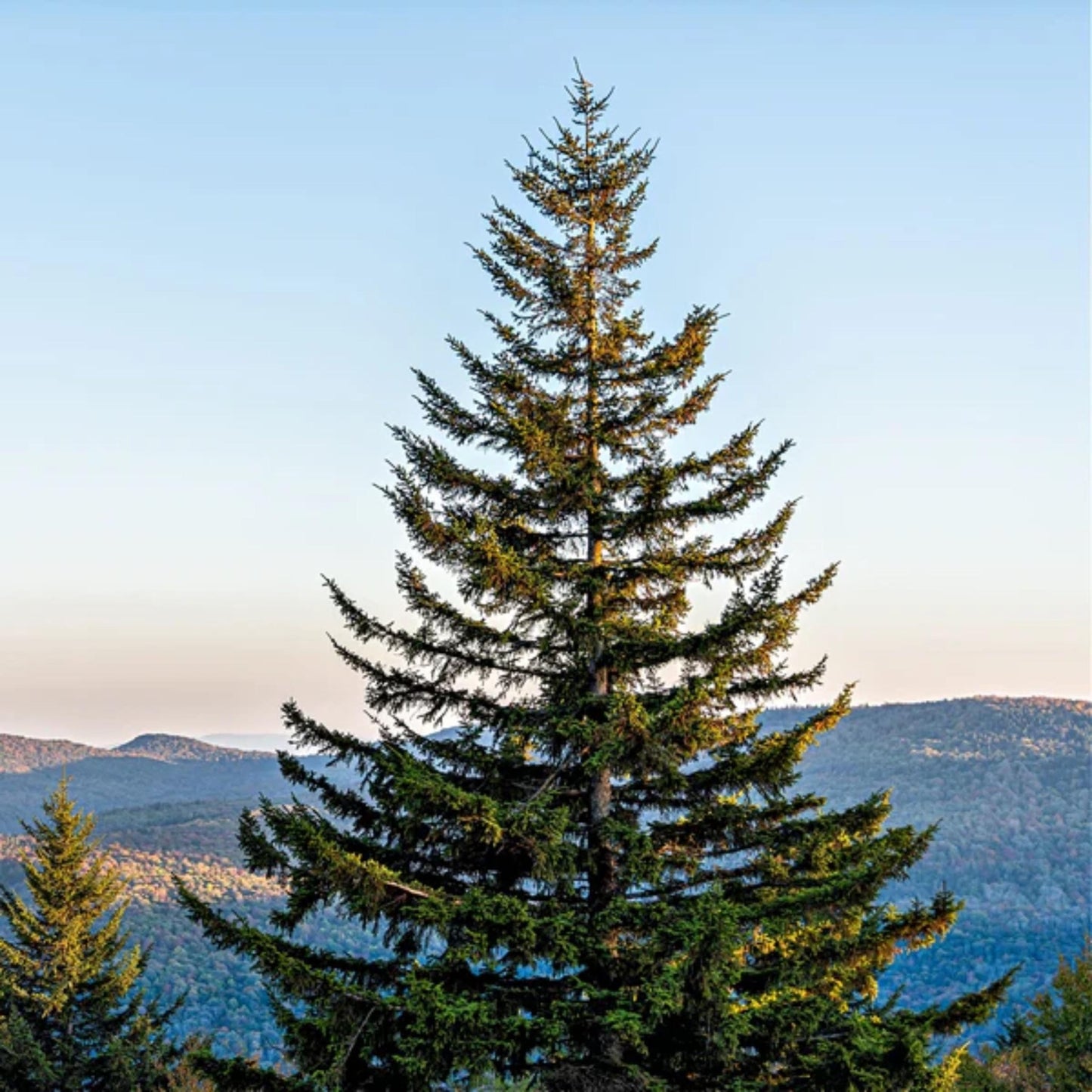


Virginia Pine Tree Seeds | Scrub Pine | (Pinus virginiana)
Virginia Pine Tree Seeds | Scrub Pine | (Pinus virginiana)
The scrub pine that does what nothing else will. The tree that reclaims the land.
Pinus virginiana, the Virginia Pine or Scrub Pine, is the pioneer conifer of the central and southern Appalachians and Piedmont, the first pine to establish on abandoned fields, eroded slopes, strip-mined land, and exhausted agricultural soils where no other tree will grow, fixing the ground, building organic matter, and creating the conditions that allow the forest to return. It grows naturally on the most difficult, nutrient-poor, acidic soils in the eastern United States and has been one of the most important trees for reforestation of degraded Appalachian landscapes for over a century. Its irregular, somewhat windswept growth habit gives individual specimens a character and naturalness that more uniform conifers lack, and its small, persistent cones provide seeds for crossbills and other wildlife through winter. If you are looking to buy Virginia Pine seeds or grow this native pioneer from seed, this is the tree that builds soil where there is none and holds ground that everything else has given up on.
- The primary pioneer conifer of the central and southern Appalachians, establishing on the most difficult soils
- Used extensively for reforestation of strip-mined and eroded land across the Appalachian region
- Tolerates extremely poor, acidic, dry, rocky soils where most other conifers fail entirely
- Provides the only Christmas tree option native to the central Appalachians and upper South
- Small persistent cones providing winter food for crossbills, siskins, and chickadees
Things you probably did not know about the Virginia Pine
It was the primary Christmas tree in the Appalachians before commercial Christmas tree farming. Virginia Pine grows naturally in the exact regions of the upper South and central Appalachians where Christmas tree farming was not historically practiced, and families across those regions cut wild Virginia Pines from old fields and roadsides for Christmas trees for generations. The irregular, characterful growth habit of wild Virginia Pine was accepted, even preferred, as a genuine expression of the natural local forest rather than the uniform perfection of commercial cultivars.
The tree has been used to stabilize and restore strip-mined land for over 60 years. The Appalachian coal mining region, which includes some of the most severely disturbed landscapes in eastern North America, has used Virginia Pine as a primary reforestation species on reclaimed mine sites because it establishes on the compacted, acidic, nutrient-poor spoil heaps that other trees cannot colonize. Millions of Virginia Pines planted on former mining sites across Kentucky, Virginia, and West Virginia represent one of the largest ecological restoration projects in American history.
The needles are arranged in pairs and are shorter and more twisted than most eastern pines. Virginia Pine needles are among the shortest of any eastern two-needled pine, typically 1.5 to 3 inches long and distinctly twisted along their length. The short, twisted needles give the foliage a coarser, more bristly texture than Eastern White Pine or Loblolly Pine, which contributes to the rougher, more rugged visual character of the tree in the landscape.
It is one of only two native pines in Maryland and Delaware. The range of Virginia Pine extends into the coastal plain and Piedmont of Maryland and Delaware, where it and Eastern White Pine are the only native pine species present. In this northern portion of its range, Virginia Pine occupies the same disturbed, poor-soil pioneer niche it fills further south, appearing on roadsides, power line cuts, and abandoned agricultural land throughout the region.
Growing Details
- Botanical Name: Pinus virginiana
- Stratification: Recommended, 30 to 60 days cold stratification
- USDA Zones: 4 to 8
- Soil: Extremely adaptable, thrives on poor, acidic, dry, rocky, or sandy soils
- Light: Full sun
- Height: 15 to 40 feet
- Spread: 10 to 30 feet
- Growth Rate: Moderate, 1 to 1.5 feet per year on poor soils, faster on better sites
Plant it where nothing else will grow and let it do the work of rebuilding the soil for whatever comes after it. That is the job it was made for and it does it better than anything else available.
FAQ
FAQ
Do you pre-stratify the seeds?
Most of our seeds are not pre-stratified. They are stored under dry, cold conditions to preserve viability without initiating stratification, allowing you to time germination for your local growing season.
The exception is recalcitrant seeds. Because these seeds must remain moist to stay viable, they are kept in moist, cold storage and are therefore in a pre-stratified state. Depending on how long a particular batch has been stored, some may arrive with an emerging radicle and be ready to plant immediately. Radicle development is not guaranteed.
Please refer to the individual product page and included growing instructions for species-specific requirements.
Do any of your seeds need to stay moist? (Recalcitrant seeds)
Yes. Some species we offer, including Chestnut, Hazelnut, and Paw Paw, are recalcitrant and must remain moist to stay viable.
Please refrigerate these seeds immediately upon arrival unless they have already developed a radicle. Seeds with an emerging radicle should be planted promptly.
Do you ship internationally?
No. We currently ship within the United States only.
We previously shipped to Canada, but tariffs, duties, and import fees resulted in customers receiving significant and unpredictable additional charges upon delivery. Because we cannot reliably calculate or absorb these costs, we have suspended shipping to Canada.
At this time, we do not ship to Canada or other international destinations.
Shipping & What's Included
Shipping & What's Included
Shipping & Packaging
• Hand-packed in resealable kraft paper seed bags
• Stratification and planting instructions included on every seed pack
• Ships within 3–5 business days via USPS within the United States and U.S. territories
Return Policy
Return Policy
Due to the nature of our products, we do not accept returns on seeds.
If your order arrives damaged, contains incorrect items, or is missing items, please contact us within 7 days of delivery so we can resolve the issue.