

Umbrella Magnolia Tree Seeds | Umbrella Tree | (Magnolia tripetala)
Umbrella Magnolia Tree Seeds | Umbrella Tree | (Magnolia tripetala)
The boldest leaves in the eastern forest. Flowers you smell before you see.
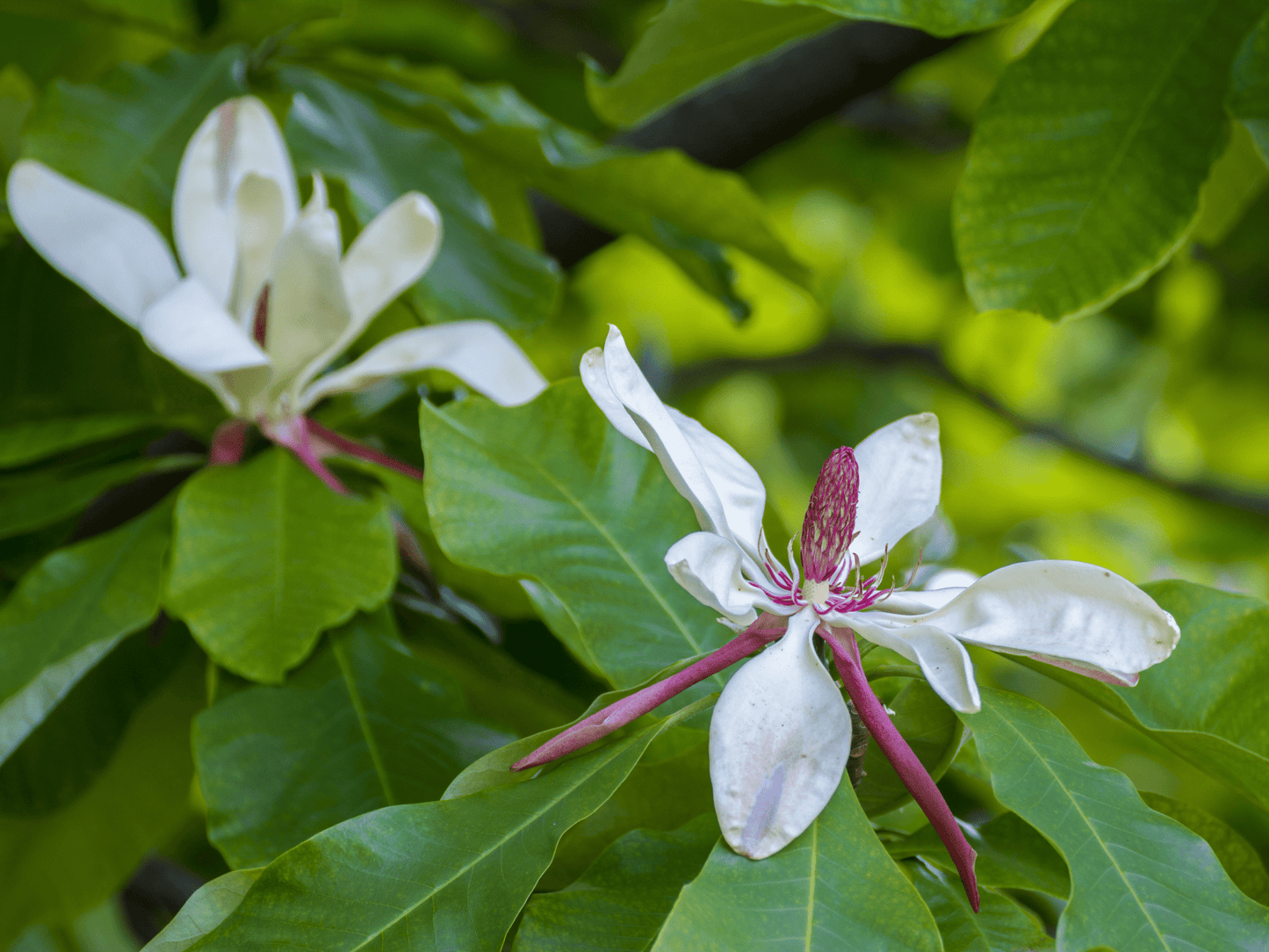
Magnolia tripetala, the Umbrella Magnolia, is the native magnolia of the Appalachian mountain coves and ravines, producing the largest leaves of any deciduous magnolia native to eastern North America, leaves up to 24 inches long that cluster at the branch tips in an umbrella-like arrangement that gives the tree its common name. The flowers are equally striking, large creamy white cups up to 10 inches across that appear in late spring with a pungent, complex fragrance that is more assertive than the sweet scents of Saucer or Star Magnolia, described by some as rich and spicy, by others as sharp and medicinal, but unmistakable and detectable from considerable distance. It grows naturally in the understory of rich Appalachian coves and cool, moist ravines where its enormous leaves create a tropical, exotic presence that immediately distinguishes it from everything growing alongside it. If you are looking to buy Umbrella Magnolia seeds or grow this bold native from seed, this is the magnolia that makes the biggest statement in any temperate woodland garden.
- Leaves up to 24 inches long clustered in umbrella-like arrangements at branch tips, the boldest native magnolia foliage
- Large creamy white flowers up to 10 inches across with a distinctive assertive fragrance unlike other magnolias
- Native to Appalachian mountain coves and ravines, the most shade-tolerant of the large-leaved native magnolias
- Brilliant red cone-like fruit in fall containing red seeds on threads, ornamentally attractive through autumn
- Genuine four-season interest from bold summer foliage through late fall fruit display
Things you probably did not know about the Umbrella Magnolia
The name tripetala is technically a misnomer because the flowers have nine tepals not three. The species was named tripetala, meaning three-petaled, by Linnaeus based on early descriptions that counted only the three large outer tepals and overlooked the six smaller inner ones. The name became official before the error was recognized and scientific nomenclature rules prevent correcting it. Every Umbrella Magnolia in the world carries a species name that is technically incorrect by the definition it was meant to convey.
It is the most cold-hardy of the large-leaved native magnolias, thriving in zone 4 where Bigleaf Magnolia would not survive. Despite its southern Appalachian native range, Umbrella Magnolia is cold-hardy to zone 4 because of the high elevations and cold mountain winters of its native cove forests. This cold hardiness makes it available to gardeners in New England, the Great Lakes, and other northern regions where Bigleaf Magnolia is not reliably winter-hardy, opening up the bold tropical foliage effect to a much wider geographic range.
The enormous leaves are used in traditional folk craft in Appalachian communities. The large, flexible leaves of Umbrella Magnolia were used historically in Appalachian folk traditions for wrapping food items for storage and transport, lining baskets, and covering surfaces during food processing in much the same way tropical banana leaves are used in tropical cooking traditions. The leaf size makes them among the most practical large organic wrapping material available in temperate eastern North America.
The fruit cone is architecturally as interesting as the flowers. In late summer and fall, Umbrella Magnolia develops the characteristic aggregate cone-like fruit of all magnolias, but the fruit of Umbrella Magnolia is particularly large and architecturally interesting, developing from the remains of the large flower into a rose-pink to red structure that splits open to reveal the bright red seeds hanging on threads. The full cone can be 4 to 5 inches long and is ornamentally striking in a way that most temperate fruit structures are not.
Growing Details
- Botanical Name: Magnolia tripetala
- Stratification: Required, 90 to 120 days cold moist stratification
- USDA Zones: 4 to 8
- Soil: Rich, moist, well-drained, slightly acidic, sheltered from strong winds that damage the large leaves
- Light: Partial shade to full sun, most natural in filtered woodland light
- Height: 15 to 40 feet
- Spread: 20 to 30 feet
- Growth Rate: Moderate, 1 to 1.5 feet per year
Plant it in a sheltered spot where the wind will not shred the enormous leaves and where the scale of the foliage can be fully appreciated. One Umbrella Magnolia in the right setting creates a tropical presence in a temperate garden that nothing else in the native flora can match.
FAQ
FAQ
Do you pre-stratify the seeds?
Most of our seeds are not pre-stratified. They are stored under dry, cold conditions to preserve viability without initiating stratification, allowing you to time germination for your local growing season.
The exception is recalcitrant seeds. Because these seeds must remain moist to stay viable, they are kept in moist, cold storage and are therefore in a pre-stratified state. Depending on how long a particular batch has been stored, some may arrive with an emerging radicle and be ready to plant immediately. Radicle development is not guaranteed.
Please refer to the individual product page and included growing instructions for species-specific requirements.
Do any of your seeds need to stay moist? (Recalcitrant seeds)
Yes. Some species we offer, including Chestnut, Hazelnut, and Paw Paw, are recalcitrant and must remain moist to stay viable.
Please refrigerate these seeds immediately upon arrival unless they have already developed a radicle. Seeds with an emerging radicle should be planted promptly.
Do you ship internationally?
No. We currently ship within the United States only.
We previously shipped to Canada, but tariffs, duties, and import fees resulted in customers receiving significant and unpredictable additional charges upon delivery. Because we cannot reliably calculate or absorb these costs, we have suspended shipping to Canada.
At this time, we do not ship to Canada or other international destinations.
Shipping & What's Included
Shipping & What's Included
Shipping & Packaging
• Hand-packed in resealable kraft paper seed bags
• Stratification and planting instructions included on every seed pack
• Ships within 3–5 business days via USPS within the United States and U.S. territories
Return Policy
Return Policy
Due to the nature of our products, we do not accept returns on seeds.
If your order arrives damaged, contains incorrect items, or is missing items, please contact us within 7 days of delivery so we can resolve the issue.