

Texas Mountain Laurel Tree Seeds | Mescal Bean | (Sophora secundiflora)
Texas Mountain Laurel Tree Seeds | Mescal Bean | (Sophora secundiflora)
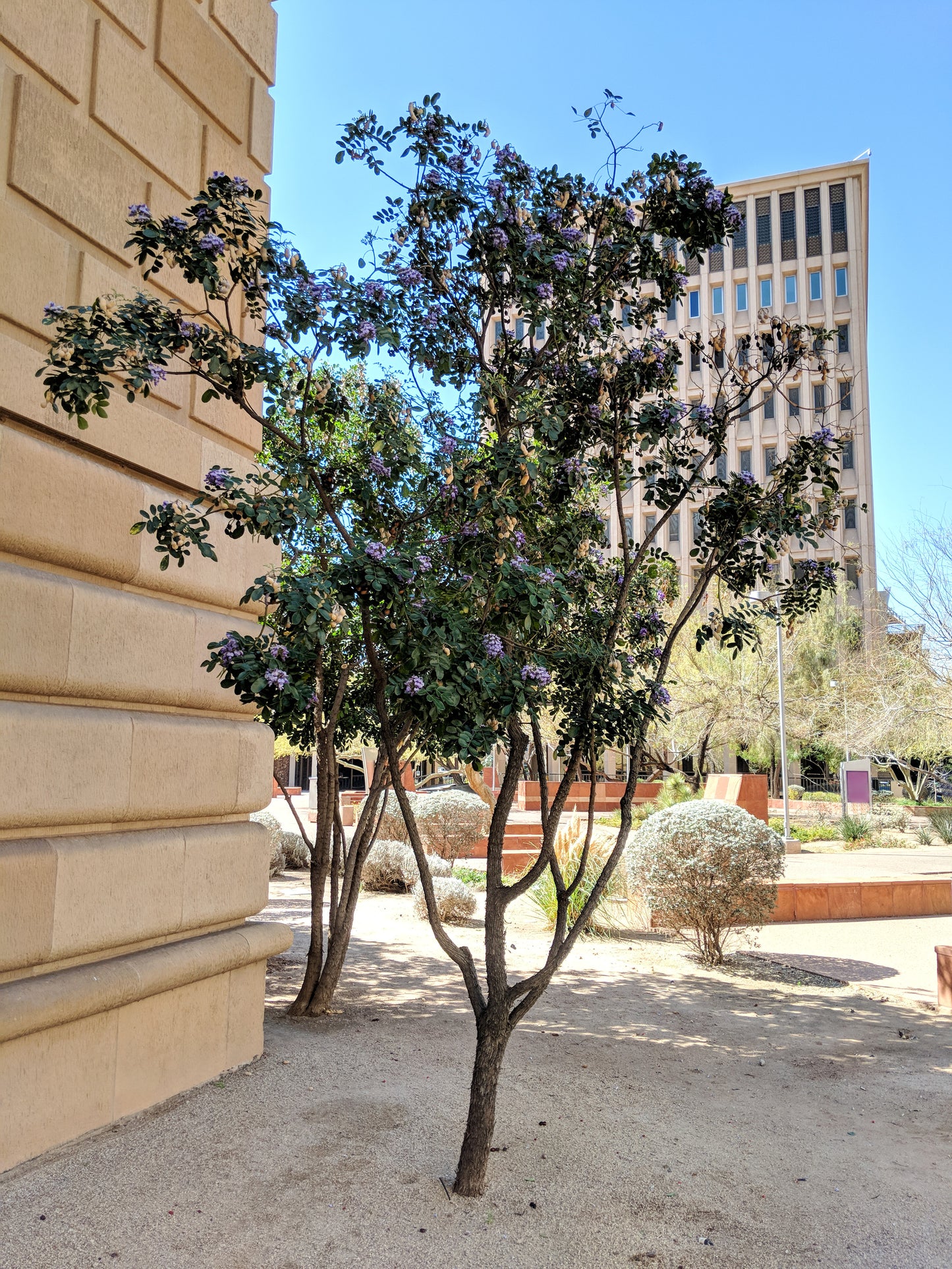
Purple wisteria flowers. Intoxicating fragrance. The most ornamental native tree in Texas.
Sophora secundiflora, the Texas Mountain Laurel or Mescal Bean, is the most spectacular native flowering shrub or small tree in Texas and the Southwest, producing drooping clusters of intense purple, wisteria-like flowers in late winter and early spring that fill the surrounding air with one of the most powerful and pleasant fragrances of any native plant, described consistently as grape soda, sweet purple, and unmistakably distinctive. It grows naturally on the limestone hills of central Texas, the Edwards Plateau, New Mexico, and northern Mexico in alkaline, rocky soils where many other ornamental plants fail, and it is extraordinarily drought-tolerant once established. The hard red seeds that follow the flowers are the original mescal beans of Texas folk history, used ceremonially by Indigenous peoples for centuries. If you are looking to buy Texas Mountain Laurel seeds or grow this extraordinary Southwest native from seed, this is the most fragrant and most ornamental native flowering plant in the Texan landscape.
- Dense clusters of purple, wisteria-like flowers in late winter and early spring with the most intense fragrance of any native Texas plant
- Fragrance described universally as grape soda, sweet, powerful, and completely unmistakable from any distance
- Grows naturally on alkaline limestone soils where most ornamental plants cannot establish
- Extremely drought-tolerant once established, thriving in the hot, dry conditions of the Texas Hill Country
- Glossy, deep green evergreen foliage providing year-round structure in the landscape
Things you probably did not know about the Texas Mountain Laurel
The fragrance is so powerful it can be detected from 50 feet away on a still morning. The volatile aromatic compounds released by Texas Mountain Laurel flowers include methyl anthranilate and other esters that combine to produce one of the strongest flower fragrances of any temperate plant. During peak bloom in February and March, a single large specimen can fill the surrounding landscape with scent that is unmistakable and almost overwhelming at close range. The fragrance carries on the wind and draws people toward the tree before they can see it.
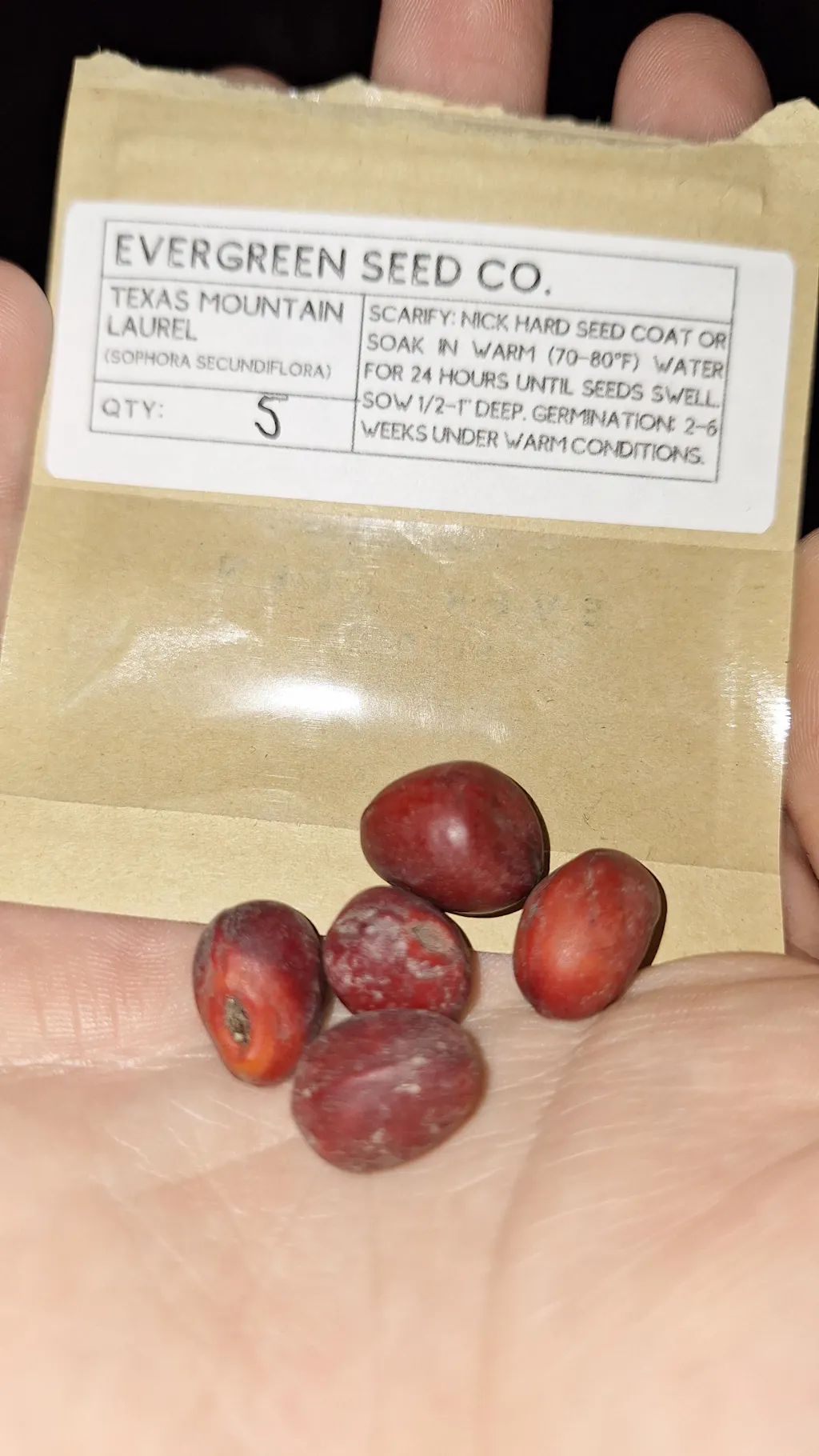
The hard red seeds were used in the Native American Church peyote ceremony as a precursor to peyote introduction. The bright red, hard seeds of Texas Mountain Laurel contain cytisine, a quinolizidine alkaloid that produces hallucinogenic effects at sufficient doses. Historically, the seeds were used ceremonially by various Texas and Mexican Indigenous groups, and archaeobotanical evidence from southern Texas and northern Mexico documents their ceremonial use for over 10,000 years, making the Mescal Bean ceremony one of the oldest documented ritual plant uses in North America.
It grows extraordinarily slowly, which is the primary reason it is not more widely grown. Texas Mountain Laurel is notoriously slow from seed, typically spending 2 to 3 years in a seedling state before making significant growth. Established plants in good conditions grow 6 to 12 inches per year, but plants in poor, rocky, alkaline soils may add only 3 to 4 inches annually. The slow growth combined with the plant's extraordinary ornamental value means large nursery specimens are extremely expensive and growing from seed is the most economical approach for patient growers.
The seeds are attractive to children but dangerously toxic. The brilliant, hard, scarlet-red seeds of Texas Mountain Laurel are visually striking and frequently handled by children who find them on the ground beneath the plant. A single seed can cause severe toxicity if chewed and swallowed. The hard seed coat prevents toxicity from intact swallowed seeds, but children should not be allowed to chew or play with them. This is one of the few genuinely dangerous native plants from a child safety perspective.
Growing Details
- Botanical Name: Sophora secundiflora
- Stratification: Required, scarification of the very hard seed coat is essential, followed by 30 to 60 days cold stratification
- USDA Zones: 7 to 10
- Soil: Well-drained, rocky, alkaline or neutral limestone soils preferred, excellent drainage essential
- Light: Full sun
- Height: 10 to 25 feet
- Spread: 8 to 15 feet
- Growth Rate: Very slow, 3 to 12 inches per year depending on conditions
Plant it in the best-drained, most alkaline spot available and expect patience to be required. The grape soda fragrance on a February morning in the Texas Hill Country is worth every year of waiting.
FAQ
FAQ
Do you pre-stratify the seeds?
Most of our seeds are not pre-stratified. We ship them unstratified so you can control germination timing based on your local growing season. We sell to all 50 U.S. states and Canadian provinces, and since each region has different planting windows, pre-stratifying would risk seeds germinating in transit or before you're ready to plant.
True stratification requires cold, moist conditions, which can lead to premature sprouting or mold if not timed properly. To avoid this, we store most seeds in dry cold conditions to preserve viability — but this does not initiate stratification.
Do any of your seeds need to stay moist? (Recalcitrant seeds)
Yes — some species we offer are recalcitrant, meaning they must remain moist to stay viable and cannot be dried out. Examples include: Chestnut, Hazelnut, Paw Paw, etc.
These seeds are shipped in moist cold storage and are clearly labeled on the product page when applicable. Please refrigerate immediately upon arrival and follow included care instructions.
Do you ship internationally?
We currently ship to the United States and Canada only. Unfortunately, we cannot ship to other countries without a phytosanitary certificate, which is required by most international customs agencies.
If you're interested in shipping outside North America, please contact us. Note that a phytosanitary certificate typically adds $60–$80 USD per seed type and must be arranged in advance.
Shipping & What's Included
Shipping & What's Included
Shipping & Packaging
Hand-packed in resealable zipper kraft paper seed bags
Stratification and planting instructions included with every order
1 free bonus seed pack included with every order
Ships within 3–5 business days via USPS
Return Policy
Return Policy
Due to the nature of our products, we do not accept returns on seeds.
However, if your order arrives damaged or incorrect, please contact us within 7 days and we’ll make it right.