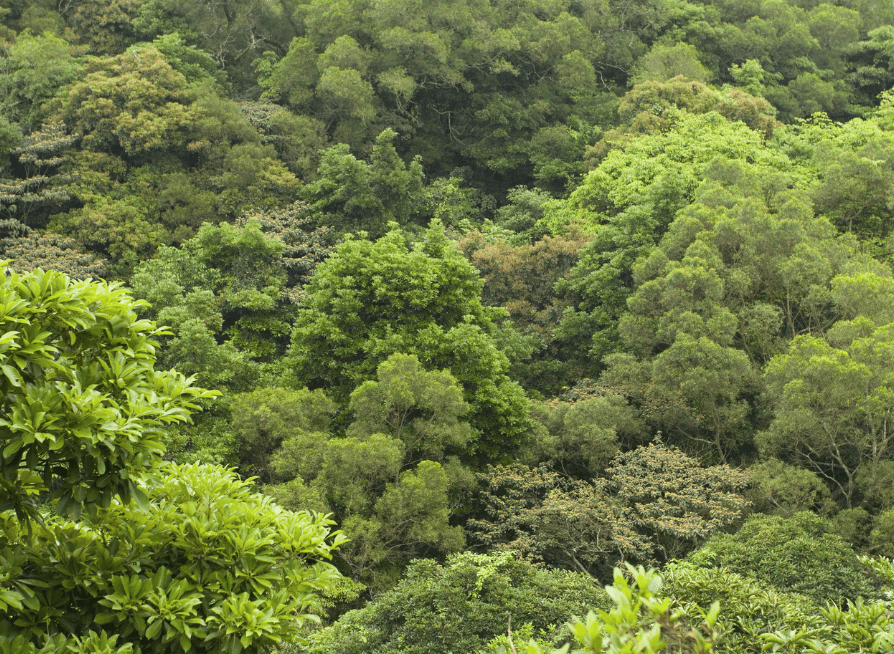


Taiwan Acacia Tree Seeds | Small Philippine Acacia | (Acacia confusa)
Taiwan Acacia Tree Seeds | Small Philippine Acacia | (Acacia confusa)
Roots that hold hillsides. Wood that outlasts generations. A tree that entire island cultures were built around.
Acacia confusa, the Taiwan Acacia or Small Philippine Acacia, is a fast-growing, nitrogen-fixing evergreen tree native to Taiwan, the Philippines, Hawaii, and much of Southeast Asia that has proven itself one of the most ecologically and culturally significant trees of the western Pacific, a tough, adaptable species that stabilizes eroding slopes, enriches depleted soils, produces dense and extraordinarily durable timber, and supports traditional cultures across its range with materials ranging from construction wood to bark dyes to ceremonial preparations. What appears in photographs as a graceful, fine-textured tree with narrow, sickle-shaped leaves is technically displaying phyllodes, flattened leaf stalks that have taken over the function of true leaves, a botanical adaptation shared across the Acacia genus that reduces water loss in seasonally dry climates. In spring, the tree covers itself in small, fragrant golden-yellow flower heads that attract bees and butterflies in abundance. It grows rapidly in poor soils, fixes atmospheric nitrogen through root symbionts, and has been planted across degraded tropical and subtropical landscapes for reforestation and erosion control for over a century. If you are looking to buy Taiwan Acacia seeds or grow Acacia confusa from seed, this is the fast-growing Pacific tree that rebuilds soil, stabilizes slopes, and produces timber of exceptional quality in climates from subtropical to warm temperate.
- Fragrant golden-yellow flower heads in spring attract bees, butterflies, and native pollinators in abundance
- Nitrogen-fixing legume that actively improves soil fertility, making it a valuable pioneer species for degraded or nutrient-poor land
- Exceptionally dense, hard, reddish-brown heartwood resists decay and is prized for furniture, tool handles, and charcoal production
- Fast-growing and highly adaptable to poor, shallow, or rocky soils in subtropical and warm temperate climates
- Deep, stabilizing root system makes it one of the most effective trees for erosion control on steep or disturbed slopes
Things you probably did not know about Taiwan Acacia
The mature leaves of Acacia confusa are not true leaves at all but flattened, leaf-like petioles called phyllodes that have evolved to perform photosynthesis while reducing water loss. True compound leaves are produced only by very young seedlings before the plant transitions to phyllode production as it matures. The phyllodes are narrow, sickle-shaped, and leathery, with a vertical orientation that reduces direct sun exposure during the hottest part of the day, a structural adaptation that allows the tree to thrive in seasonally dry conditions where a conventional broad leaf would lose water at an unsustainable rate. This transition from compound leaves to phyllodes is visible in seedlings and has been studied as a developmental model for understanding evolutionary transitions in leaf morphology.
The bark of Acacia confusa has been used for centuries across Taiwan and the Philippines as a natural source of tannins and red-brown dyes for textiles and traditional crafts. The inner bark contains high concentrations of condensed tannins that produce a warm reddish-brown color when used as a textile dye and have historically been used to tan leather and to waterproof and preserve fishing nets, ropes, and woven materials. In Taiwan, bark extraction from managed Acacia confusa plantations was a significant small-scale industry through the mid-20th century, and the tannin-rich bark continues to be used in traditional dyeing practices by Indigenous Taiwanese communities.
Acacia confusa has become one of the most widely planted reforestation trees across degraded tropical landscapes in Asia and the Pacific largely because of its combination of speed, soil-building capacity, and tolerance of extremely poor conditions. As a nitrogen-fixing legume it enriches the soil around its roots, creating conditions that allow other, more demanding species to establish in its wake, making it a classic pioneer tree in ecological restoration plantings. In Hawaii, where it was introduced in the early 20th century for reforestation of eroded volcanic slopes, it has naturalized extensively and now forms dense forests on lava fields and degraded pasturelands across the lower elevations of several islands.
The heartwood of Taiwan Acacia is among the densest and most durable produced by any fast-growing tree in its range. With a Janka hardness rating comparable to many tropical hardwoods, the reddish-brown heartwood of mature Acacia confusa resists rot, insect attack, and weathering to a degree unusual for a species that reaches harvestable size in 10 to 15 years. It has been used traditionally in Taiwan for agricultural tools, furniture, structural timbers, and charcoal production, and its combination of fast growth and high-quality wood has made it a subject of interest in sustainable forestry programs looking for alternatives to slow-growing tropical hardwoods.
Growing Details
- Botanical Name: Acacia confusa
- Seed Treatment: Scarification required; pour boiling water over seeds and allow to soak for 12 to 24 hours until seeds swell, then sow immediately; hard, unswollen seeds should be nicked and re-soaked
- USDA Zones: 9 to 11
- Soil: Adaptable to poor, shallow, rocky, and clay soils; tolerates low fertility and periodic drought once established; avoid waterlogged conditions
- Light: Full sun
- Height: 30 to 50 feet at maturity
- Spread: 15 to 25 feet
- Growth Rate: Fast, 3 to 6 feet per year under good conditions in suitable climates
Plant it where the soil is thin, the slope is steep, or the land has been stripped of its fertility and needs a tree that asks nothing and gives back everything. Taiwan Acacia will establish where little else will, fix nitrogen into the ground beneath it, and within a decade produce a canopy dense enough to shelter the slower, more demanding trees that come after it.
FAQ
FAQ
Do you pre-stratify the seeds?
Most of our seeds are not pre-stratified. They are stored under dry, cold conditions to preserve viability without initiating stratification, allowing you to time germination for your local growing season.
The exception is recalcitrant seeds. Because these seeds must remain moist to stay viable, they are kept in moist, cold storage and are therefore in a pre-stratified state. Depending on how long a particular batch has been stored, some may arrive with an emerging radicle and be ready to plant immediately. Radicle development is not guaranteed.
Please refer to the individual product page and included growing instructions for species-specific requirements.
Do any of your seeds need to stay moist? (Recalcitrant seeds)
Yes. Some species we offer, including Chestnut, Hazelnut, and Paw Paw, are recalcitrant and must remain moist to stay viable.
Please refrigerate these seeds immediately upon arrival unless they have already developed a radicle. Seeds with an emerging radicle should be planted promptly.
Do you ship internationally?
No. We currently ship within the United States only.
We previously shipped to Canada, but tariffs, duties, and import fees resulted in customers receiving significant and unpredictable additional charges upon delivery. Because we cannot reliably calculate or absorb these costs, we have suspended shipping to Canada.
At this time, we do not ship to Canada or other international destinations.
Shipping & What's Included
Shipping & What's Included
Shipping & Packaging
• Hand-packed in resealable kraft paper seed bags
• Stratification and planting instructions included on every seed pack
• Ships within 3–5 business days via USPS within the United States and U.S. territories
Return Policy
Return Policy
Due to the nature of our products, we do not accept returns on seeds.
If your order arrives damaged, contains incorrect items, or is missing items, please contact us within 7 days of delivery so we can resolve the issue.