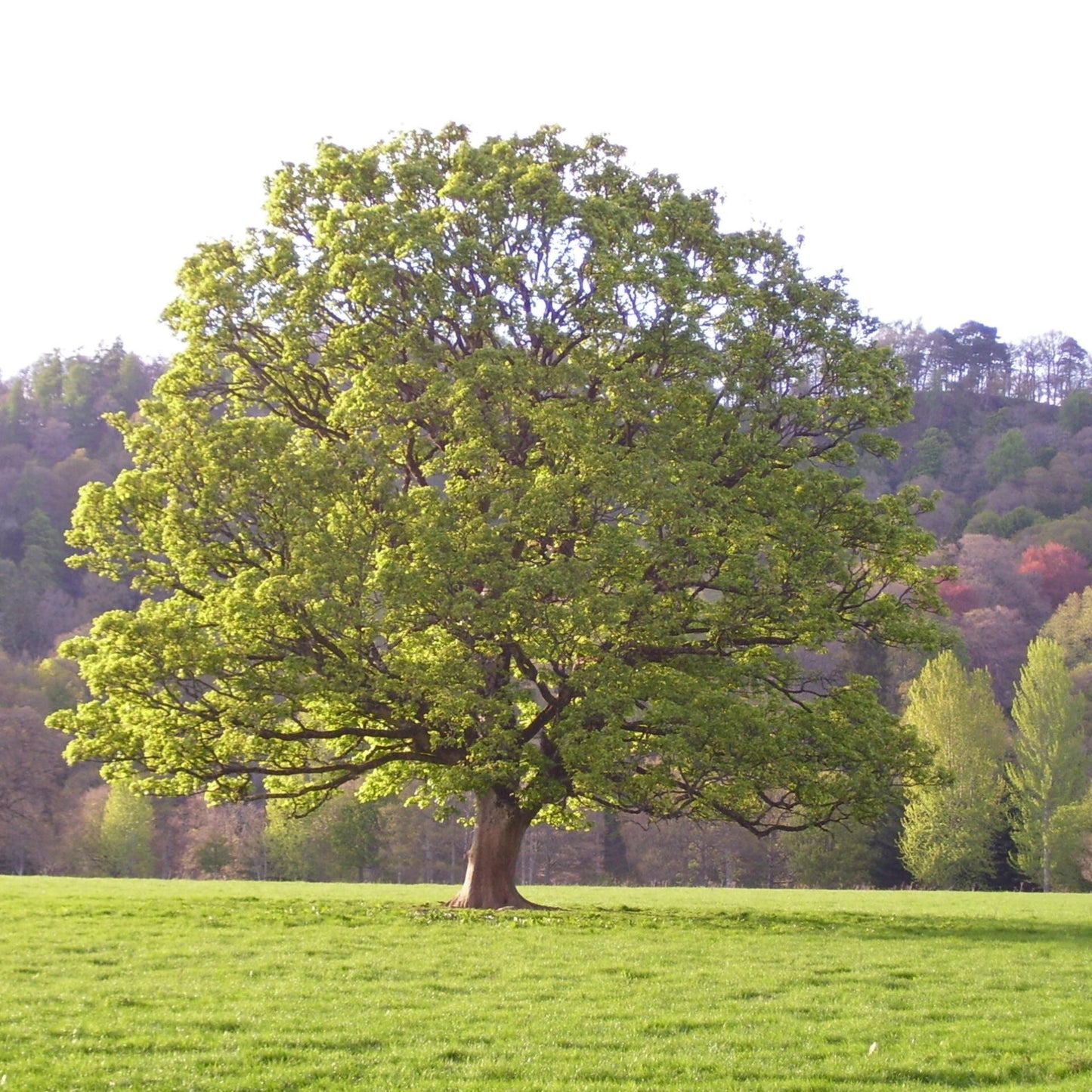


Sycamore Tree Seeds | American Sycamore | (Platanus occidentalis)
Sycamore Tree Seeds | American Sycamore | (Platanus occidentalis)
The largest native hardwood in eastern North America. Impossible to ignore.
Platanus occidentalis, the American Sycamore, is the largest native hardwood tree in eastern North America and one of the most visually distinctive trees in any landscape, its smooth, cream and tan bark peeling in patches to reveal ghost-white inner bark beneath, creating a mottled, camouflage-like pattern that is immediately recognizable from a considerable distance. It grows faster than almost any other large native hardwood, tolerates wet, compacted, and disturbed soils, and develops into a massive, wide-spreading tree that dominates any landscape it inhabits. Along rivers and bottomlands it is the tree that defines the view, its white upper canopy visible from miles away across a flat valley. If you are looking to buy Sycamore seeds or grow American Sycamore from seed, this is the tree for growers who want the largest, most dramatic native hardwood available.
- The largest native hardwood in eastern North America, capable of exceeding 10 feet in trunk diameter
- Mottled cream and white exfoliating bark, one of the most distinctive bark patterns of any tree
- Extraordinarily fast-growing, one of the fastest-establishing large native hardwoods available
- Extremely adaptable to wet, compacted, disturbed, or floodplain soils
- Critical wildlife tree providing nesting cavities for wood ducks, chimney swifts, and over 40 other species
Things you probably did not know about the Sycamore
The largest known Sycamore in history had a trunk over 15 feet in diameter. Several historical accounts from the 18th and 19th century document American Sycamores with trunk diameters exceeding 12 to 15 feet, large enough to hollow out and use as a single-room shelter. One account from Ohio describes a hollow Sycamore trunk used as a stable for horses. These dimensions are not credible for any other native hardwood in the eastern United States.
It was the primary hollow tree of the eastern forest ecosystem. The massive hollow trunks that develop in old Sycamores created the largest tree cavities available in the eastern forest, used by black bears for denning, wood ducks and chimney swifts for nesting, and raccoons and opossums for shelter. The loss of old hollow Sycamores along eastern rivers has been identified as one of the contributing factors in the decline of chimney swift populations.
The ball-shaped seed clusters are among the most familiar images of winter. The round, bristly seed balls of American Sycamore, which hang singly or in pairs on long stalks from bare winter branches, are one of the most recognizable features of the winter river corridor landscape across the East. Each ball contains hundreds of tightly packed seeds with feathery tails that disperse individually in late winter and early spring wind.
It grows so fast it can reach 6 feet in a single season from seed. American Sycamore is among the fastest-growing native hardwoods from seed, capable of producing 4 to 6 feet of growth in favorable conditions in its first year. This remarkable early vigor made it historically important for rapid erosion control along disturbed streambanks and is why it colonizes newly exposed floodplain soils with such efficiency.
Growing Details
- Botanical Name: Platanus occidentalis
- Stratification: Recommended, 30 to 60 days cold stratification
- USDA Zones: 4 to 9
- Soil: Adaptable, prefers moist, rich bottomland soils, tolerates wet and periodically flooded sites
- Light: Full sun
- Height: 75 to 100 feet
- Spread: 75 to 100 feet
- Growth Rate: Very fast, 3 to 6 feet per year in ideal conditions
Plant it where it has room to become what it is. There is no point in planting a Sycamore in a small space. Give it the bottomland or the field edge and watch it take over.
FAQ
FAQ
Do you pre-stratify the seeds?
Most of our seeds are not pre-stratified. They are stored under dry, cold conditions to preserve viability without initiating stratification, allowing you to time germination for your local growing season.
The exception is recalcitrant seeds. Because these seeds must remain moist to stay viable, they are kept in moist, cold storage and are therefore in a pre-stratified state. Depending on how long a particular batch has been stored, some may arrive with an emerging radicle and be ready to plant immediately. Radicle development is not guaranteed.
Please refer to the individual product page and included growing instructions for species-specific requirements.
Do any of your seeds need to stay moist? (Recalcitrant seeds)
Yes. Some species we offer, including Chestnut, Hazelnut, and Paw Paw, are recalcitrant and must remain moist to stay viable.
Please refrigerate these seeds immediately upon arrival unless they have already developed a radicle. Seeds with an emerging radicle should be planted promptly.
Do you ship internationally?
No. We currently ship within the United States only.
We previously shipped to Canada, but tariffs, duties, and import fees resulted in customers receiving significant and unpredictable additional charges upon delivery. Because we cannot reliably calculate or absorb these costs, we have suspended shipping to Canada.
At this time, we do not ship to Canada or other international destinations.
Shipping & What's Included
Shipping & What's Included
Shipping & Packaging
• Hand-packed in resealable kraft paper seed bags
• Stratification and planting instructions included on every seed pack
• Ships within 3–5 business days via USPS within the United States and U.S. territories
Return Policy
Return Policy
Due to the nature of our products, we do not accept returns on seeds.
If your order arrives damaged, contains incorrect items, or is missing items, please contact us within 7 days of delivery so we can resolve the issue.