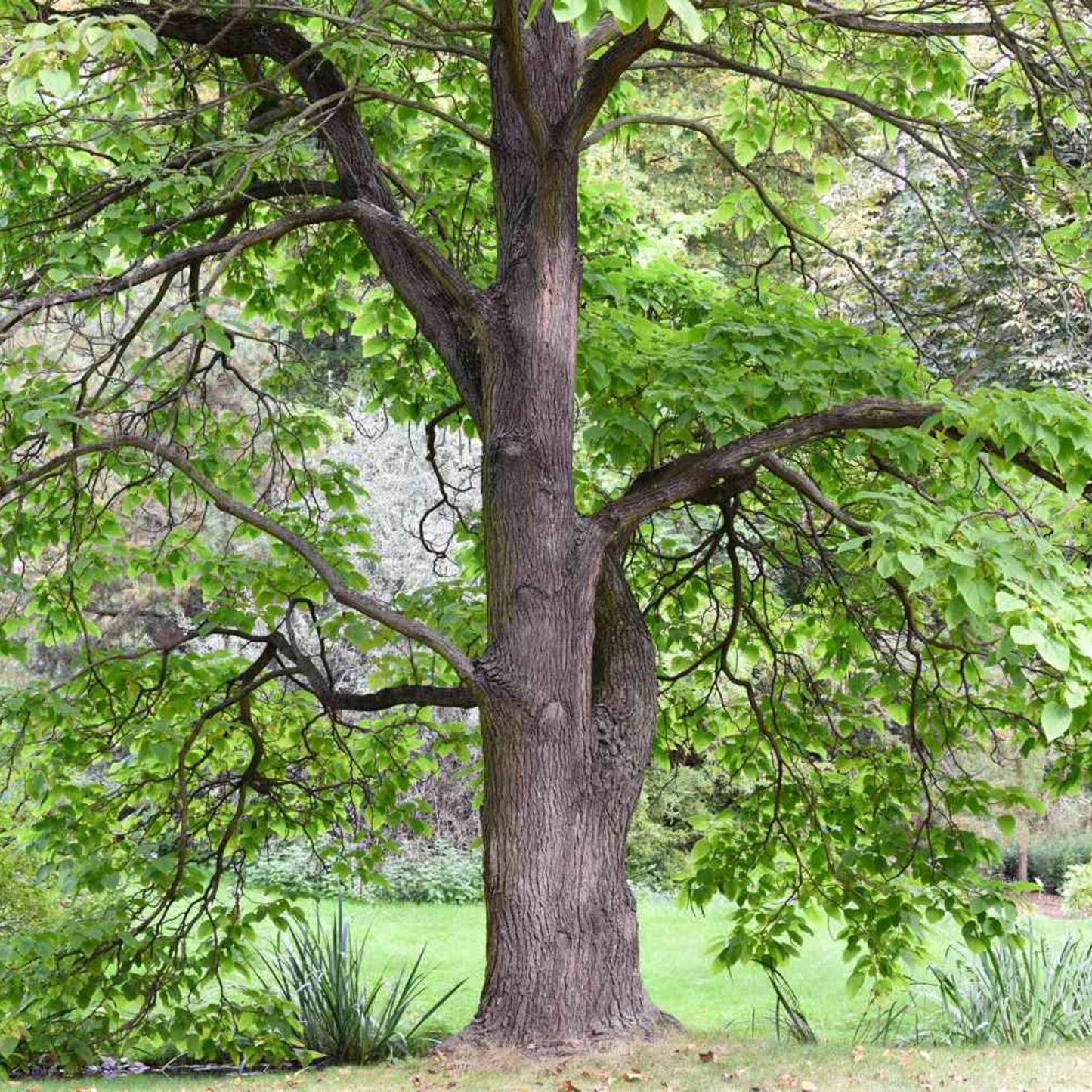


Southern Catalpa Tree Seeds | Indian Bean Tree | (Catalpa bignonioides)
Southern Catalpa Tree Seeds | Indian Bean Tree | (Catalpa bignonioides)
White orchids in summer. The tree that minds nothing.
Catalpa bignonioides, the Southern Catalpa, is one of the most dramatic and easy-going flowering trees in North American horticulture, producing massive heart-shaped leaves up to a foot wide and enormous clusters of white orchid-like flowers with purple and yellow markings in early summer that cover the tree in a display unlike anything else in the temperate landscape. It grows in poor soils, tolerates drought, heat, flooding, air pollution, and compacted ground, and establishes with almost no care in conditions that would stress most flowering trees. Its massive seed pods, hanging in clusters a foot or more long through winter, give it year-round interest even after the flowering season ends. If you are looking to buy Southern Catalpa seeds or grow this extraordinary flowering tree from seed, this is the most theatrical and least demanding large flowering tree available in warm-climate horticulture.
- Enormous clusters of white orchid-like flowers in early summer covering the entire canopy
- Massive heart-shaped leaves up to 12 inches wide, the most tropical-looking foliage of any native tree
- Long bean-like seed pods hanging through winter providing persistent ornamental interest
- Grows in almost any soil including poor, compacted, wet, or dry sites
- One of the most important trees for sphinx moth caterpillars, particularly the Catalpa Sphinx
Things you probably did not know about the Southern Catalpa
Fishing enthusiasts plant them specifically to attract catalpa sphinx moth caterpillars. The large green and yellow caterpillars of the Catalpa Sphinx moth, known in the South as catawba worms or catalpa worms, are considered by many freshwater anglers to be the most effective live bait for catching catfish and bass. A single Catalpa tree can support hundreds of caterpillars in a good year. Dedicated fishing families have planted Catalpa trees for generations specifically as a bait production resource.
The flowers are structurally similar to orchids. Catalpa flowers are among the most complex and architecturally elaborate of any tree flower in North America. The white petals with their intricate purple spotting and yellow streaks serve as nectar guides for pollinators, directing bees and hummingbirds to the nectar source with color patterns that are partially visible in the ultraviolet spectrum. The similarity to orchid flower structure is convergent evolution driven by similar pollination pressures.
The wood was planted extensively for fence posts and railroad ties. Southern Catalpa wood is moderately rot-resistant and the tree's fast growth made it a logical candidate for utilitarian planting across the South in the 19th century. The USDA recommended its planting for fence posts and timber throughout the southern states and millions of trees were planted specifically for this purpose. The utilitarian planting program spread the tree far beyond its original range in the southeastern coastal plain.
It was used as a street tree in cities before its size and leaf litter became problematic. Southern Catalpa was planted as a street and park tree in American cities throughout the late 19th and early 20th centuries because of its fast growth, impressive flowers, and tolerance of urban conditions. The massive leaves that fall in autumn and the large seed pods that accumulate on sidewalks eventually discouraged its use in formal urban settings, but in parks and large properties it remains one of the most spectacular flowering trees available.
Growing Details
- Botanical Name: Catalpa bignonioides
- Stratification: Recommended, 30 to 60 days cold stratification
- USDA Zones: 5 to 9
- Soil: Extremely adaptable, tolerates poor, wet, dry, compacted, or disturbed soils
- Light: Full sun
- Height: 25 to 40 feet
- Spread: 25 to 40 feet
- Growth Rate: Fast, 2 to 4 feet per year
Plant it where you want something that makes a statement in June and does not ask for anything in return. Very few trees deliver this kind of spectacle with this little effort.
FAQ
FAQ
Do you pre-stratify the seeds?
Most of our seeds are not pre-stratified. They are stored under dry, cold conditions to preserve viability without initiating stratification, allowing you to time germination for your local growing season.
The exception is recalcitrant seeds. Because these seeds must remain moist to stay viable, they are kept in moist, cold storage and are therefore in a pre-stratified state. Depending on how long a particular batch has been stored, some may arrive with an emerging radicle and be ready to plant immediately. Radicle development is not guaranteed.
Please refer to the individual product page and included growing instructions for species-specific requirements.
Do any of your seeds need to stay moist? (Recalcitrant seeds)
Yes. Some species we offer, including Chestnut, Hazelnut, and Paw Paw, are recalcitrant and must remain moist to stay viable.
Please refrigerate these seeds immediately upon arrival unless they have already developed a radicle. Seeds with an emerging radicle should be planted promptly.
Do you ship internationally?
No. We currently ship within the United States only.
We previously shipped to Canada, but tariffs, duties, and import fees resulted in customers receiving significant and unpredictable additional charges upon delivery. Because we cannot reliably calculate or absorb these costs, we have suspended shipping to Canada.
At this time, we do not ship to Canada or other international destinations.
Shipping & What's Included
Shipping & What's Included
Shipping & Packaging
• Hand-packed in resealable kraft paper seed bags
• Stratification and planting instructions included on every seed pack
• Ships within 3–5 business days via USPS within the United States and U.S. territories
Return Policy
Return Policy
Due to the nature of our products, we do not accept returns on seeds.
If your order arrives damaged, contains incorrect items, or is missing items, please contact us within 7 days of delivery so we can resolve the issue.