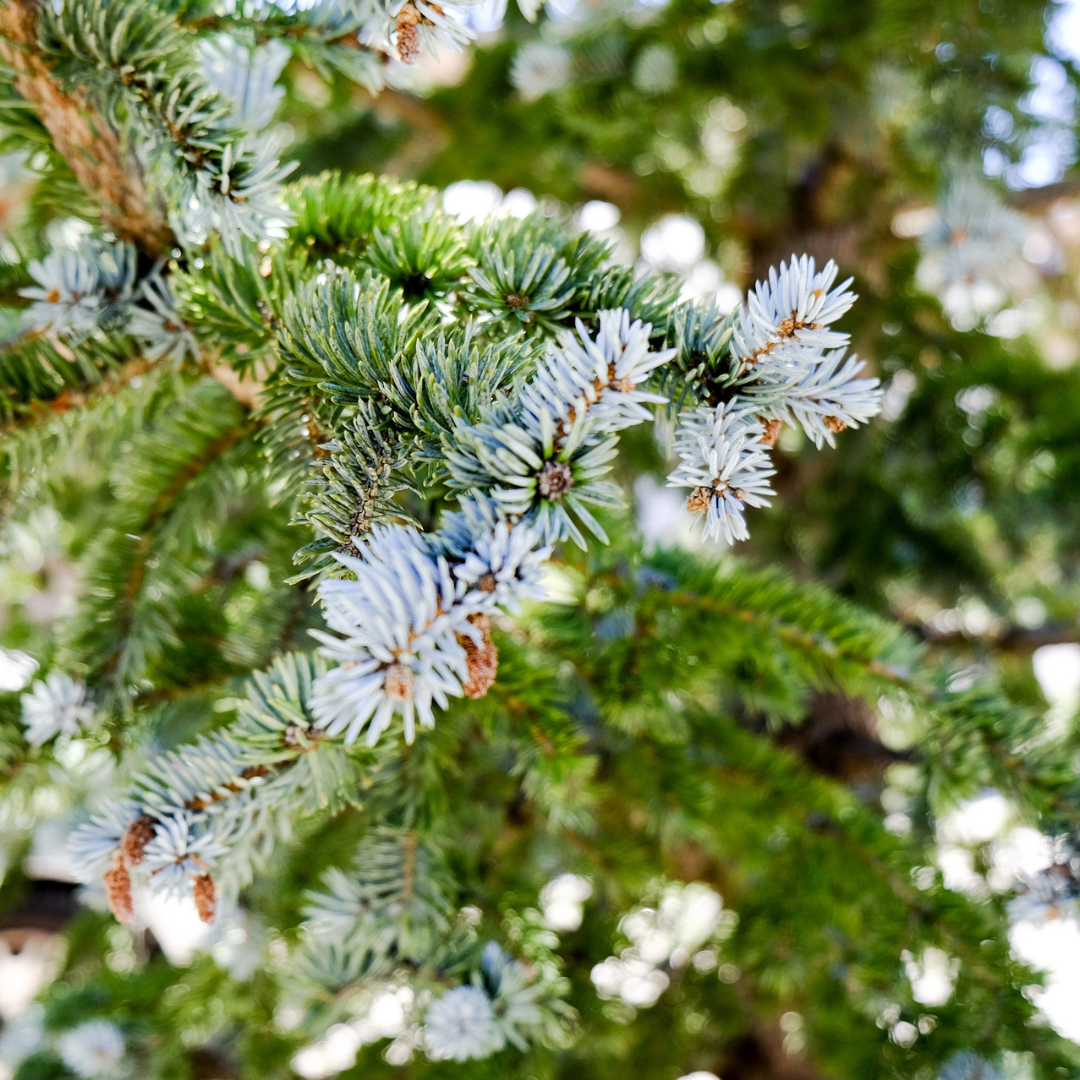


Sitka Spruce (Picea sitchensis)
Sitka Spruce (Picea sitchensis)
The largest spruce in the world. The tree that built the Spitfire.
Picea sitchensis, the Sitka Spruce, is the largest spruce species on Earth and the fifth largest conifer in the world by height, native to a narrow coastal belt stretching from northern California to Alaska where the combination of cool temperatures, high rainfall, and persistent fog creates conditions of extraordinary tree growth. It can exceed 300 feet in height and 16 feet in trunk diameter. It also produces the highest strength-to-weight ratio wood of any conifer in the world, which is why it was the wood of choice for aircraft construction through both World Wars, why it is still preferred for violin soundboards and guitar tops, and why Sitka Spruce forests were considered strategic military resources. If you are looking to buy Sitka Spruce seeds or grow this magnificent coastal conifer from seed, this is a tree that shaped the history of flight and still shapes the finest musical instruments in the world.
- The largest spruce species on Earth, capable of exceeding 300 feet in its native coastal habitat
- Produces the highest strength-to-weight ratio wood of any conifer, historically critical for aircraft construction
- The preferred tonewood for violin, guitar, and piano soundboards among the world's finest instrument makers
- Fast-growing for a large conifer in cool, moist conditions, establishing quickly in suitable climates
- Critical wildlife tree of the Pacific coast old-growth forest, supporting hundreds of dependent species
Things you probably did not know about the Sitka Spruce
The Sitka Spruce built the Spitfire and the Mosquito. During World War II, Sitka Spruce was a classified strategic material in Britain. The de Havilland Mosquito, one of the most effective aircraft of the war, was built almost entirely from Sitka Spruce and birch plywood, which gave it a strength-to-weight advantage over metal-framed aircraft of the same period. The British government controlled Sitka Spruce stocks with the same seriousness as steel and aluminum. Much of the timber came from Pacific Northwest old-growth forests.
The world's finest violins are made from Sitka Spruce. The Stradivarius violins used European Spruce, but contemporary violin makers working with the best available materials frequently choose Sitka Spruce for soundboards because of its superior strength-to-weight ratio and acoustic responsiveness. Taylor Guitars, Martin Guitars, and other premier acoustic guitar makers use Sitka Spruce for their top-of-line instrument tops. The wood's ability to vibrate efficiently across a wide frequency range is unmatched by any alternative.
Old-growth Sitka Spruce roots support entire ecosystems. The massive buttressed roots of old-growth Sitka Spruces along the Pacific coast create microhabitats for mosses, ferns, fungi, salamanders, and small mammals that require the specific humid, sheltered conditions these root structures provide. The loss of old-growth Sitka Spruce forest is not simply a loss of large trees but a loss of entire communities of organisms that depend on structures that take centuries to develop.
It grows faster in plantation conditions than almost any other spruce. Sitka Spruce has been planted in commercial forestry plantations across Britain, Ireland, and Scandinavia because it grows faster in those climates than any other large conifer available for timber production. Plantations established in Scotland in the 1920s and 1930s are now mature forests producing timber in volumes that no other species in that climate could have generated in the same time period.
Growing Details
- Botanical Name: Picea sitchensis
- Stratification: Recommended, 30 to 60 days cold stratification
- USDA Zones: 6 to 8, thrives in cool, moist, coastal climates
- Soil: Moist, well-drained, acidic, rich in organic matter
- Light: Full sun to partial shade
- Height: 100 to 200 feet in cultivation, larger in native range
- Spread: 25 to 35 feet
- Growth Rate: Fast in suitable climates, 2 to 4 feet per year with adequate moisture
Plant it in a cool, moist site in the Pacific Northwest or a similar climate. In the right conditions, nothing grows faster or bigger.
FAQ
FAQ
Do you pre-stratify the seeds?
Most of our seeds are not pre-stratified. They are stored under dry, cold conditions to preserve viability without initiating stratification, allowing you to time germination for your local growing season.
The exception is recalcitrant seeds. Because these seeds must remain moist to stay viable, they are kept in moist, cold storage and are therefore in a pre-stratified state. Depending on how long a particular batch has been stored, some may arrive with an emerging radicle and be ready to plant immediately. Radicle development is not guaranteed.
Please refer to the individual product page and included growing instructions for species-specific requirements.
Do any of your seeds need to stay moist? (Recalcitrant seeds)
Yes. Some species we offer, including Chestnut, Hazelnut, and Paw Paw, are recalcitrant and must remain moist to stay viable.
Please refrigerate these seeds immediately upon arrival unless they have already developed a radicle. Seeds with an emerging radicle should be planted promptly.
Do you ship internationally?
No. We currently ship within the United States only.
We previously shipped to Canada, but tariffs, duties, and import fees resulted in customers receiving significant and unpredictable additional charges upon delivery. Because we cannot reliably calculate or absorb these costs, we have suspended shipping to Canada.
At this time, we do not ship to Canada or other international destinations.
Shipping & What's Included
Shipping & What's Included
Shipping & Packaging
• Hand-packed in resealable kraft paper seed bags
• Stratification and planting instructions included on every seed pack
• Ships within 3–5 business days via USPS within the United States and U.S. territories
Return Policy
Return Policy
Due to the nature of our products, we do not accept returns on seeds.
If your order arrives damaged, contains incorrect items, or is missing items, please contact us within 7 days of delivery so we can resolve the issue.