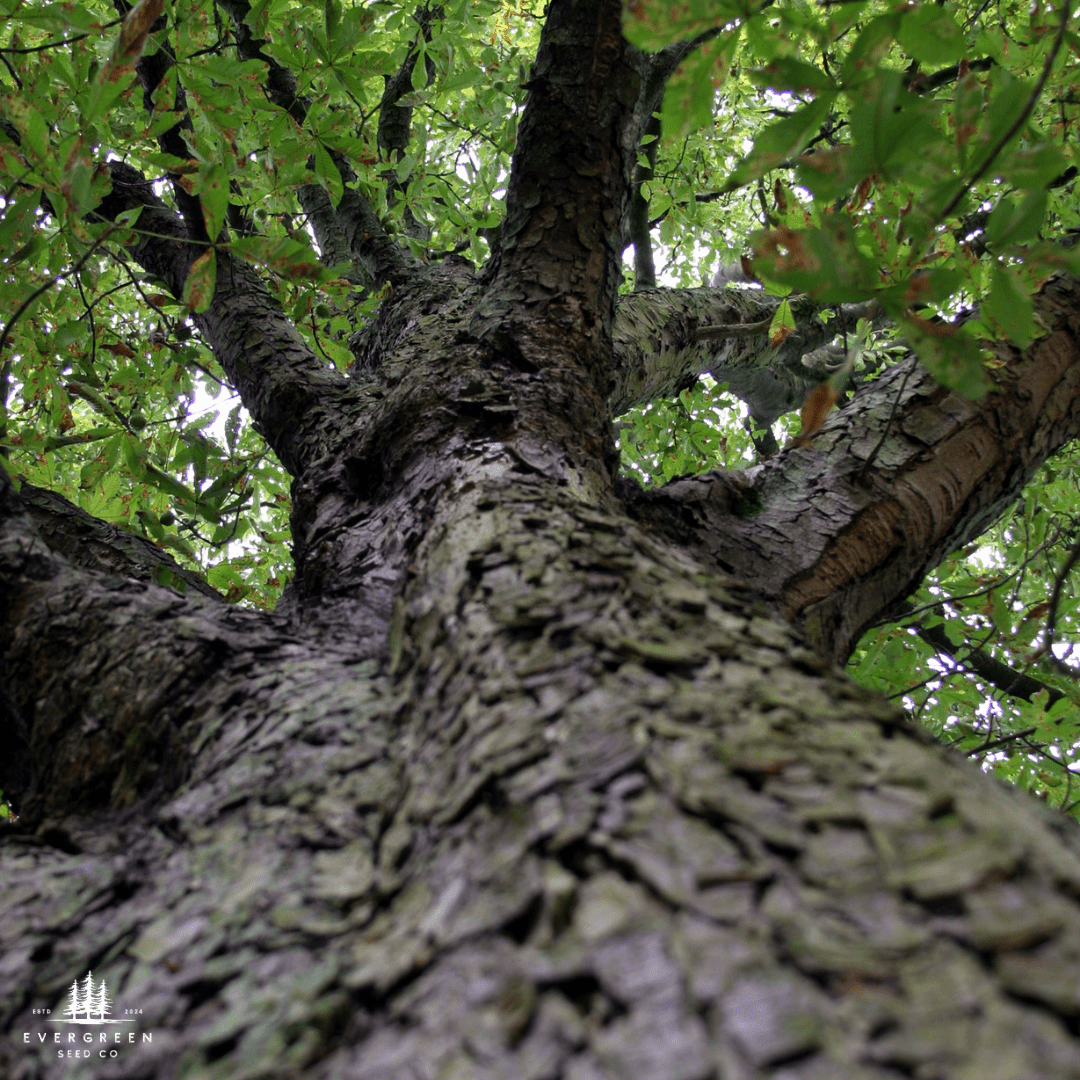


Japanese Chestnut Tree Seeds 'Silverleaf' (Castanea crenata var. Silverleaf)
Japanese Chestnut Tree Seeds 'Silverleaf' (Castanea crenata var. Silverleaf)
Blight-resistant. Silver-leaved. A chestnut unlike any other.
Castanea crenata var. Silverleaf is a distinctive variety of the Japanese Chestnut selected for its striking silver-backed leaves that shimmer in the wind, giving it exceptional ornamental value in addition to the blight resistance and nut production that make all Japanese Chestnut varieties important in North American cultivation. The Japanese Chestnut is the species that contributed blight resistance to the most important hybrid chestnuts available to North American growers, and the Silverleaf variety carries these same genetics while adding a visual quality that makes it one of the most attractive chestnuts in the landscape. The nuts are smaller than Colossal or Dunstan selections but produced reliably and consistently with genuine sweet chestnut flavor. If you are looking to buy Silverleaf Japanese Chestnut seeds or grow this ornamental and productive chestnut from seed, this is the variety that combines beauty and function.
- Silver-backed leaves shimmering in the wind, creating a two-toned display unlike any other chestnut
- Full blight resistance from the Japanese Chestnut parent species that provided the resistance genetics for hybrid breeding
- Reliably productive nut crop with sweet, edible chestnuts beginning within 3 to 5 years from seed
- Attractive ornamental tree with the combined value of distinctive foliage and fall nut production
- Seed-grown trees carry the silverleaf genetic traits and blight resistance of the parent variety
Things you probably did not know about the Silverleaf Japanese Chestnut
The silver undersides of the leaves are covered in fine, dense hairs. The striking silver appearance of the Silverleaf variety's leaf undersides comes from a dense covering of fine, pale hairs called pubescence, more dense than on standard Japanese Chestnut leaves. This pubescence creates a reflective surface that catches light differently from the upper leaf surface, producing the shimmering, two-toned effect visible when wind moves through the canopy.
Japanese Chestnut has been cultivated in Japan for over 2,000 years. Castanea crenata cultivation is documented in Japanese agricultural records dating back more than two millennia, with the nuts playing a significant role in the Japanese autumn harvest tradition. Chestnut rice, roasted chestnuts, and chestnut sweets are among the most traditional autumn foods in Japanese culture, and the Kuri, as the chestnut is known in Japanese, appears throughout Japanese folk tradition and seasonal celebration.
The blight resistance in Japanese Chestnut works through an oxalic acid response. When Cryphonectria parasitica, the blight fungus, infects a Japanese Chestnut, the tree responds by producing elevated levels of oxalic acid in the infected tissue that creates an acidic environment hostile to the fungus, limiting canker expansion. This hypovirulence mechanism is one of two distinct resistance pathways identified in blight-resistant Castanea species, the other being the structural resistance pathway identified in Chinese Chestnut.
Cross-pollination with other chestnut species produces the most productive and blight-resistant offspring. Silverleaf Japanese Chestnut cross-pollinated with American Chestnut hybrids, Chinese Chestnuts, or Dunstan Chestnuts produces offspring that combine resistance mechanisms from multiple parent species and typically outperform either parent in nut production and disease resistance. Planting mixed chestnut species together maximizes both production and the probability of discovering superior individual seedlings.
Growing Details
- Botanical Name: Castanea crenata var. Silverleaf
- Stratification: Required, 60 to 90 days cold moist stratification, recalcitrant seed, keep moist
- USDA Zones: 4 to 8
- Soil: Well-drained, slightly acidic, avoid compacted or waterlogged conditions
- Light: Full sun
- Height: 30 to 50 feet
- Spread: 30 to 50 feet
- Growth Rate: Moderate to fast, 2 to 3 feet per year
Plant it where the silver-backed leaves will catch afternoon light and move in the wind. The ornamental value alone justifies it. The chestnuts are the bonus.
FAQ
FAQ
Do you pre-stratify the seeds?
Most of our seeds are not pre-stratified. They are stored under dry, cold conditions to preserve viability without initiating stratification, allowing you to time germination for your local growing season.
The exception is recalcitrant seeds. Because these seeds must remain moist to stay viable, they are kept in moist, cold storage and are therefore in a pre-stratified state. Depending on how long a particular batch has been stored, some may arrive with an emerging radicle and be ready to plant immediately. Radicle development is not guaranteed.
Please refer to the individual product page and included growing instructions for species-specific requirements.
Do any of your seeds need to stay moist? (Recalcitrant seeds)
Yes. Some species we offer, including Chestnut, Hazelnut, and Paw Paw, are recalcitrant and must remain moist to stay viable.
Please refrigerate these seeds immediately upon arrival unless they have already developed a radicle. Seeds with an emerging radicle should be planted promptly.
Do you ship internationally?
No. We currently ship within the United States only.
We previously shipped to Canada, but tariffs, duties, and import fees resulted in customers receiving significant and unpredictable additional charges upon delivery. Because we cannot reliably calculate or absorb these costs, we have suspended shipping to Canada.
At this time, we do not ship to Canada or other international destinations.
Shipping & What's Included
Shipping & What's Included
Shipping & Packaging
• Hand-packed in resealable kraft paper seed bags
• Stratification and planting instructions included on every seed pack
• Ships within 3–5 business days via USPS within the United States and U.S. territories
Return Policy
Return Policy
Due to the nature of our products, we do not accept returns on seeds.
If your order arrives damaged, contains incorrect items, or is missing items, please contact us within 7 days of delivery so we can resolve the issue.