

Silky Dogwood Tree Seeds (Cornus Amomum)
Silky Dogwood Tree Seeds (Cornus Amomum)
The native shrub that holds the banks. Blue berries, white flowers, red stems.
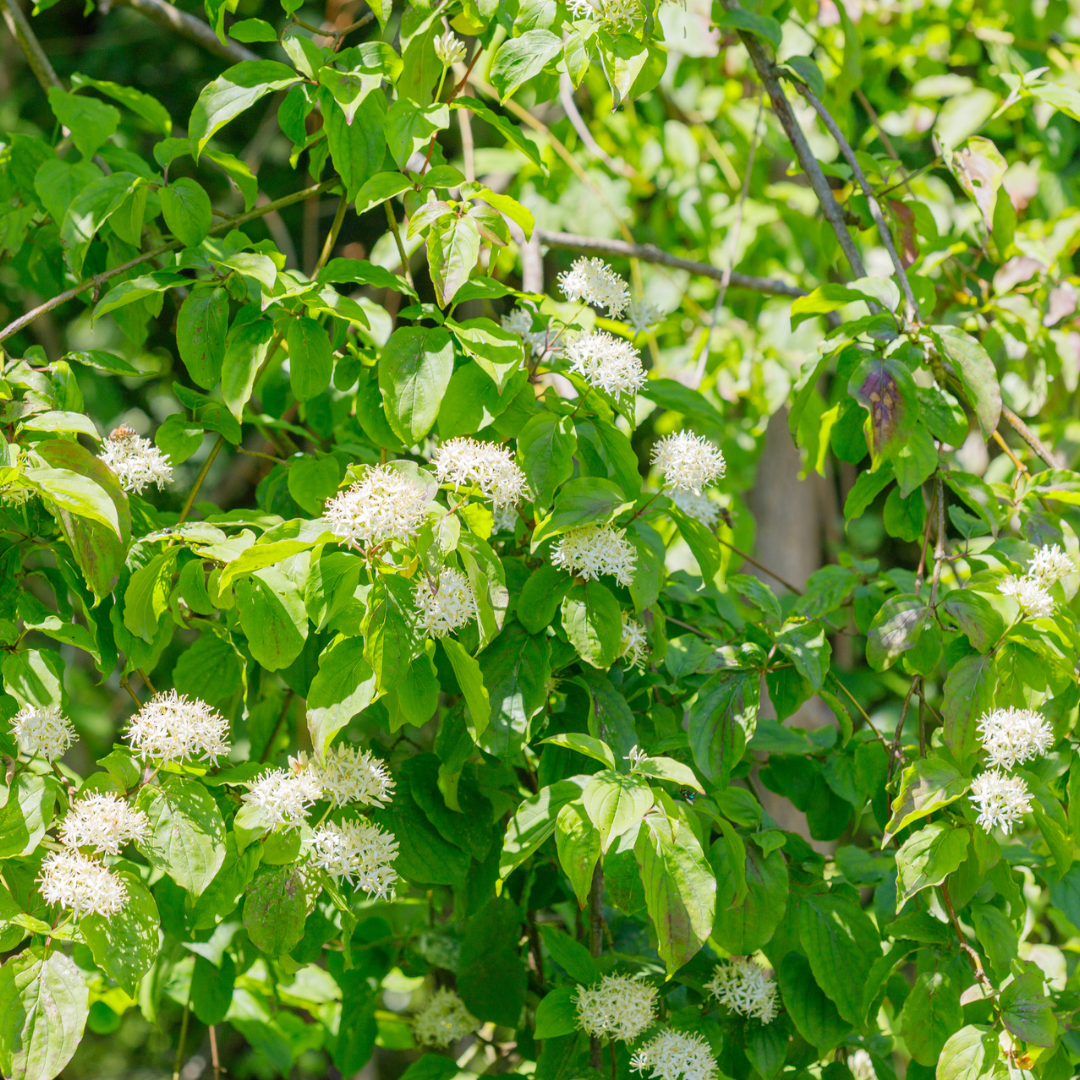
Cornus amomum, the Silky Dogwood, is one of the most ecologically valuable and visually underrated native shrubs in eastern North America, a wetland-adapted dogwood that produces flat-topped clusters of creamy white flowers in late spring, clusters of distinctive blue and white berries in late summer, and brilliant red stems through winter that glow against snow in a display that rivals any ornamental shrub in the landscape. It grows naturally along stream banks, pond margins, wet ditches, and floodplain edges where its dense, spreading root system binds soil against erosion and its berries feed migratory birds making fall journeys across the continent. If you are looking to buy Silky Dogwood seeds or grow this native wetland shrub from seed, this is the most productive riparian native plant available for wet, difficult sites in the eastern United States.
- Flat-topped white flower clusters in late spring attracting native bees and pollinators
- Distinctive blue and white berries in late summer eaten intensively by migratory songbirds
- Brilliant red stems through winter providing color and structure in the bare landscape
- Dense, spreading root system providing exceptional bank stabilization and erosion control
- Adaptable to wet, poorly drained, and seasonally flooded sites where most shrubs fail
Things you probably did not know about the Silky Dogwood
The berries are among the highest-fat native fruits available to migrating birds. Silky Dogwood berries contain exceptionally high lipid content relative to most native berries, providing the concentrated caloric fuel that migratory birds require for long-distance flights. Studies of fall migratory bird diet along the Atlantic flyway consistently identify Silky Dogwood berries as a preferred fuel source for wood thrushes, veeries, gray catbirds, and other thrush family members that are among the most significant long-distance migrants of the eastern forest.
The red stem color intensifies with cold weather. Silky Dogwood stems develop their brightest red color after the first frosts of fall, and the display intensifies through winter as temperatures drop. This cold-triggered coloring is the same mechanism that produces fall leaf color in deciduous trees. The stems are at their most ornamentally striking in January and February when the contrast with snow or bare ground is greatest and nothing else in the landscape provides similar color.
It creates thickets that are nearly impenetrable for predators but accessible for small birds. The dense, branching stems of a mature Silky Dogwood thicket create a structure with openings large enough for songbirds to enter and nest while being too tight for most avian predators to maneuver through effectively. Ornithologists have documented significantly higher nesting success rates for ground and low-nesting birds in Silky Dogwood thickets compared to more open shrub plantings.
The berries ripen over several weeks rather than all at once. Unlike many shrubs that ripen all their fruit simultaneously in a brief window, Silky Dogwood berries ripen progressively over three to four weeks in late summer. This extended fruiting period sustains bird populations through a longer portion of the pre-migration feeding period and spreads the ecological benefit across more time and more individual birds than a simultaneous ripening would allow.
Growing Details
- Botanical Name: Cornus amomum
- Stratification: Required, warm stratification of 60 to 90 days followed by 90 days cold stratification
- USDA Zones: 4 to 8
- Soil: Prefers moist, wet, or periodically flooded soils, adapts to ordinary moist garden conditions
- Light: Full sun to partial shade
- Height: 6 to 10 feet
- Spread: 6 to 10 feet, spreading by suckers over time
- Growth Rate: Moderate to fast, 1 to 2 feet per year
Plant it at a water's edge, along a wet ditch, or anywhere with consistent moisture. The birds will find it before you have finished planting the next one.
FAQ
FAQ
Do you pre-stratify the seeds?
Most of our seeds are not pre-stratified. They are stored under dry, cold conditions to preserve viability without initiating stratification, allowing you to time germination for your local growing season.
The exception is recalcitrant seeds. Because these seeds must remain moist to stay viable, they are kept in moist, cold storage and are therefore in a pre-stratified state. Depending on how long a particular batch has been stored, some may arrive with an emerging radicle and be ready to plant immediately. Radicle development is not guaranteed.
Please refer to the individual product page and included growing instructions for species-specific requirements.
Do any of your seeds need to stay moist? (Recalcitrant seeds)
Yes. Some species we offer, including Chestnut, Hazelnut, and Paw Paw, are recalcitrant and must remain moist to stay viable.
Please refrigerate these seeds immediately upon arrival unless they have already developed a radicle. Seeds with an emerging radicle should be planted promptly.
Do you ship internationally?
No. We currently ship within the United States only.
We previously shipped to Canada, but tariffs, duties, and import fees resulted in customers receiving significant and unpredictable additional charges upon delivery. Because we cannot reliably calculate or absorb these costs, we have suspended shipping to Canada.
At this time, we do not ship to Canada or other international destinations.
Shipping & What's Included
Shipping & What's Included
Shipping & Packaging
• Hand-packed in resealable kraft paper seed bags
• Stratification and planting instructions included on every seed pack
• Ships within 3–5 business days via USPS within the United States and U.S. territories
Return Policy
Return Policy
Due to the nature of our products, we do not accept returns on seeds.
If your order arrives damaged, contains incorrect items, or is missing items, please contact us within 7 days of delivery so we can resolve the issue.