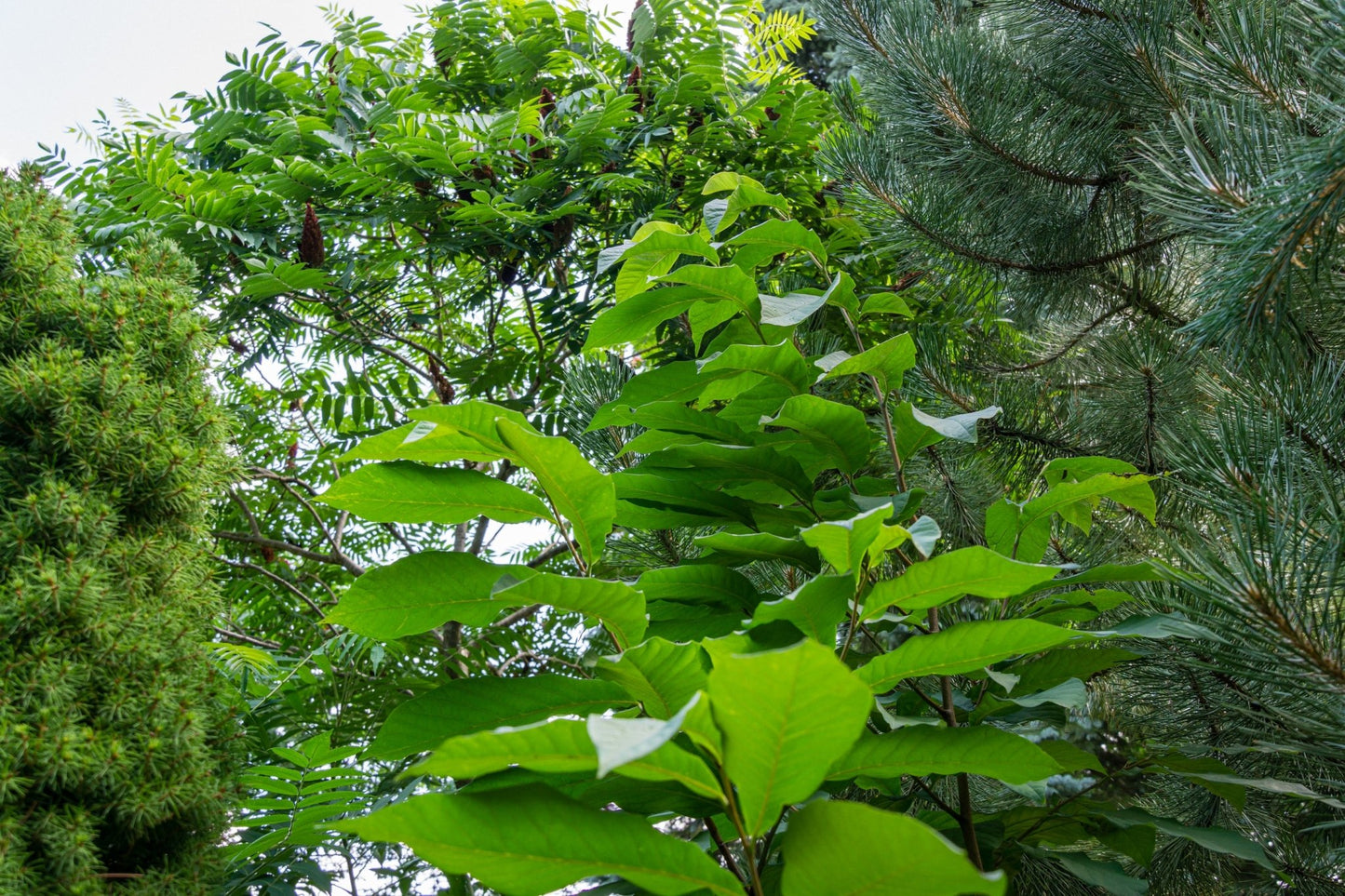


Shenandoah Pawpaw Tree Seeds | (Asimina triloba ‘Shenandoah’)
Shenandoah Pawpaw Tree Seeds | (Asimina triloba ‘Shenandoah’)
The sweetest pawpaw ever developed. Selected to minimize the tropical edge.
Asimina triloba ‘Shenandoah’ is considered by many pawpaw enthusiasts to be the finest-flavored pawpaw variety ever developed, selected specifically for its exceptionally sweet, mild, vanilla-custard flavor with less of the musky tropical quality that some people find challenging in other varieties. The fruit is large, the flesh is pale yellow with a smooth, dense texture, and the flavor is often described as the most accessible of all pawpaws for people trying the fruit for the first time. It was developed by Neal Peterson, the most dedicated pawpaw breeder in modern American history, after over 25 years of evaluation and selection from thousands of seedlings across the eastern United States. Growing Shenandoah from seed will not reproduce the exact cultivar but the genetics it carries represent the finest pawpaw breeding work done in a generation. If you are looking to buy Shenandoah Pawpaw seeds or grow the most celebrated pawpaw variety from seed, this is the starting point.
- The most acclaimed pawpaw variety for mild, sweet, accessible flavor with minimal tropical muskiness
- Large fruit with pale yellow flesh, smooth dense texture, and a vanilla-custard flavor profile
- Developed by Neal Peterson after 25 years and thousands of seedlings evaluated across the eastern US
- Produces heavy crops with cross-pollination from a genetically different second tree
- Cold-hardy across the native range, zones 5 to 9, with full deer-resistance in the foliage
Things you probably did not know about the Shenandoah Pawpaw
The breeder spent 25 years and tested over 1,500 seedlings to develop it. Neal Peterson, a Washington DC scientist and amateur plant breeder, dedicated more than two decades of his life to evaluating wild pawpaw seedlings across the Appalachian region and developing superior named varieties. The Shenandoah selection, named for the Virginia valley where many of the evaluated seedlings originated, emerged from this extraordinary effort as the standout for flavor accessibility and fruit size. It is one of the most thoroughly evaluated fruit varieties in American amateur horticulture history.
The flavor difference between Shenandoah and a typical wild pawpaw is dramatic. Wild pawpaws can range from exceptional to barely palatable depending on the individual tree, the season, and how ripe the fruit is when eaten. Shenandoah was selected specifically to minimize the variation and maximize the qualities that make pawpaw fruit extraordinary at its best, the rich sweetness and custard texture, while reducing the musky notes that can be off-putting to first-time tasters. The result is the pawpaw variety most consistently described as accessible to people who have never tasted the fruit before.
The Shenandoah Valley has some of the finest wild pawpaw habitat in the eastern United States. The limestone-influenced soils, cold winter temperatures, and warm humid summers of the Shenandoah Valley region create conditions that favor exceptional pawpaw flavor development. Many of the finest wild seedlings Peterson evaluated came from this region, and the flavor qualities he was selecting for are partly a reflection of the regional growing conditions that shaped the parent population.
Pawpaw varieties are named in a tradition that connects them to places and people of significance. Beyond Shenandoah, Peterson's other named selections include Susquehanna, Rappahannock, Wabash, and Chesapeake, all rivers and waterways of the eastern United States that run through prime pawpaw country. The naming convention reflects a deliberate choice to honor the Native American and frontier landscape history of the fruit's homeland.
Growing Details
- Botanical Name: Asimina triloba ‘Shenandoah’
- Stratification: Required, 90 to 120 days cold moist stratification, recalcitrant seed, keep moist
- USDA Zones: 5 to 9
- Soil: Rich, well-drained, slightly acidic, consistent moisture
- Light: Full sun to partial shade
- Height: 15 to 30 feet
- Spread: 15 to 25 feet
- Growth Rate: Slow to moderate, 1 to 2 feet per year
Plant it alongside a different pawpaw variety for cross-pollination. The first ripe Shenandoah off a tree you grew from seed may be the best fruit you have ever eaten that did not come from a tropical country.
FAQ
FAQ
Do you pre-stratify the seeds?
Most of our seeds are not pre-stratified. They are stored under dry, cold conditions to preserve viability without initiating stratification, allowing you to time germination for your local growing season.
The exception is recalcitrant seeds. Because these seeds must remain moist to stay viable, they are kept in moist, cold storage and are therefore in a pre-stratified state. Depending on how long a particular batch has been stored, some may arrive with an emerging radicle and be ready to plant immediately. Radicle development is not guaranteed.
Please refer to the individual product page and included growing instructions for species-specific requirements.
Do any of your seeds need to stay moist? (Recalcitrant seeds)
Yes. Some species we offer, including Chestnut, Hazelnut, and Paw Paw, are recalcitrant and must remain moist to stay viable.
Please refrigerate these seeds immediately upon arrival unless they have already developed a radicle. Seeds with an emerging radicle should be planted promptly.
Do you ship internationally?
No. We currently ship within the United States only.
We previously shipped to Canada, but tariffs, duties, and import fees resulted in customers receiving significant and unpredictable additional charges upon delivery. Because we cannot reliably calculate or absorb these costs, we have suspended shipping to Canada.
At this time, we do not ship to Canada or other international destinations.
Shipping & What's Included
Shipping & What's Included
Shipping & Packaging
• Hand-packed in resealable kraft paper seed bags
• Stratification and planting instructions included on every seed pack
• Ships within 3–5 business days via USPS within the United States and U.S. territories
Return Policy
Return Policy
Due to the nature of our products, we do not accept returns on seeds.
If your order arrives damaged, contains incorrect items, or is missing items, please contact us within 7 days of delivery so we can resolve the issue.