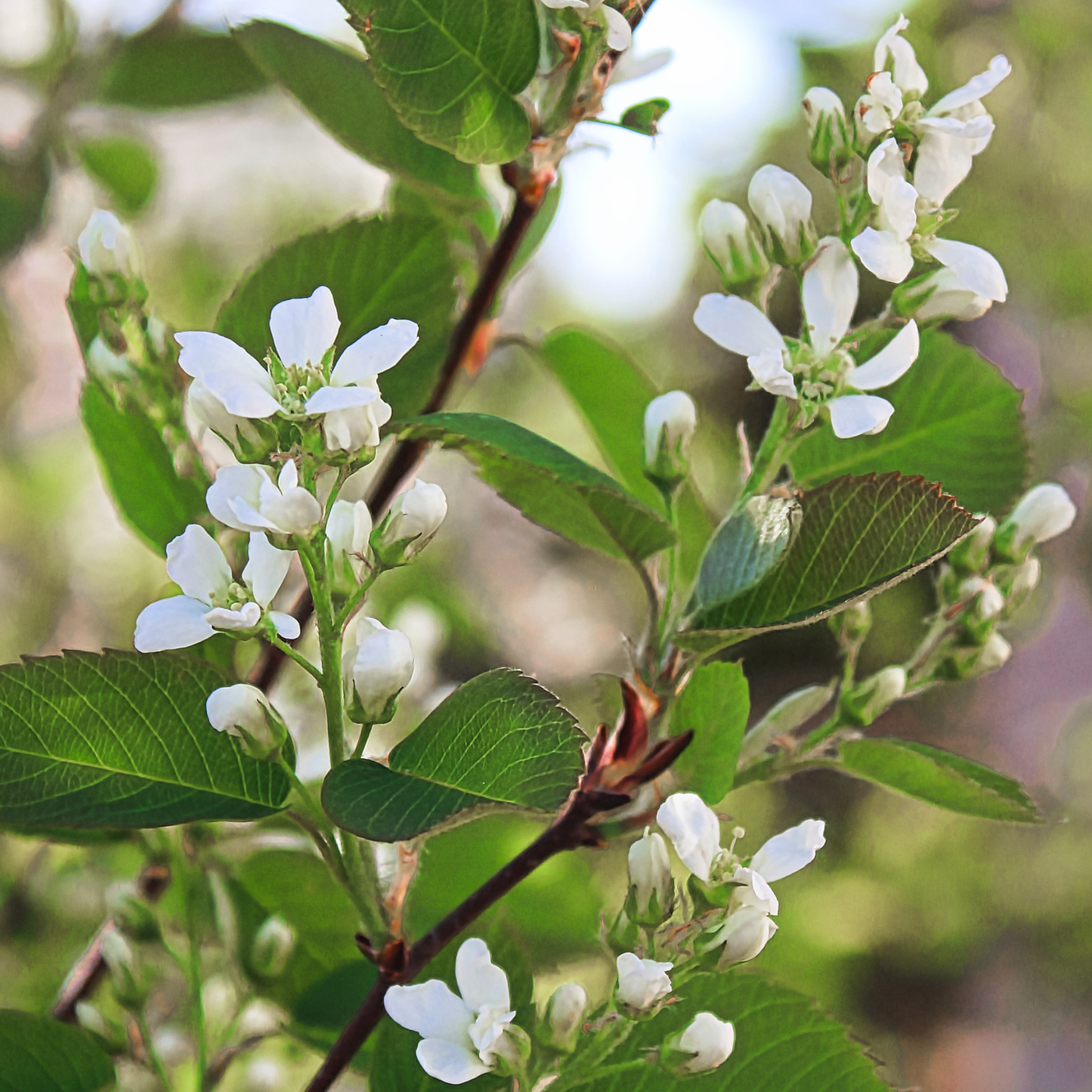


Saskatoon Berry Tree Seeds | Saskatoon Serviceberry | (Amelanchier alnifolia)
Saskatoon Berry Tree Seeds | Saskatoon Serviceberry | (Amelanchier alnifolia)
The berry that fed the frontier. The shrub that feeds everything else.
Amelanchier alnifolia, the Saskatoon Berry, is one of the most productive and ecologically valuable native shrubs in North America. It produces sweet, blueberry-like fruit early in the season and supports pollinators, birds, and wildlife from spring through winter. With early white blooms, cold-hardiness, and adaptability to tough conditions, it earns its place in any functional landscape.
- Produces sweet, blueberry-like fruit early in summer
- Critical early-season nectar source for bees and pollinators
- Extremely cold-hardy, thriving to zone 2
- High wildlife value; berries feed dozens of bird and animal species
- Drought-tolerant and adaptable to a wide range of soils
Things You Probably Didn’t Know
It helped sustain entire cultures.
Saskatoon Berries were a key ingredient in pemmican, a nutrient-dense food relied on by Indigenous peoples for survival during long winters and travel.
It gave a city its name.
The city of Saskatoon, Saskatchewan, is named after this plant, derived from the Cree word misâskwatômina.
It blooms before almost everything else.
Often flowering while snow is still on the ground, it provides essential early nectar for pollinators emerging from winter.
The fruit is highly nutritious.
Saskatoon Berries are rich in antioxidants, fiber, and minerals like iron and magnesium, making them comparable to or exceeding blueberries in nutritional value.
Growing Details
- Botanical Name: Amelanchier alnifolia
- Stratification: Required; 90 days cold moist stratification
- USDA Zones: 2–7
- Soil: Adaptable; prefers well-drained loamy or sandy soil
- Light: Full sun to partial shade
- Height: 6–15 feet
- Spread: 6–12 feet
- Growth Rate: Moderate (1–2 ft/year)
Plant it at the edge of a field or along a fence line and let it feed the bees in spring, you in summer, and the birds all winter long.
FAQ
FAQ
Do you pre-stratify the seeds?
Most of our seeds are not pre-stratified. We ship them unstratified so you can control germination timing based on your local growing season. We sell to all 50 U.S. states and Canadian provinces, and since each region has different planting windows, pre-stratifying would risk seeds germinating in transit or before you're ready to plant.
True stratification requires cold, moist conditions, which can lead to premature sprouting or mold if not timed properly. To avoid this, we store most seeds in dry cold conditions to preserve viability — but this does not initiate stratification.
Do any of your seeds need to stay moist? (Recalcitrant seeds)
Yes — some species we offer are recalcitrant, meaning they must remain moist to stay viable and cannot be dried out. Examples include: Chestnut, Hazelnut, Paw Paw, etc.
These seeds are shipped in moist cold storage and are clearly labeled on the product page when applicable. Please refrigerate immediately upon arrival and follow included care instructions.
Do you ship internationally?
We currently ship to the United States and Canada only. Unfortunately, we cannot ship to other countries without a phytosanitary certificate, which is required by most international customs agencies.
If you're interested in shipping outside North America, please contact us. Note that a phytosanitary certificate typically adds $60–$80 USD per seed type and must be arranged in advance.
Shipping & What's Included
Shipping & What's Included
Shipping & Packaging
Hand-packed in resealable zipper kraft paper seed bags
Stratification and planting instructions included with every order
1 free bonus seed pack included with every order
Ships within 3–5 business days via USPS
Return Policy
Return Policy
Due to the nature of our products, we do not accept returns on seeds.
However, if your order arrives damaged or incorrect, please contact us within 7 days and we’ll make it right.