

Rocky Mountain Juniper Tree Seeds | Rocky Mt. Juniper | (Juniperus scopulorum)
Rocky Mountain Juniper Tree Seeds | Rocky Mt. Juniper | (Juniperus scopulorum)
The silver sentinel of the mountain west. Year-round and nearly indestructible.
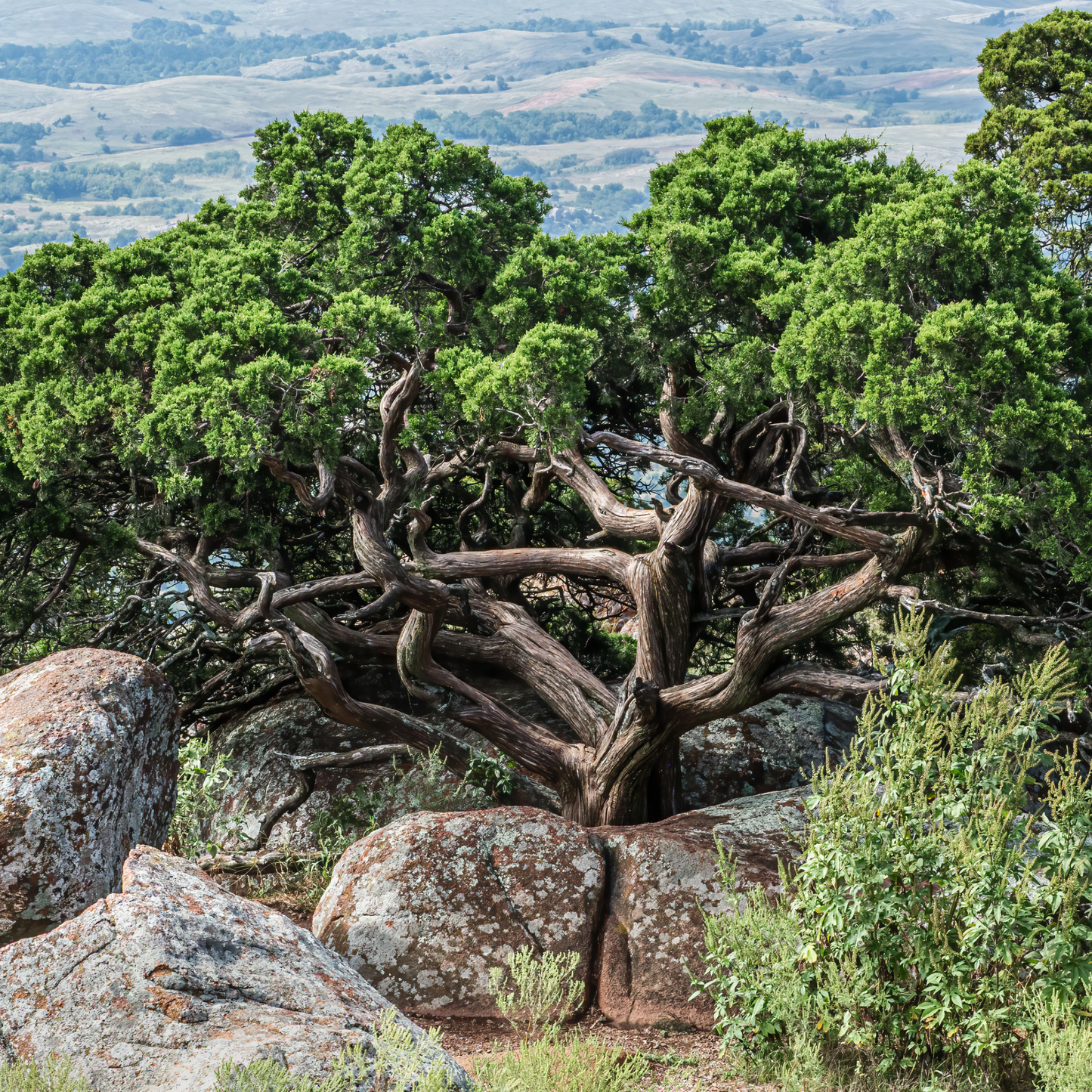
Juniperus scopulorum, the Rocky Mountain Juniper, is the most cold-tolerant and drought-resistant juniper native to western North America, a slow-growing evergreen that once established demands almost nothing from the landscape while providing year-round structure, wildlife habitat, and windbreak. Its silvery-blue to gray-green foliage, aromatic wood, and dense habit make it one of the most valued native conifers for difficult western sites where other trees fail. It grows naturally on rocky ridges, dry hillsides, and high plains from British Columbia to Texas where temperatures swing 100 degrees between summer and winter. If you are looking to buy Rocky Mountain Juniper seeds or grow this native western juniper from seed, this is a tree that was built for conditions most others cannot handle.
- Exceptionally drought-tolerant and cold-hardy, thriving in zones 3 to 7 across a wide range of difficult sites
- Dense, aromatic, silvery-blue to gray-green foliage providing year-round privacy and windbreak
- Blue berry-like cones eaten by cedar waxwings, bluebirds, and over 20 other bird species
- Extremely long-lived, with documented specimens exceeding 2,000 years in the wild
- Naturally adapted to poor, rocky, alkaline, or clay soils where most conifers fail
Things you probably did not know about the Rocky Mountain Juniper
Some specimens are among the oldest living things in North America. Rocky Mountain Junipers growing on exposed limestone ridges in Utah and Nevada have been dated at over 2,000 years old, with the oldest verified specimens approaching 3,000 years. Their slow growth in harsh conditions means annual rings are so thin they require specialist equipment to count. These ancient trees witnessed the rise and fall of entire civilizations.
The aromatic wood has been sacred to Indigenous peoples for thousands of years. Rocky Mountain Juniper wood and foliage are among the most widely used ceremonial plants across the tribes of the Great Plains and Rocky Mountain region. It is burned for purification, woven into prayer items, and used in healing ceremonies across dozens of distinct cultural traditions. The fragrance carries deep spiritual significance that has been maintained continuously for thousands of years.
Birds plant it more effectively than humans do. Rocky Mountain Juniper depends heavily on birds, particularly cedar waxwings, American robins, and Townsend's solitaires, to disperse its seeds. The birds consume the blue berries and deposit the seeds across the landscape in their droppings. A single cedar waxwing flock can disperse thousands of juniper seeds in a single day, which is one reason juniper woodlands expand naturally along bird travel corridors.
The wood naturally repels insects. Like Eastern Red Cedar, Rocky Mountain Juniper wood contains aromatic compounds that inhibit insect activity, which is why it was used for storage chests, closets, and protective wrappings by Indigenous peoples and early settlers. The same properties make aged juniper fence posts extraordinarily rot-resistant in dry western climates.
Growing Details
- Botanical Name: Juniperus scopulorum
- Stratification: Required, 90 to 120 days warm followed by 60 days cold stratification
- USDA Zones: 3 to 7
- Soil: Extremely adaptable, tolerates poor, rocky, dry, alkaline, or clay soils
- Light: Full sun
- Height: 30 to 40 feet
- Spread: 3 to 15 feet depending on form
- Growth Rate: Slow, 6 to 12 inches per year
Plant it where the conditions are dry and difficult and leave it alone. It was designed for exactly that situation and it will be there long after everything planted beside it is gone.
FAQ
FAQ
Do you pre-stratify the seeds?
Most of our seeds are not pre-stratified. They are stored under dry, cold conditions to preserve viability without initiating stratification, allowing you to time germination for your local growing season.
The exception is recalcitrant seeds. Because these seeds must remain moist to stay viable, they are kept in moist, cold storage and are therefore in a pre-stratified state. Depending on how long a particular batch has been stored, some may arrive with an emerging radicle and be ready to plant immediately. Radicle development is not guaranteed.
Please refer to the individual product page and included growing instructions for species-specific requirements.
Do any of your seeds need to stay moist? (Recalcitrant seeds)
Yes. Some species we offer, including Chestnut, Hazelnut, and Paw Paw, are recalcitrant and must remain moist to stay viable.
Please refrigerate these seeds immediately upon arrival unless they have already developed a radicle. Seeds with an emerging radicle should be planted promptly.
Do you ship internationally?
No. We currently ship within the United States only.
We previously shipped to Canada, but tariffs, duties, and import fees resulted in customers receiving significant and unpredictable additional charges upon delivery. Because we cannot reliably calculate or absorb these costs, we have suspended shipping to Canada.
At this time, we do not ship to Canada or other international destinations.
Shipping & What's Included
Shipping & What's Included
Shipping & Packaging
• Hand-packed in resealable kraft paper seed bags
• Stratification and planting instructions included on every seed pack
• Ships within 3–5 business days via USPS within the United States and U.S. territories
Return Policy
Return Policy
Due to the nature of our products, we do not accept returns on seeds.
If your order arrives damaged, contains incorrect items, or is missing items, please contact us within 7 days of delivery so we can resolve the issue.