

Rocky Mountain Bristlecone Pine Tree Seeds | (Pinus Aristata)
Rocky Mountain Bristlecone Pine Tree Seeds | (Pinus Aristata)
Rocky Mountain Bristlecone Pine Tree Seeds (Pinus aristata)
Ancient. Resilient. A different bristlecone from a different mountain.
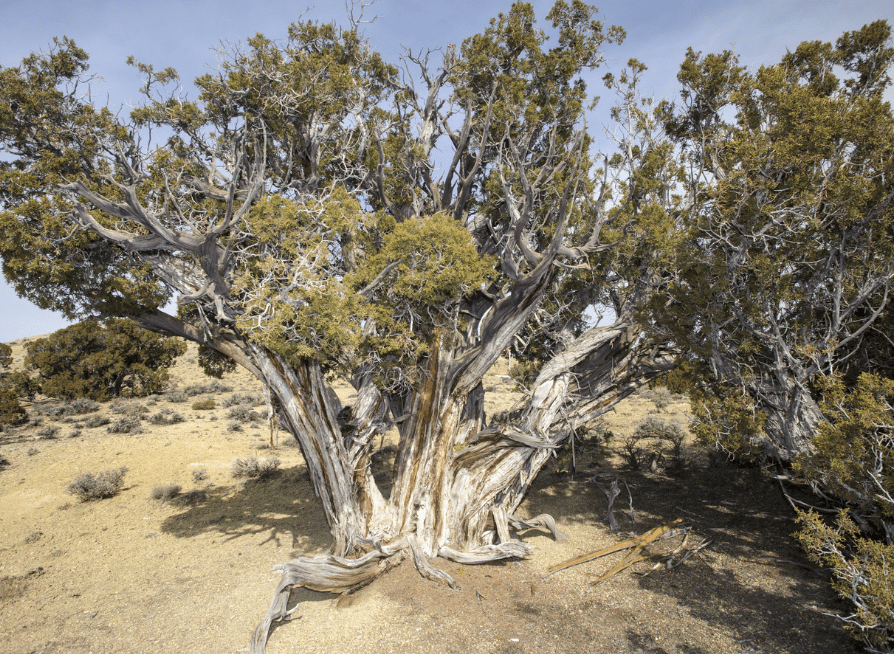
Pinus aristata, the Rocky Mountain Bristlecone Pine, is the bristlecone pine of Colorado, New Mexico, and Arizona, growing on the high subalpine peaks of the southern Rocky Mountains at elevations between 9,000 and 12,000 feet where the air is thin, the soil is thin, and the winters are long and brutal. It is closely related to the Great Basin Bristlecone Pine but is a distinct species with its own geographic range, its own population genetics, and its own extraordinary longevity, with documented specimens exceeding 2,000 years old on the exposed dolomite ridges of the Colorado Rockies. It differs visually from its Great Basin relative in one immediately recognizable way: its needles bear tiny white resin flecks that give them a distinctive speckled appearance not present in Pinus longaeva. If you are looking to buy Rocky Mountain Bristlecone Pine seeds or grow this ancient subalpine conifer from seed, this is the bristlecone of the southern Rockies with a story as old as human civilization.
- The bristlecone pine of the southern Rocky Mountains, growing on high subalpine peaks from Colorado to Arizona
- Documented specimens over 2,000 years old on exposed rocky ridges of the Colorado mountains
- Distinctive white resin flecks on the needles immediately differentiating it from Great Basin Bristlecone Pine
- Extremely cold-hardy and drought-tolerant, adapted to the most severe growing conditions of the southern Rockies
- Slow-growing, resinous, and virtually immune to wood decay, persisting long after death as standing or fallen wood
Things you probably did not know about the Rocky Mountain Bristlecone Pine
It was confused with the Great Basin Bristlecone Pine for decades and the species were only formally separated in 1970. Until 1970, Pinus aristata and Pinus longaeva were considered varieties of a single species. When Dana Bailey formally separated them based on differences in needle resin flecking, cone structure, and geographic isolation, the two populations were recognized as distinct species that had been evolving independently for millions of years. The separation explains why the oldest documented specimens are Great Basin Bristlecones from California and Nevada rather than Rocky Mountain trees from Colorado.
The white resin flecks on the needles are produced by resin ducts that exude resin to the needle surface. The distinctive white spots on Rocky Mountain Bristlecone Pine needles are dried resin deposits that exude from subepidermal resin canals onto the needle surface and harden into white dots. This surface resin is not present in Great Basin Bristlecone Pine needles, making needle inspection the most reliable field identification feature between the two species. The resin production may provide additional protection against fungal infection and insect attack at the high-elevation sites where the species grows.
The trees grow in the same exposed, harsh conditions that paradoxically extend their lifespan. Rocky Mountain Bristlecone Pines growing on the most exposed, rocky, nutrient-poor sites grow the slowest and live the longest, while trees in more favorable conditions grow faster and die younger. This inverse relationship between growing conditions and lifespan is consistently observed across bristlecone populations and is thought to result from the extreme metabolic slowness of trees on harsh sites producing less cellular damage over time than faster-growing trees in better conditions.
The standing dead wood preserves for thousands of years at high elevation. The combination of cold temperatures, low humidity, and the natural resin saturation of the wood means that dead Rocky Mountain Bristlecone Pines standing on exposed ridges can persist for 4,000 to 6,000 years after death without significant decay. Researchers studying climate history have used the wood of these ancient dead trees, cross-dated with living specimens, to extend continuous tree ring records back over 8,000 years in some Rocky Mountain locations.
Growing Details
- Botanical Name: Pinus aristata
- Stratification: Required, 30 to 60 days cold stratification
- USDA Zones: 4 to 7
- Soil: Well-drained, rocky, poor quality, alkaline to neutral, excellent drainage essential
- Light: Full sun
- Height: 8 to 20 feet in cultivation, shorter on the most exposed sites
- Spread: 8 to 15 feet
- Growth Rate: Very slow, 3 to 6 inches per year
Plant it in full sun in the driest, rockiest, most exposed site available and expect it to outlive everything else you plant by a wide margin. Some of the trees started from these seeds will still be alive in the year 4000.
FAQ
FAQ
Do you pre-stratify the seeds?
Most of our seeds are not pre-stratified. They are stored under dry, cold conditions to preserve viability without initiating stratification, allowing you to time germination for your local growing season.
The exception is recalcitrant seeds. Because these seeds must remain moist to stay viable, they are kept in moist, cold storage and are therefore in a pre-stratified state. Depending on how long a particular batch has been stored, some may arrive with an emerging radicle and be ready to plant immediately. Radicle development is not guaranteed.
Please refer to the individual product page and included growing instructions for species-specific requirements.
Do any of your seeds need to stay moist? (Recalcitrant seeds)
Yes. Some species we offer, including Chestnut, Hazelnut, and Paw Paw, are recalcitrant and must remain moist to stay viable.
Please refrigerate these seeds immediately upon arrival unless they have already developed a radicle. Seeds with an emerging radicle should be planted promptly.
Do you ship internationally?
No. We currently ship within the United States only.
We previously shipped to Canada, but tariffs, duties, and import fees resulted in customers receiving significant and unpredictable additional charges upon delivery. Because we cannot reliably calculate or absorb these costs, we have suspended shipping to Canada.
At this time, we do not ship to Canada or other international destinations.
Shipping & What's Included
Shipping & What's Included
Shipping & Packaging
• Hand-packed in resealable kraft paper seed bags
• Stratification and planting instructions included on every seed pack
• Ships within 3–5 business days via USPS within the United States and U.S. territories
Return Policy
Return Policy
Due to the nature of our products, we do not accept returns on seeds.
If your order arrives damaged, contains incorrect items, or is missing items, please contact us within 7 days of delivery so we can resolve the issue.