

Red Snakebark Maple Tree Seeds | Snakebark Maple | (Acer capillipes)
Red Snakebark Maple Tree Seeds | Snakebark Maple | (Acer capillipes)
Striped bark that looks painted. The maple that earns attention in winter.
Acer capillipes, the Red Snakebark Maple, is one of the most ornamentally distinctive small maples available in temperate horticulture, producing bark with a characteristic pattern of white stripes on green to red-green background that gives the trunk and branches the appearance of a snake's scales, developing year-round ornamental interest that most ornamental trees reserve for a single season. Native to the mountain forests of central Japan, it develops into a graceful, multi-stemmed small tree with excellent fall color in orange and crimson that rivals many larger maples for intensity, and the deeply lobed, reddish-tinged new leaves in spring add a third season of distinction. In winter, when the striped bark is fully visible without any competing foliage, the tree becomes one of the most visually interesting elements in any garden. If you are looking to buy Red Snakebark Maple seeds or grow this Japanese native from seed, this is the maple that earns its place in the garden by doing something different in every season.
- Distinctive white-striped bark on green to red-green background creating a snake-scale pattern unique among temperate trees
- Most ornamentally striking in winter when bare bark is fully visible against snow or evergreen backgrounds
- Reddish-tinged new leaves in spring adding a distinctive fourth season of color interest
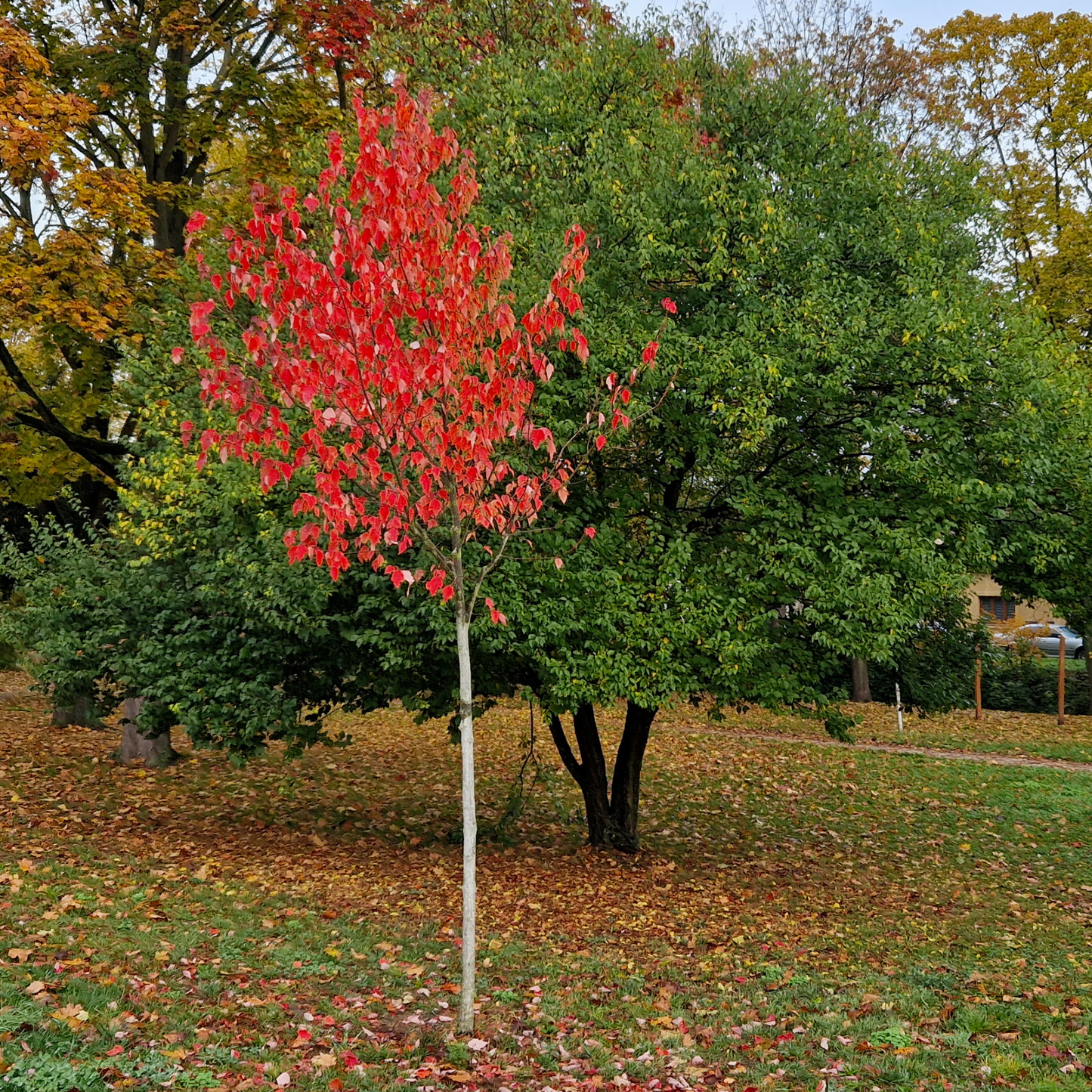
- Brilliant orange to crimson fall color, one of the finest fall displays of any small Japanese maple species
- Multi-stemmed, graceful form fitting smaller garden spaces where large maples are impractical
Things you probably did not know about the Red Snakebark Maple
The striped bark is caused by a layer of photosynthetically active tissue just beneath the thin outer bark. The characteristic white stripes of Acer capillipes and related snakebark maples are not surface markings but lenticels, pores in the bark that allow gas exchange and create the pale striped pattern against the green bark surface. The green color between the stripes comes from chlorophyll in the living bark tissue, which is capable of carrying out photosynthesis in winter when the leaves are absent, similar to the bark photosynthesis of Blue Palo Verde in the desert. The striped snakebark maples supplement their annual energy budget through bark photosynthesis in a way that most deciduous trees cannot.
There are approximately 20 snakebark maple species, all from Asia except one North American species. The snakebark maples form a distinctive group within the Acer genus recognized by their characteristic striped bark, primarily distributed across China, Japan, and Korea with a single representative, Acer pensylvanicum, native to eastern North America. The convergent evolution of striped bark across multiple maple species on different continents suggests that this bark characteristic provides some shared functional advantage, though the specific benefit is not fully understood.
The species was introduced to western horticulture by Ernest Wilson during his Japanese expeditions in the early 20th century. E.H. Wilson, the plant hunter responsible for introducing hundreds of Asian ornamentals to western gardens, collected Acer capillipes in Japan and introduced it to the Arnold Arboretum and subsequently to European gardens in the early 1900s. It has been grown in botanical collections and specialist nurseries since that introduction but remains relatively uncommon in general garden culture despite its exceptional ornamental qualities.
Seed-grown plants show variation in the intensity and pattern of bark striping. The characteristic striped bark of Acer capillipes develops gradually as the tree matures, with the pattern becoming clearer and more pronounced as the bark thickens. Seed-grown specimens vary in the intensity of the stripe pattern and the degree of reddish coloration in the green bark between stripes, making each plant develop its own individual bark character over the years.
Growing Details
- Botanical Name: Acer capillipes
- Stratification: Required, 90 to 120 days cold moist stratification
- USDA Zones: 5 to 7
- Soil: Well-drained, moist, slightly acidic, rich in organic matter
- Light: Full sun to partial shade, best bark color in some direct sun
- Height: 20 to 30 feet
- Spread: 15 to 25 feet
- Growth Rate: Moderate, 1 to 1.5 feet per year
Plant it where the winter bark will be visible from inside the house and from a regularly used path. In January when it is bare it becomes the most interesting tree in the garden. That is the season it was made for.
FAQ
FAQ
Do you pre-stratify the seeds?
Most of our seeds are not pre-stratified. They are stored under dry, cold conditions to preserve viability without initiating stratification, allowing you to time germination for your local growing season.
The exception is recalcitrant seeds. Because these seeds must remain moist to stay viable, they are kept in moist, cold storage and are therefore in a pre-stratified state. Depending on how long a particular batch has been stored, some may arrive with an emerging radicle and be ready to plant immediately. Radicle development is not guaranteed.
Please refer to the individual product page and included growing instructions for species-specific requirements.
Do any of your seeds need to stay moist? (Recalcitrant seeds)
Yes. Some species we offer, including Chestnut, Hazelnut, and Paw Paw, are recalcitrant and must remain moist to stay viable.
Please refrigerate these seeds immediately upon arrival unless they have already developed a radicle. Seeds with an emerging radicle should be planted promptly.
Do you ship internationally?
No. We currently ship within the United States only.
We previously shipped to Canada, but tariffs, duties, and import fees resulted in customers receiving significant and unpredictable additional charges upon delivery. Because we cannot reliably calculate or absorb these costs, we have suspended shipping to Canada.
At this time, we do not ship to Canada or other international destinations.
Shipping & What's Included
Shipping & What's Included
Shipping & Packaging
• Hand-packed in resealable kraft paper seed bags
• Stratification and planting instructions included on every seed pack
• Ships within 3–5 business days via USPS within the United States and U.S. territories
Return Policy
Return Policy
Due to the nature of our products, we do not accept returns on seeds.
If your order arrives damaged, contains incorrect items, or is missing items, please contact us within 7 days of delivery so we can resolve the issue.