

Red Mulberry Tree Seeds | American Mulberry | (Morus rubra)
Red Mulberry Tree Seeds | American Mulberry | (Morus rubra)
The native mulberry. The sweetest berry the wildlife finds first. The tree that feeds everything.
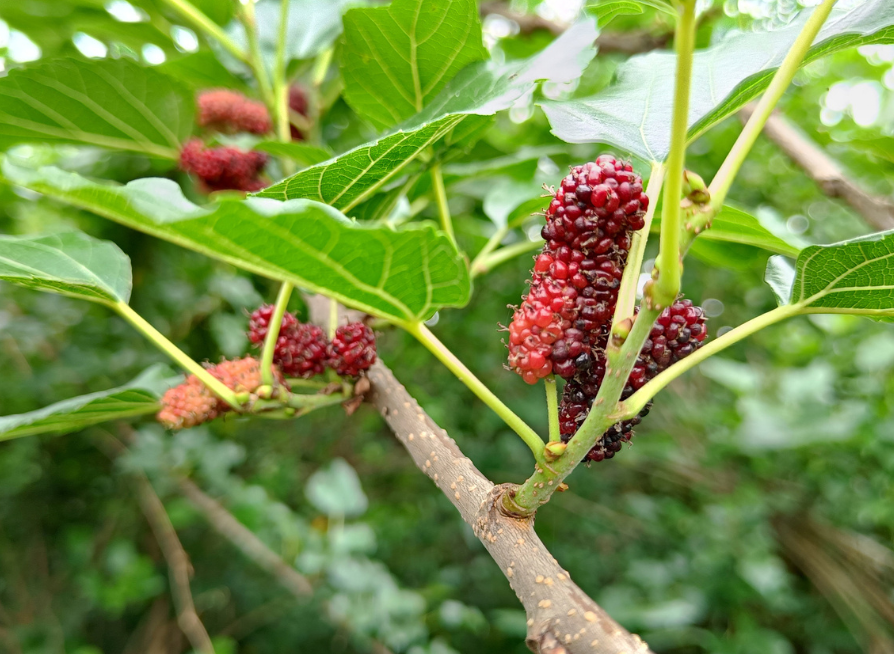
Morus rubra, the Red Mulberry or American Mulberry, is the only mulberry species native to eastern North America, a fast-growing native hardwood that produces heavy crops of sweet, dark red to nearly black berries in early summer that are consumed more intensely by more wildlife species than the fruit of almost any other native tree in the eastern forest. Over 60 species of birds, from scarlet tanagers to cedar waxwings to wood ducks, eat Red Mulberry fruit. Deer, raccoons, foxes, opossums, and black bears consume them in quantity. Humans who encounter a ripe Red Mulberry discover a berry sweeter, larger, and more flavorful than the white mulberry that most people know. It is also the host plant for the silkworm in North America and a genuinely fast-growing, adaptable native tree that provides food, wildlife habitat, and quick canopy in almost any garden situation. If you are looking to buy Red Mulberry seeds or grow American Mulberry from seed, this is the most productive native wildlife fruit tree in the eastern United States.
- Heavy crops of sweet, dark red to nearly black berries eaten by over 60 bird species and dozens of mammal species
- Sweeter and more flavorful than White Mulberry, with larger berries and more complex flavor
- Fast-growing native hardwood adaptable to a wide range of soils and conditions
- The only mulberry species native to eastern North America, ecologically matched to native wildlife
- Host plant for native silk moths as well as the domesticated silkworm
Things you probably did not know about the Red Mulberry
It was heavily used as a food and fiber plant by Indigenous peoples across eastern North America. Red Mulberry was one of the most broadly utilized native plants in eastern North American Indigenous cultures. The fruit was eaten fresh, dried into cakes for winter storage, and fermented into beverages. The bark fiber was woven into cloth, rope, and baskets. The milky latex in the sap was used medicinally. The wood was used for fence posts and construction where rot resistance was needed. Few native trees contributed so completely to daily material life across so many different Indigenous cultural traditions.
The fruit ripening in early summer coincides precisely with peak songbird migration and nesting. Red Mulberry fruits ripen in May and June in the Southeast and June and July further north, a timing that coincides exactly with the peak of the breeding season for most songbirds and with the northward passage of late spring migrants. Parent birds feeding nestlings and migrating birds fueling for long flights both concentrate on Red Mulberry fruit during this period, making a single fruiting tree visible evidence of bird activity every day through the fruiting season.
It is under threat from hybridization with the introduced White Mulberry. Morus alba, the White Mulberry, introduced from Asia centuries ago for silk production and now naturalized across eastern North America, hybridizes freely with native Red Mulberry where the two species grow in proximity. The resulting hybrids are intermediate in characteristics and fertile, capable of producing further hybrid offspring. As White Mulberry has spread and become increasingly common in disturbed areas, pure Red Mulberry populations have declined in some regions due to hybridization pressure that dilutes the genetic identity of the native species.
The wood is naturally rot-resistant and was historically used for fence posts and boat building. Red Mulberry heartwood contains compounds that resist fungal decay with effectiveness comparable to Black Locust and Osage Orange, making it one of the most rot-resistant native hardwoods available in the eastern United States. Indigenous peoples used it for canoe building and later European settlers used it for fence posts that lasted for decades in ground contact. The combination of rot resistance and moderate hardness made it particularly valued for specific applications where wood in contact with soil or water was required.
Growing Details
- Botanical Name: Morus rubra
- Stratification: Required, 60 to 90 days cold stratification
- USDA Zones: 4 to 9
- Soil: Extremely adaptable, tolerates poor, dry, wet, and disturbed soils
- Light: Full sun to partial shade
- Height: 35 to 70 feet
- Spread: 35 to 50 feet
- Growth Rate: Fast, 2 to 3 feet per year
Plant it where the summer fruit drop can be tolerated and where birds are welcome. The staining from fallen fruit is substantial beneath large specimens. The birds, however, are extraordinary. Every morning of the fruiting season is a wildlife spectacle that no feeder can replicate.
FAQ
FAQ
Do you pre-stratify the seeds?
Most of our seeds are not pre-stratified. They are stored under dry, cold conditions to preserve viability without initiating stratification, allowing you to time germination for your local growing season.
The exception is recalcitrant seeds. Because these seeds must remain moist to stay viable, they are kept in moist, cold storage and are therefore in a pre-stratified state. Depending on how long a particular batch has been stored, some may arrive with an emerging radicle and be ready to plant immediately. Radicle development is not guaranteed.
Please refer to the individual product page and included growing instructions for species-specific requirements.
Do any of your seeds need to stay moist? (Recalcitrant seeds)
Yes. Some species we offer, including Chestnut, Hazelnut, and Paw Paw, are recalcitrant and must remain moist to stay viable.
Please refrigerate these seeds immediately upon arrival unless they have already developed a radicle. Seeds with an emerging radicle should be planted promptly.
Do you ship internationally?
No. We currently ship within the United States only.
We previously shipped to Canada, but tariffs, duties, and import fees resulted in customers receiving significant and unpredictable additional charges upon delivery. Because we cannot reliably calculate or absorb these costs, we have suspended shipping to Canada.
At this time, we do not ship to Canada or other international destinations.
Shipping & What's Included
Shipping & What's Included
Shipping & Packaging
• Hand-packed in resealable kraft paper seed bags
• Stratification and planting instructions included on every seed pack
• Ships within 3–5 business days via USPS within the United States and U.S. territories
Return Policy
Return Policy
Due to the nature of our products, we do not accept returns on seeds.
If your order arrives damaged, contains incorrect items, or is missing items, please contact us within 7 days of delivery so we can resolve the issue.