

Red Elderberry Seeds-(sambucus racemosa)
Red Elderberry Seeds-(sambucus racemosa)
The northern elderberry. Bold flowers. Brilliant fruit. Wildlife essential.
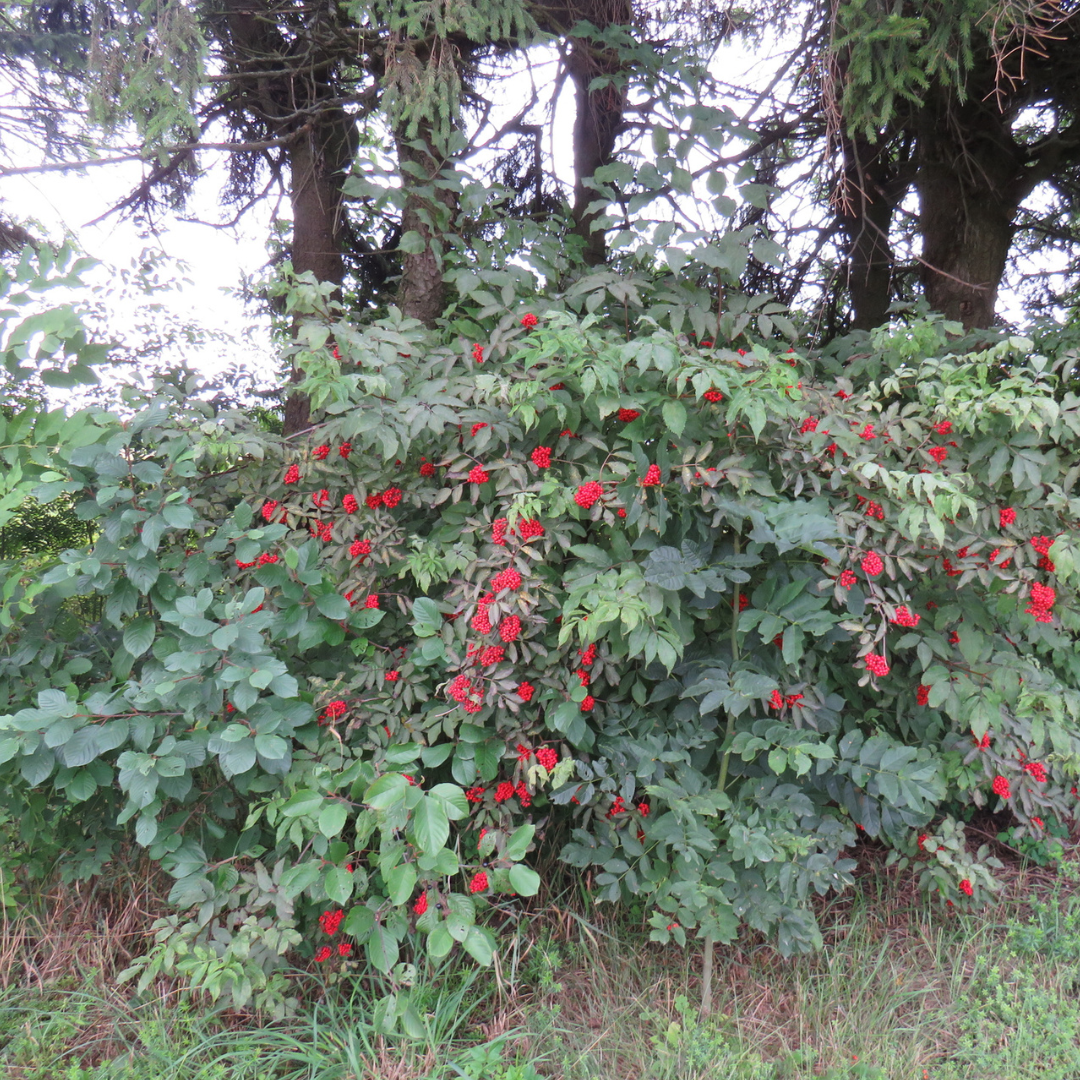
Sambucus racemosa, the Red Elderberry, is the most cold-hardy elderberry species in North America, native from the Arctic tree line through the Rocky Mountains and across the northern tier of the continent in conditions that would kill its American Black Elderberry relative. It produces large, pyramidal clusters of creamy white flowers in spring followed by brilliant red to scarlet berries that ripen in midsummer, weeks earlier than any other elderberry, creating one of the most vivid red berry displays available in a native woodland shrub. The berries are eaten intensively by songbirds during the critical pre-migration feeding period in late summer and the shrub's dense habit provides essential nesting cover in the cool, moist forests and mountain slopes where it grows. If you are looking to buy Red Elderberry seeds or grow this northern native from seed, this is the elderberry for cold climates, mountain gardens, and cool-summer landscapes where the Black Elderberry performs less reliably.
- Brilliant red berries ripening in midsummer, weeks earlier than Black Elderberry, consumed intensively by songbirds
- The most cold-hardy elderberry in North America, thriving in zone 3 conditions that stress other elderberry species
- Large pyramidal flower clusters in spring attractive to native bees and pollinators
- Native across northern North America from Newfoundland through the Rocky Mountains to Alaska
- Dense multi-stemmed habit providing critical nesting cover for forest songbirds
Things you probably did not know about the Red Elderberry
The berries are mildly toxic when raw but safe when cooked. Red Elderberry berries contain sambunigrin, a cyanogenic glycoside that causes nausea and vomiting when berries are consumed raw in significant quantities. Cooking or drying the berries destroys this compound completely, and cooked Red Elderberry has been used for jellies, wines, and medicinal preparations across its range by Indigenous peoples for centuries. Birds are not affected by sambunigrin and consume the berries freely. This is the primary reason the berries should not be eaten raw off the bush.
It is one of the fastest-establishing native shrubs in disturbed or logged forest habitat. Red Elderberry is a classic forest edge and disturbance pioneer, one of the first native shrubs to colonize logged areas, burned sites, and avalanche paths in mountain and northern forest environments. It grows rapidly from seed after disturbance, providing quick wildlife cover and food while slower-recovering species establish. This pioneer role makes it ecologically important far beyond its own food and cover contributions.
Indigenous peoples of the Pacific Coast used the hollow stems as blowguns and flutes. The pithy, hollow stems of Red Elderberry have been used across Pacific Coast and northern woodland cultures for centuries as blowgun tubes for small game, as flutes and whistles for music and ceremony, and as spouts for extracting honey and other liquids from containers. The hollow stems are easily cleaned and provide a naturally formed tube that requires no additional shaping.
The flowers can be used for elderflower cordial with the same technique as Black Elderberry. Red Elderberry flowers have a similar delicate muscat fragrance to Black Elderberry flowers and can be used to make elderflower cordial, fritters, and wine using the same methods. The flavor is slightly different but the culinary applications are comparable. Harvesting the flowers before they fully open gives the most fragrant and flavorful result.
Growing Details
- Botanical Name: Sambucus racemosa
- Stratification: Required, 60 to 90 days cold moist stratification
- USDA Zones: 3 to 7
- Soil: Moist, rich, well-drained to moderately wet, slightly acidic
- Light: Full sun to partial shade
- Height: 5 to 15 feet
- Spread: 5 to 12 feet, spreading by root suckers
- Growth Rate: Fast, 2 to 4 feet per year in ideal conditions
Plant it in a cool, moist site in partial shade at the edge of a woodland or along a north-facing slope. In a cold climate where Black Elderberry struggles, Red Elderberry thrives and delivers the same ecological value at the latitude and elevation where it belongs.
FAQ
FAQ
Do you pre-stratify the seeds?
Most of our seeds are not pre-stratified. They are stored under dry, cold conditions to preserve viability without initiating stratification, allowing you to time germination for your local growing season.
The exception is recalcitrant seeds. Because these seeds must remain moist to stay viable, they are kept in moist, cold storage and are therefore in a pre-stratified state. Depending on how long a particular batch has been stored, some may arrive with an emerging radicle and be ready to plant immediately. Radicle development is not guaranteed.
Please refer to the individual product page and included growing instructions for species-specific requirements.
Do any of your seeds need to stay moist? (Recalcitrant seeds)
Yes. Some species we offer, including Chestnut, Hazelnut, and Paw Paw, are recalcitrant and must remain moist to stay viable.
Please refrigerate these seeds immediately upon arrival unless they have already developed a radicle. Seeds with an emerging radicle should be planted promptly.
Do you ship internationally?
No. We currently ship within the United States only.
We previously shipped to Canada, but tariffs, duties, and import fees resulted in customers receiving significant and unpredictable additional charges upon delivery. Because we cannot reliably calculate or absorb these costs, we have suspended shipping to Canada.
At this time, we do not ship to Canada or other international destinations.
Shipping & What's Included
Shipping & What's Included
Shipping & Packaging
• Hand-packed in resealable kraft paper seed bags
• Stratification and planting instructions included on every seed pack
• Ships within 3–5 business days via USPS within the United States and U.S. territories
Return Policy
Return Policy
Due to the nature of our products, we do not accept returns on seeds.
If your order arrives damaged, contains incorrect items, or is missing items, please contact us within 7 days of delivery so we can resolve the issue.