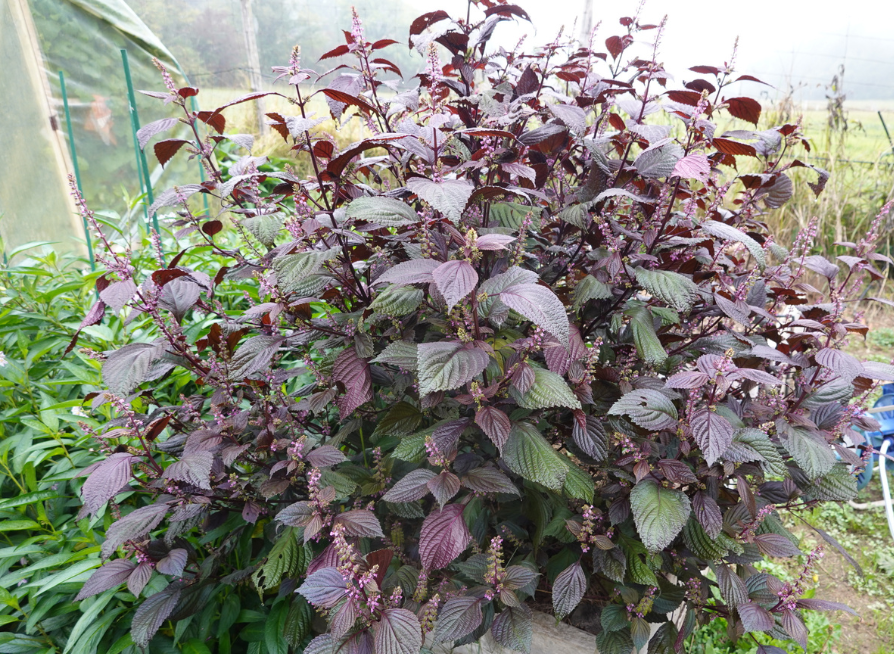


Purple Leaf Perilla Seeds | Shiso | (Perilla frutescens)
Purple Leaf Perilla Seeds | Shiso | (Perilla frutescens)
The herb that built Korean and Japanese cuisine. Intensely aromatic. Effortlessly productive.
Perilla frutescens, known as Perilla, Shiso, or Beefsteak Plant, is one of the most important culinary herbs in East Asian cooking, a fast-growing annual or short-lived perennial in the mint family native to the mountain regions of China, India, and Southeast Asia that has been cultivated in Japan, Korea, and China for over 2,000 years as a food, medicine, and dye plant. The purple-leaved form produces striking, deeply serrated leaves in rich burgundy to dark purple with a metallic sheen that makes it one of the most ornamentally attractive culinary herbs available in any garden. The flavor is intensely aromatic, combining notes of anise, cinnamon, citrus, and mint in a complex, distinctive profile that is unlike any other culinary herb and that defines specific flavor profiles in Japanese and Korean cuisine the way basil defines Italian cooking. If you are looking to buy Perilla seeds or grow shiso from seed, this is the herb that grows itself once you start it and produces continuously through summer.
- Intensely aromatic leaves combining anise, cinnamon, citrus, and mint in a flavor profile unique among culinary herbs
- Purple-leaved form produces striking, deeply serrated burgundy-purple leaves with metallic sheen
- Fast-growing annual that self-seeds reliably, returning year after year without replanting in warm climates
- Used in Japanese and Korean cuisine for sushi, tempura, kimchi, pickles, and teas for over 2,000 years
- Produces continuously through the growing season, with young leaves the most aromatic and flavorful
Things you probably did not know about Perilla
Perilla is the source of one of the most commercially important seed oils in East Asia. Perilla seed oil, pressed from the seeds that form in late summer, is extremely high in alpha-linolenic acid, an omega-3 fatty acid, with a concentration exceeding that of flaxseed oil. In Korea and Japan, perilla seed oil has been used for cooking, wood preservation, lamp oil, and ink production for centuries. The combination of high omega-3 content and pleasant flavor has made perilla seed oil increasingly popular in health food markets in North America and Europe.
The plant was used to revive people poisoned by eating bad seafood in traditional Japanese and Chinese medicine. Perilla contains rosmarinic acid and other compounds with documented antimicrobial and anti-inflammatory properties, and traditional Chinese and Japanese medical practice specifically prescribed perilla preparations for seafood poisoning and digestive complaints related to consuming raw fish. The practice of serving shiso leaves alongside sashimi in Japanese cuisine is not merely aesthetic but reflects this centuries-old understanding of the plant's protective properties.
The purple color of the leaves comes from anthocyanin pigments that are used as a natural food dye. The intensely purple leaves of Perilla frutescens produce anthocyanin pigments that have been extracted and used as a natural red-purple food dye across East Asia for centuries. The most familiar application is in the coloring of pickled Japanese plums, umeboshi, which acquire their characteristic pink-red color from the anthocyanins leached from perilla leaves included in the pickling process. The dye is natural, stable in acidic conditions, and produces colors ranging from pink through red to purple depending on pH.
It naturalizes so readily in warm climates that it is considered invasive in parts of the southeastern United States. Perilla produces enormous quantities of seeds on each plant and the seeds have dormancy mechanisms that allow them to persist in soil for multiple years, germinating sporadically rather than all at once. In warm, moist climates across the southeastern United States, Perilla has naturalized in disturbed areas, roadsides, and forest edges and is classified as an invasive weed in some states. In gardens it can be managed by removing flower heads before seed set.
Growing Details
- Botanical Name: Perilla frutescens
- Stratification: Not required, seeds need light to germinate, surface sow
- Annual in most climates, short-lived perennial in zone 9 and warmer
- USDA Zones: Annual throughout North America, overwintering perennial in zones 9 to 11
- Soil: Adaptable, prefers moist, fertile soil but grows in almost any well-drained condition
- Light: Full sun to partial shade
- Height: 2 to 4 feet
- Spread: 1 to 2 feet
- Growth Rate: Fast, reaching full size within 8 to 10 weeks from seed
Start seeds indoors 6 weeks before last frost or direct sow after frost. Harvest young leaves continuously through summer before flowering for the most intense flavor. Let a few plants go to seed and you will never need to replant.
FAQ
FAQ
Do you pre-stratify the seeds?
Most of our seeds are not pre-stratified. They are stored under dry, cold conditions to preserve viability without initiating stratification, allowing you to time germination for your local growing season.
The exception is recalcitrant seeds. Because these seeds must remain moist to stay viable, they are kept in moist, cold storage and are therefore in a pre-stratified state. Depending on how long a particular batch has been stored, some may arrive with an emerging radicle and be ready to plant immediately. Radicle development is not guaranteed.
Please refer to the individual product page and included growing instructions for species-specific requirements.
Do any of your seeds need to stay moist? (Recalcitrant seeds)
Yes. Some species we offer, including Chestnut, Hazelnut, and Paw Paw, are recalcitrant and must remain moist to stay viable.
Please refrigerate these seeds immediately upon arrival unless they have already developed a radicle. Seeds with an emerging radicle should be planted promptly.
Do you ship internationally?
No. We currently ship within the United States only.
We previously shipped to Canada, but tariffs, duties, and import fees resulted in customers receiving significant and unpredictable additional charges upon delivery. Because we cannot reliably calculate or absorb these costs, we have suspended shipping to Canada.
At this time, we do not ship to Canada or other international destinations.
Shipping & What's Included
Shipping & What's Included
Shipping & Packaging
• Hand-packed in resealable kraft paper seed bags
• Stratification and planting instructions included on every seed pack
• Ships within 3–5 business days via USPS within the United States and U.S. territories
Return Policy
Return Policy
Due to the nature of our products, we do not accept returns on seeds.
If your order arrives damaged, contains incorrect items, or is missing items, please contact us within 7 days of delivery so we can resolve the issue.