

Purple Beautyberry Tree Seeds | Japanese Beautyberry | (Callicarpa dichotoma)
Purple Beautyberry Tree Seeds | Japanese Beautyberry | (Callicarpa dichotoma)
Nothing prepares you for it the first time you see it in fruit.
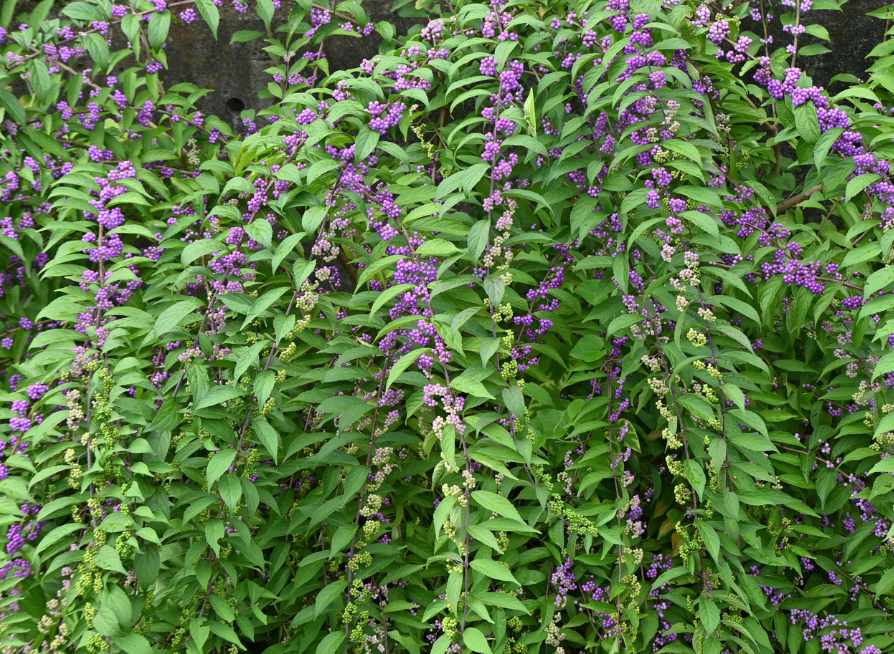
Callicarpa dichotoma, the Purple Beautyberry, is a medium-sized deciduous shrub native to China, Japan, and Korea that produces one of the most arresting fruit displays in the temperate garden, dense, jewel-like clusters of vivid violet-purple berries packed so tightly along every arching stem that the branches appear to have been studded with amethysts from tip to base. The effect in late summer and autumn is genuinely startling, a color so saturated and so unlike anything else fruiting at that time of year that even experienced gardeners stop to look twice. The shrub itself is graceful and undemanding, with a loose, fountain-like habit, soft green foliage through the growing season, and small lilac-pink flowers in midsummer that attract bees and butterflies before giving way to the berry clusters that carry the plant through autumn and well into winter. Smaller and more refined in habit than the American Beautyberry, Callicarpa dichotoma fits comfortably into mixed borders, foundation plantings, and naturalized edges where it earns its space many times over each autumn. If you are looking to buy Purple Beautyberry seeds or grow Callicarpa dichotoma from seed, this is the shrub that delivers the most improbable and unforgettable color in the autumn garden.
- Brilliant violet-purple berry clusters encircle every stem from late summer through autumn, creating one of the most vivid and unusual fruiting displays in temperate horticulture
- Small lilac-pink flowers in midsummer attract bees, butterflies, and native pollinators before berry development begins
- Graceful, arching habit with soft green foliage through spring and summer requires minimal maintenance or pruning
- Berries persist into winter and provide valuable late-season food for mockingbirds, bluebirds, robins, and other fruit-eating birds
- More compact and refined in scale than American Beautyberry, fitting naturally into mixed borders and smaller garden spaces
Things you probably did not know about Purple Beautyberry
The berry clusters of Callicarpa dichotoma are produced in a flowering arrangement that wraps completely around the stem at every leaf node rather than at branch tips. This verticillate cyme structure, in which tight flower and fruit clusters encircle the stem at regular intervals along its entire length, is the reason the plant looks decorated rather than simply fruited. Most fruiting shrubs concentrate their reproductive display at branch ends where it is visible to fruit-eating birds from a distance, but Callicarpa's stem-hugging arrangement evolved alongside a different set of foraging behaviors and produces an effect unlike any other fruiting shrub in the temperate garden, with berries essentially wrapping the entire visible branch structure in solid color.
The vivid purple color of the berries is driven by an exceptionally high concentration of anthocyanins, the same pigment class found in blueberries, elderberries, and blackcurrants. The intensity of the color in Callicarpa dichotoma is the result of anthocyanin concentrations that register among the highest measured in any temperate fruiting shrub, and the pigment is present throughout the fruit flesh rather than concentrated only in the skin. This depth of pigmentation is why the berries appear almost luminous in certain light conditions, and it also means the color holds unusually well as the fruit ages through the season, maintaining its intensity long after many other autumn berries have dulled or shriveled.
Callicarpa species have been used in traditional Chinese and Japanese medicine for centuries, with modern research confirming several biologically active compounds. The leaves, roots, and stems of Callicarpa dichotoma have been used in East Asian folk medicine to treat hemorrhage, skin infections, and inflammatory conditions, and pharmacological studies have isolated callicarpenal and a range of terpenoid and flavonoid compounds from the plant's tissues. Research into the genus as a source of natural insect-repellent compounds has identified diterpenes with activity against mosquitoes and other insects comparable in some studies to DEET at certain concentrations, a finding that has attracted ongoing research interest in the United States Department of Agriculture and several university programs.
Hard annual pruning is the single most important cultural practice for maximizing berry production, and most gardeners do not cut back hard enough. Callicarpa dichotoma produces its berries on current-season wood, meaning the more vigorous new growth the plant produces in spring, the more stems will carry berries in autumn. Cutting the entire plant back to within six to twelve inches of the ground in late winter or early spring stimulates the production of long, arching shoots that will be covered in berry clusters by September. Plants left unpruned gradually build up a framework of older, less productive wood and produce noticeably fewer berries over time. This hard cutback is counterintuitive but consistently produces the most spectacular results.
Growing Details
- Botanical Name: Callicarpa dichotoma
- Seed Treatment: Cold stratification of 30 to 60 days at 34 to 40 degrees Fahrenheit in moist medium recommended; surface sow or cover lightly after stratification
- USDA Zones: 5 to 8
- Soil: Adaptable to most well-drained soils; prefers moderately fertile, evenly moist loam but tolerates clay, sandy soils, and periods of drought once established
- Light: Full sun to partial shade; heaviest berry production and most compact habit in full sun
- Height: 3 to 5 feet
- Spread: 3 to 5 feet
- Growth Rate: Moderate to fast; cut back hard in late winter each year to maximize fruiting on vigorous new growth
Plant it where autumn light can catch the stems from the side, and give it a hard cutback every late winter without hesitation. By September the new growth will be arching under the weight of berry clusters so densely packed and so purely violet that visitors will reach out to touch them, convinced they cannot possibly be real.
FAQ
FAQ
Do you pre-stratify the seeds?
Most of our seeds are not pre-stratified. We ship them unstratified so you can control germination timing based on your local growing season. We sell to all 50 U.S. states and Canadian provinces, and since each region has different planting windows, pre-stratifying would risk seeds germinating in transit or before you're ready to plant.
True stratification requires cold, moist conditions, which can lead to premature sprouting or mold if not timed properly. To avoid this, we store most seeds in dry cold conditions to preserve viability — but this does not initiate stratification.
Do any of your seeds need to stay moist? (Recalcitrant seeds)
Yes — some species we offer are recalcitrant, meaning they must remain moist to stay viable and cannot be dried out. Examples include: Chestnut, Hazelnut, Paw Paw, etc.
These seeds are shipped in moist cold storage and are clearly labeled on the product page when applicable. Please refrigerate immediately upon arrival and follow included care instructions.
Do you ship internationally?
We currently ship to the United States and Canada only. Unfortunately, we cannot ship to other countries without a phytosanitary certificate, which is required by most international customs agencies.
If you're interested in shipping outside North America, please contact us. Note that a phytosanitary certificate typically adds $60–$80 USD per seed type and must be arranged in advance.
Shipping & What's Included
Shipping & What's Included
Shipping & Packaging
Hand-packed in resealable zipper kraft paper seed bags
Stratification and planting instructions included with every order
1 free bonus seed pack included with every order
Ships within 3–5 business days via USPS
Return Policy
Return Policy
Due to the nature of our products, we do not accept returns on seeds.
However, if your order arrives damaged or incorrect, please contact us within 7 days and we’ll make it right.