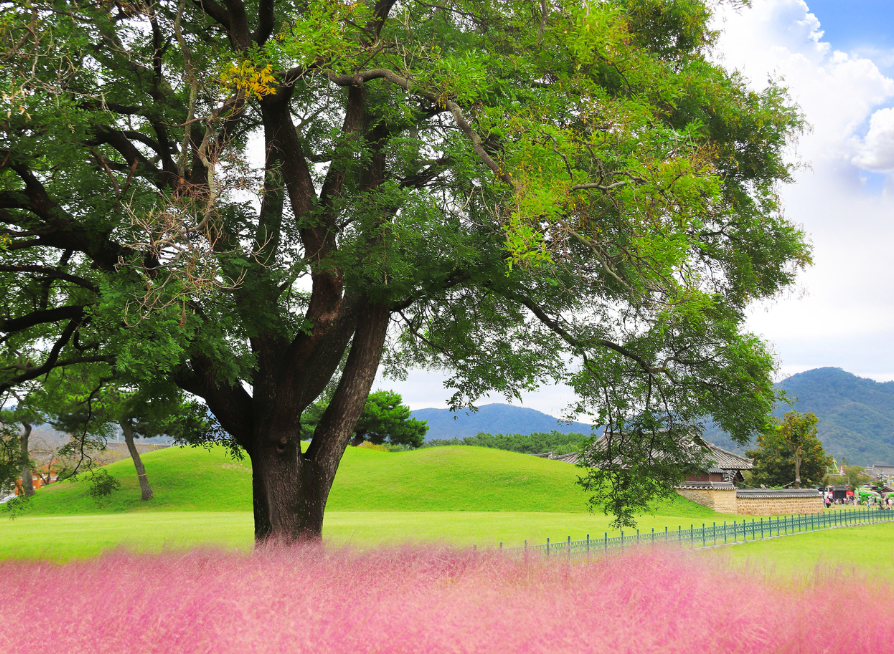


Pink Muhly Grass Seeds | Hairawn Muhly | (Muhlenbergia capillaris)
Pink Muhly Grass Seeds | Hairawn Muhly | (Muhlenbergia capillaris)
Nothing in the garden moves like this in October.
Muhlenbergia capillaris, the Pink Muhly Grass or Hairawn Muhly, is one of the most visually spectacular native grasses in North America, a fine-textured, clumping warm-season grass that spends most of the year as a tidy mound of dark green foliage before erupting in autumn into a cloud of airy, rose-pink to magenta flower plumes so dense and luminous they appear to glow in low-angle light. Native to the eastern and southeastern United States, Pink Muhly grows naturally in open woods, rocky slopes, and coastal plains from Massachusetts to Texas, thriving in poor, dry soils where more demanding plants struggle. The plumes emerge in September and October and persist well into winter, shifting from vivid pink to a warm tan as temperatures drop, providing months of ornamental interest at precisely the time when most of the garden has gone quiet. It is equally at home in mass plantings, mixed borders, roadside naturalization, and container gardens, and it requires almost nothing once established. If you are looking to buy Pink Muhly Grass seeds or grow Muhlenbergia capillaris from seed, this is the native grass that turns an ordinary autumn garden into something genuinely breathtaking.
- Spectacular rose-pink to magenta flower plumes in September and October create one of the most vivid autumn displays of any native plant
- Extremely drought tolerant once established, thriving in poor, sandy, or rocky soils with minimal supplemental water
- Fine, dark green foliage forms a tidy, low-maintenance clump through spring and summer before the autumn show begins
- Native to the eastern United States and provides important habitat value for birds, insects, and small wildlife
- Plumes persist through winter, transitioning to warm tan tones and maintaining structural interest long after bloom
Things you probably did not know about Pink Muhly Grass
The luminous quality of the plumes is caused by the extreme fineness of the individual flower branches, not by any pigment intensity. Each plume is composed of thousands of hair-like branchlets, or capillary branches, which is the origin of the species name capillaris. These branchlets are so fine that they scatter and transmit light rather than simply reflecting it, creating the characteristic glowing, backlit effect that makes Pink Muhly so visually arresting when planted where low morning or afternoon sun shines through the plumes. Mass plantings on south or west-facing slopes capture this effect most dramatically in the hour before sunset.
Pink Muhly Grass is native to some of the poorest and most challenging soils in the eastern United States. Its natural habitats include coastal plain sandhills, granite outcrops, dry limestone glades, and open longleaf pine savanna, all environments characterized by thin, nutrient-poor, rapidly draining soils. This origin makes it genuinely adapted to neglect in cultivation. Adding fertilizer, improving drainage beyond what is needed, or irrigating heavily can actually reduce flowering performance and increase the likelihood of flopping or disease. The plant performs best when treated as it was shaped by nature, lean soil, full sun, and benign neglect.
The genus Muhlenbergia is named for Gotthilf Heinrich Ernst Muhlenberg, an 18th-century American botanist and Lutheran minister who documented hundreds of North American plant species. Muhlenberg, working in Pennsylvania in the late 1700s and early 1800s, corresponded extensively with European botanists and produced significant early catalogs of North American grasses at a time when the flora of the continent was still largely unknown to science. The genus named in his honor contains over 160 species distributed across North and Central America, making it one of the largest grass genera native to the western hemisphere.
Seed germination in Pink Muhly Grass is strongly dependent on temperature and light, not moisture alone. The seeds are small and require light for germination, meaning they should be surface sown or barely covered rather than buried. Germination is most reliable at soil temperatures between 70 and 80 degrees Fahrenheit, and seeds sown too early in cold soil will sit dormant or rot rather than sprout. Starting seeds indoors six to eight weeks before the last frost date, or direct sowing after soil has warmed in late spring, produces significantly better results than early outdoor seeding. First-year plants are small and should be grown on before transplanting to their final position.
Growing Details
- Botanical Name: Muhlenbergia capillaris
- Seed Treatment: No stratification required; surface sow or cover lightly, seeds require light for germination; germination temperature 70 to 80 degrees Fahrenheit
- USDA Zones: 5 to 10
- Soil: Well-drained to dry, tolerates poor, sandy, rocky, or clay soils; avoid consistently wet or heavily amended beds
- Light: Full sun; reduced flowering and looser habit in partial shade
- Height: 2 to 3 feet foliage, plumes reaching 3 to 4 feet
- Spread: 2 to 3 feet
- Growth Rate: Moderate; flowering size typically reached in the second season from seed
Plant it in full sun, give it sharp drainage, and leave it alone. Come October, when the low afternoon light catches the plumes and turns them into a cloud of rose and magenta, you will understand why Pink Muhly Grass has become one of the most planted native grasses in North America and why every garden that has room for it should have it.
FAQ
FAQ
Do you pre-stratify the seeds?
Most of our seeds are not pre-stratified. We ship them unstratified so you can control germination timing based on your local growing season. We sell to all 50 U.S. states and Canadian provinces, and since each region has different planting windows, pre-stratifying would risk seeds germinating in transit or before you're ready to plant.
True stratification requires cold, moist conditions, which can lead to premature sprouting or mold if not timed properly. To avoid this, we store most seeds in dry cold conditions to preserve viability — but this does not initiate stratification.
Do any of your seeds need to stay moist? (Recalcitrant seeds)
Yes — some species we offer are recalcitrant, meaning they must remain moist to stay viable and cannot be dried out. Examples include: Chestnut, Hazelnut, Paw Paw, etc.
These seeds are shipped in moist cold storage and are clearly labeled on the product page when applicable. Please refrigerate immediately upon arrival and follow included care instructions.
Do you ship internationally?
We currently ship to the United States and Canada only. Unfortunately, we cannot ship to other countries without a phytosanitary certificate, which is required by most international customs agencies.
If you're interested in shipping outside North America, please contact us. Note that a phytosanitary certificate typically adds $60–$80 USD per seed type and must be arranged in advance.
Shipping & What's Included
Shipping & What's Included
Shipping & Packaging
Hand-packed in resealable zipper kraft paper seed bags
Stratification and planting instructions included with every order
1 free bonus seed pack included with every order
Ships within 3–5 business days via USPS
Return Policy
Return Policy
Due to the nature of our products, we do not accept returns on seeds.
However, if your order arrives damaged or incorrect, please contact us within 7 days and we’ll make it right.