

Pacific Madrone Tree Seeds | Madrona | (Arbutus menziesii)
Pacific Madrone Tree Seeds | Madrona | (Arbutus menziesii)
The most beautiful bark in North America. The tree that does not survive being transplanted.
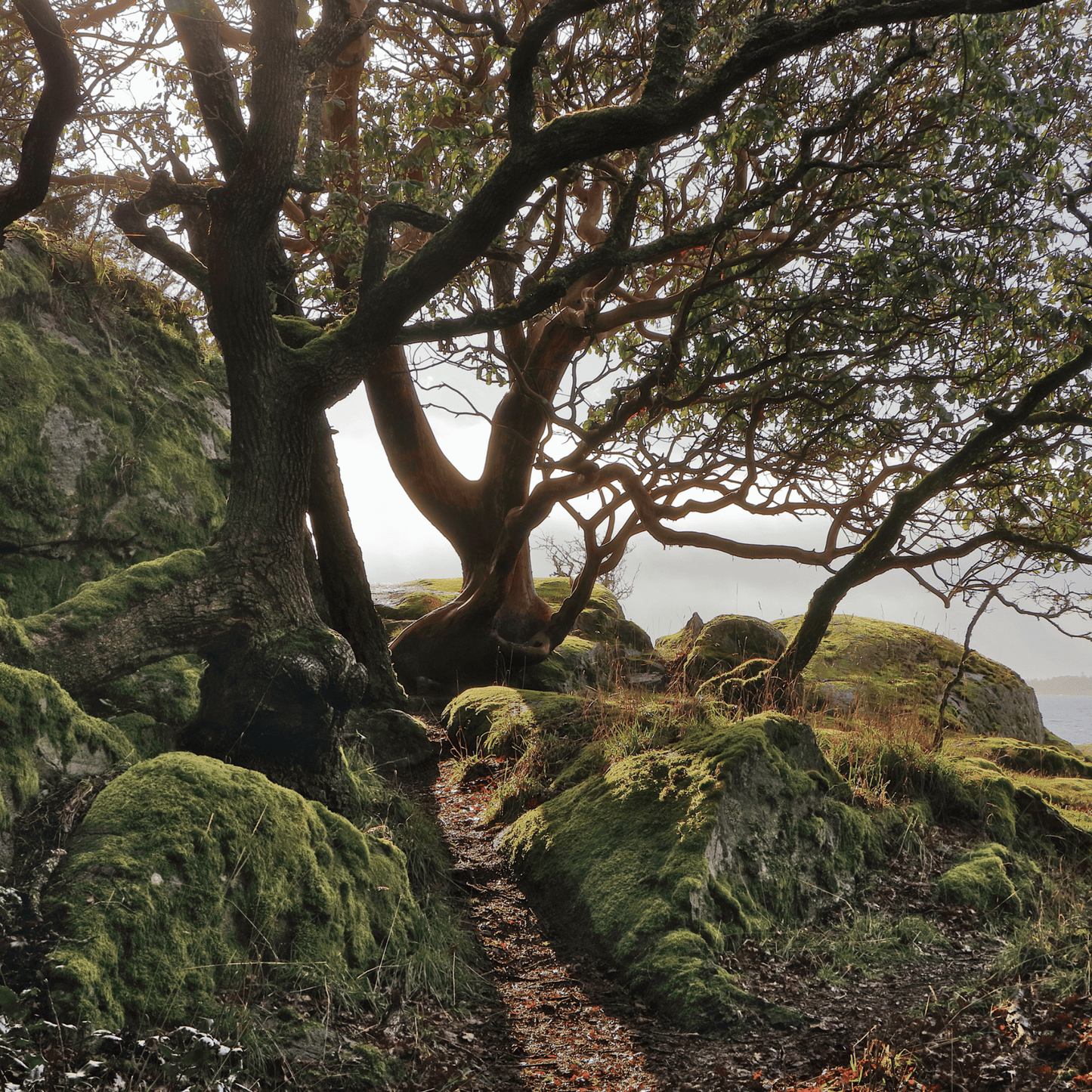
Arbutus menziesii, the Pacific Madrone, is the most visually striking native broadleaf evergreen tree in western North America, its smooth, cinnamon-red to orange bark peeling back in papery layers to reveal fresh green and cream beneath, changing color and texture through every season in a display unlike anything else in the temperate world. It grows naturally along the Pacific Coast from British Columbia to Baja California, always within sight or smell of the ocean, on dry rocky slopes and exposed ridges where few other trees compete. It is notoriously difficult to transplant from nursery containers, which is why growing it from seed and planting it small is the accepted method for successful establishment. If you are looking to buy Pacific Madrone seeds or grow this extraordinary native tree from seed, this is the most challenging and most rewarding broadleaf evergreen you can grow in a western garden.
- Smooth, peeling bark in shades of cinnamon, orange, green, and cream, incomparable in the temperate world
- Native broadleaf evergreen of the Pacific Coast, growing on dry rocky slopes with minimal care once established
- White urn-shaped flower clusters in spring followed by brilliant red-orange berries in fall
- Critical wildlife tree, berries eaten by band-tailed pigeons, bears, deer, and dozens of bird species
- Extremely difficult to transplant from nursery stock, growing from seed is the most reliable establishment method
Things you probably did not know about the Pacific Madrone
It is closely related to the strawberry tree of Mediterranean Europe. Arbutus menziesii belongs to the same genus as Arbutus unedo, the Strawberry Tree cultivated in European gardens for centuries. The two species separated when the Atlantic opened between North America and Europe millions of years ago and evolved independently, but the family resemblance in bark, flower, and fruit is immediately apparent to anyone who knows both.
The bark changes color depending on the season and the tree's age. Fresh bark exposed after peeling is bright green or yellow-green. Within weeks it turns orange-yellow, then deepens through cinnamon to mahogany red as it ages. A single Madrone tree in late summer can show all of these colors simultaneously on different parts of the trunk and branches, creating an effect that looks like it was painted rather than grown.
It cannot survive having its roots disturbed once established. Pacific Madrone has an extremely specific relationship with mycorrhizal fungi in its root system. Disturbance of the soil around established trees, even compaction from foot traffic, can disrupt this relationship fatally. Trees that are thriving in the wild fail to establish when transplanted from containers because the mycorrhizal community is disrupted in the process. This is why seed-grown trees planted in place from small containers succeed where nursery transplants fail.
Indigenous peoples across its range used every part of it. The bark was used as an astringent medicine for colds and stomach complaints. The berries were eaten fresh, dried, and fermented into a cider-like beverage. The wood, which is extremely hard and fine-grained, was used for tools, digging sticks, and fuel. The Madrone was one of the most fully utilized trees along the Pacific Coast.
Growing Details
- Botanical Name: Arbutus menziesii
- Stratification: Required, 60 to 90 days cold stratification
- USDA Zones: 7 to 9
- Soil: Well-drained, rocky, poor to moderate fertility, tolerates drought once established
- Light: Full sun
- Height: 20 to 80 feet
- Spread: 20 to 40 feet
- Growth Rate: Slow to moderate, 1 to 2 feet per year
Plant it small, disturb the roots as little as possible, and do not water it more than necessary once it is established. The reward is a tree that stops every person who sees it.
FAQ
FAQ
Do you pre-stratify the seeds?
Most of our seeds are not pre-stratified. They are stored under dry, cold conditions to preserve viability without initiating stratification, allowing you to time germination for your local growing season.
The exception is recalcitrant seeds. Because these seeds must remain moist to stay viable, they are kept in moist, cold storage and are therefore in a pre-stratified state. Depending on how long a particular batch has been stored, some may arrive with an emerging radicle and be ready to plant immediately. Radicle development is not guaranteed.
Please refer to the individual product page and included growing instructions for species-specific requirements.
Do any of your seeds need to stay moist? (Recalcitrant seeds)
Yes. Some species we offer, including Chestnut, Hazelnut, and Paw Paw, are recalcitrant and must remain moist to stay viable.
Please refrigerate these seeds immediately upon arrival unless they have already developed a radicle. Seeds with an emerging radicle should be planted promptly.
Do you ship internationally?
No. We currently ship within the United States only.
We previously shipped to Canada, but tariffs, duties, and import fees resulted in customers receiving significant and unpredictable additional charges upon delivery. Because we cannot reliably calculate or absorb these costs, we have suspended shipping to Canada.
At this time, we do not ship to Canada or other international destinations.
Shipping & What's Included
Shipping & What's Included
Shipping & Packaging
• Hand-packed in resealable kraft paper seed bags
• Stratification and planting instructions included on every seed pack
• Ships within 3–5 business days via USPS within the United States and U.S. territories
Return Policy
Return Policy
Due to the nature of our products, we do not accept returns on seeds.
If your order arrives damaged, contains incorrect items, or is missing items, please contact us within 7 days of delivery so we can resolve the issue.