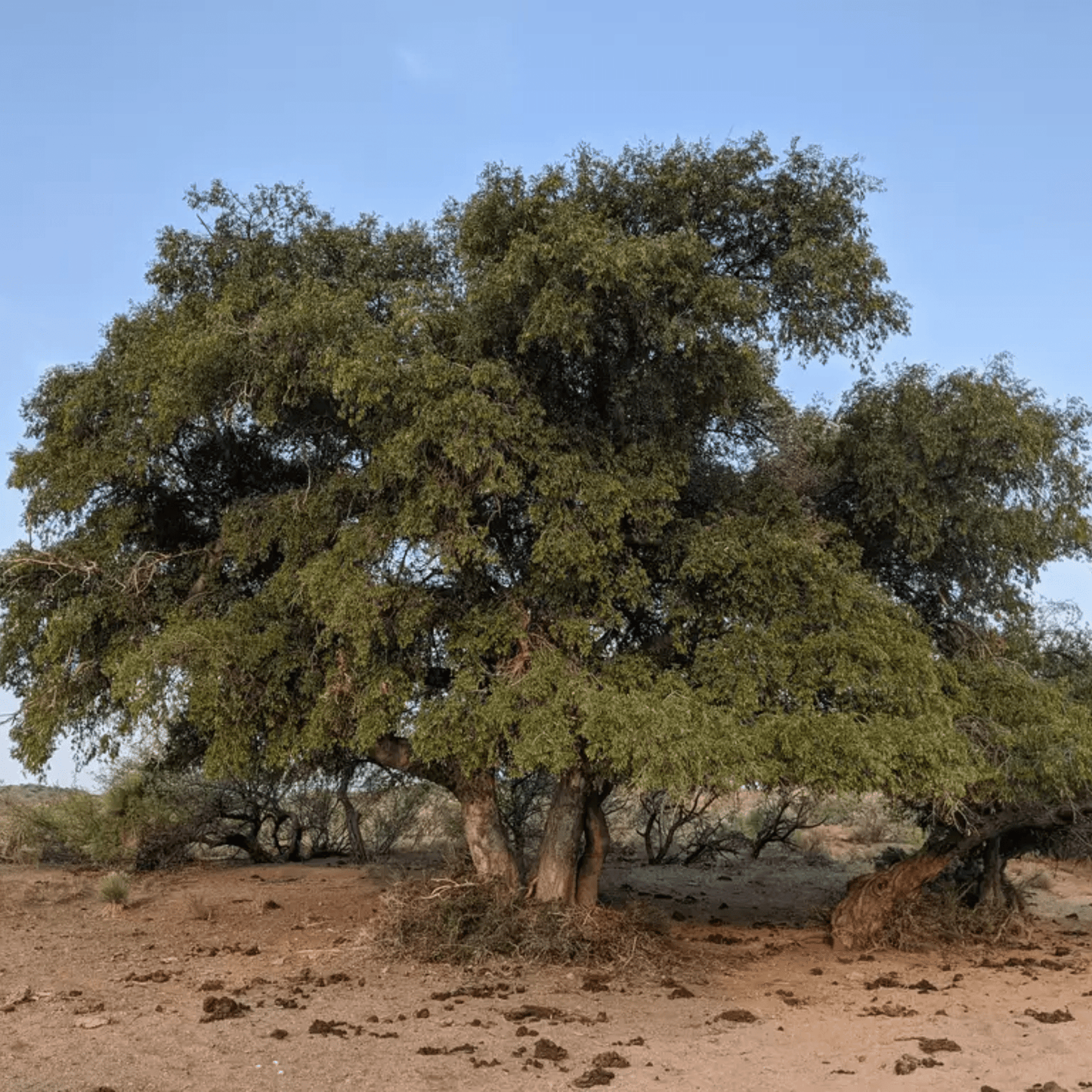


Western Hackberry Tree Seeds | Netleaf Hackberry | (Celtis laevigata var. reticulata)
Western Hackberry Tree Seeds | Netleaf Hackberry | (Celtis laevigata var. reticulata)
The drought survivor of the desert west. Habitat anchor in the most difficult landscapes.
Celtis laevigata var. reticulata, the Western Hackberry or Net-leaf Hackberry, is the most drought-tolerant and heat-resistant native hackberry in North America, a medium-sized deciduous tree native to the driest river valleys, canyon bottoms, and rocky hillsides of the American Southwest and Great Plains where it provides some of the only significant canopy and wildlife food available in landscapes that receive less than 15 inches of annual rainfall. It produces small, red to dark purple sweet berries in fall that are eaten by dozens of bird species and mammals and was one of the most important food plants of Indigenous peoples across the arid Southwest. It grows where other native trees cannot establish and provides shade, wildlife habitat, and food production in conditions that defeat most other deciduous trees. If you are looking to buy Western Hackberry seeds or grow this desert-adapted native from seed, this is the tree for the driest, harshest sites in western landscapes.
- The most drought-tolerant native hackberry, growing in desert canyon bottoms and rocky hillsides with minimal rainfall
- Produces sweet, small red to dark purple berries eaten by dozens of bird species and mammals in fall
- Provides shade and wildlife habitat in the arid Southwest where most other trees cannot establish
- Extremely adaptable to poor, rocky, alkaline soils and extreme summer heat
- Deeply textured, corky bark developing distinctive character on mature specimens
Things you probably did not know about the Western Hackberry
The berries were a primary food source for Indigenous peoples of the Southwest and Great Basin. Archaeological evidence from rock shelters and canyon sites across the Colorado Plateau and Great Basin documents dried Western Hackberry berries stored in enormous quantities for winter food. The fruits were eaten fresh, dried whole, and ground into a paste mixed with fat for energy-dense trail food. The sugar content of the dried berries makes them calorically dense and shelf-stable, qualities that made them essential in cultures dependent on stored food through lean seasons.
It develops witch's brooms, dense clusters of twigs that look diseased but are actually harmless galls. Western Hackberry frequently develops clusters of dense, broom-like twig growth caused by a combination of a mite and a powdery mildew fungus that together induce abnormal twig proliferation. These witch's brooms, while striking in appearance, cause no significant damage to the tree and are so characteristic of hackberry species that they serve as a useful identification feature in winter when the tree has no leaves.
The corky bark develops into one of the most textured surfaces of any western native tree. Mature Western Hackberry trunks develop deeply corky, ridged bark with a distinctive warty surface texture that is unlike any other commonly encountered tree in its range. The bark texture and the characteristic leaf shape, which has three prominent veins from the base rather than the single midrib of most deciduous trees, make Western Hackberry identifiable in the field with high reliability even in the absence of fruit.
It is one of the most important trees for migrating Monarch butterflies in the Southwest. The sugar-rich berries of Western Hackberry ripen during the Monarch butterfly migration period in fall, providing a direct energy source for migrating butterflies that are fueling for their journey to the Mexican overwintering grounds. In areas where Western Hackberry is abundant, Monarch populations have been documented aggregating specifically at fruiting trees.
Growing Details
- Botanical Name: Celtis laevigata var. reticulata
- Stratification: Required, 60 to 90 days cold stratification
- USDA Zones: 4 to 9
- Soil: Extremely adaptable, tolerates poor, rocky, alkaline, dry soils
- Light: Full sun
- Height: 20 to 40 feet
- Spread: 20 to 40 feet
- Growth Rate: Moderate, 1 to 2 feet per year when established
Plant it in the driest, most difficult site available in zones 4 to 9. Once established it will provide shade, berries, and wildlife value in conditions where most other trees require irrigation to survive.
FAQ
FAQ
Do you pre-stratify the seeds?
Most of our seeds are not pre-stratified. They are stored under dry, cold conditions to preserve viability without initiating stratification, allowing you to time germination for your local growing season.
The exception is recalcitrant seeds. Because these seeds must remain moist to stay viable, they are kept in moist, cold storage and are therefore in a pre-stratified state. Depending on how long a particular batch has been stored, some may arrive with an emerging radicle and be ready to plant immediately. Radicle development is not guaranteed.
Please refer to the individual product page and included growing instructions for species-specific requirements.
Do any of your seeds need to stay moist? (Recalcitrant seeds)
Yes. Some species we offer, including Chestnut, Hazelnut, and Paw Paw, are recalcitrant and must remain moist to stay viable.
Please refrigerate these seeds immediately upon arrival unless they have already developed a radicle. Seeds with an emerging radicle should be planted promptly.
Do you ship internationally?
No. We currently ship within the United States only.
We previously shipped to Canada, but tariffs, duties, and import fees resulted in customers receiving significant and unpredictable additional charges upon delivery. Because we cannot reliably calculate or absorb these costs, we have suspended shipping to Canada.
At this time, we do not ship to Canada or other international destinations.
Shipping & What's Included
Shipping & What's Included
Shipping & Packaging
• Hand-packed in resealable kraft paper seed bags
• Stratification and planting instructions included on every seed pack
• Ships within 3–5 business days via USPS within the United States and U.S. territories
Return Policy
Return Policy
Due to the nature of our products, we do not accept returns on seeds.
If your order arrives damaged, contains incorrect items, or is missing items, please contact us within 7 days of delivery so we can resolve the issue.