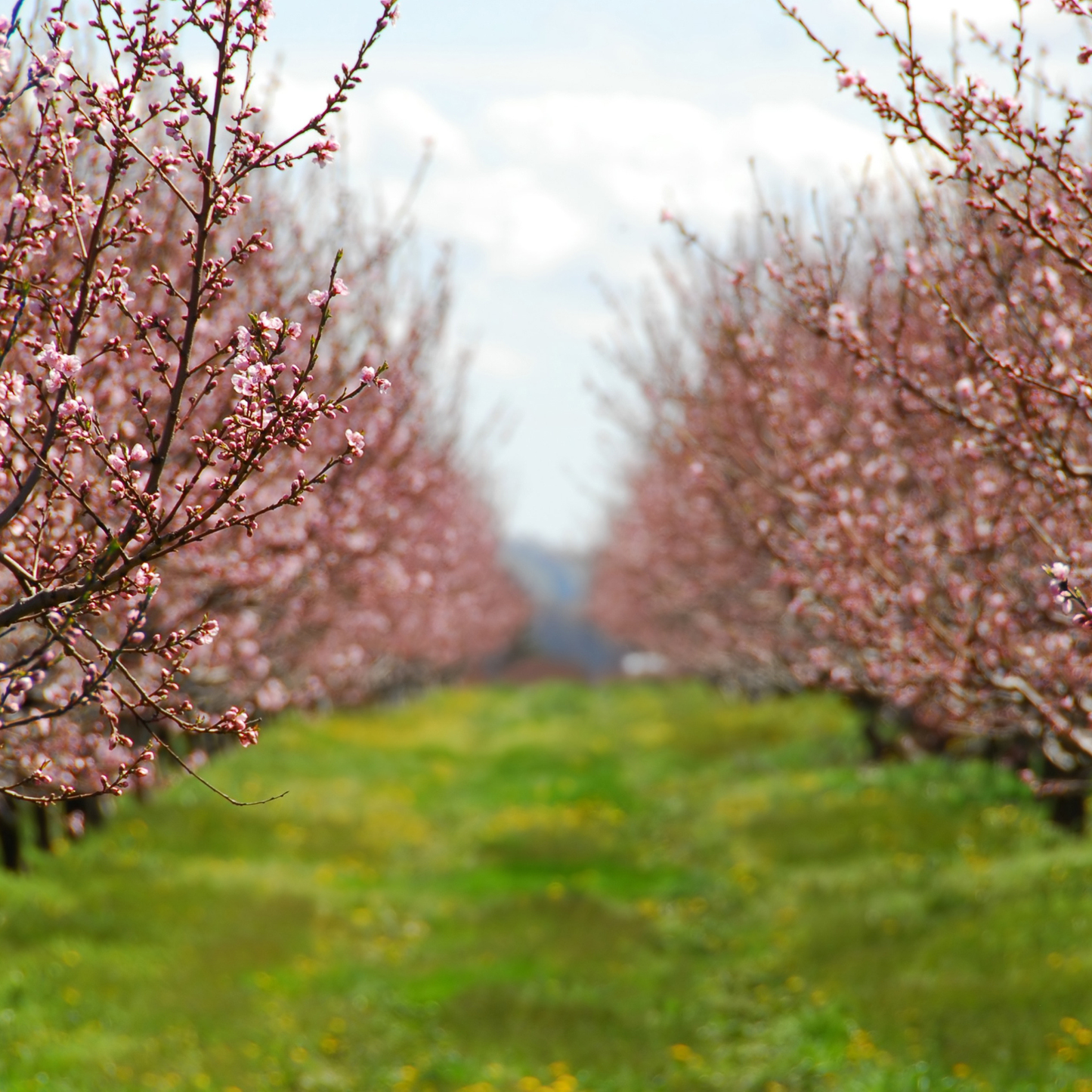


Nemaguard Peach Tree Seeds | (Prunus persica var. Nemaguard)
Nemaguard Peach Tree Seeds | (Prunus persica var. Nemaguard)
The rootstock that built the California peach industry. Vigorous from seed.
Prunus persica var. Nemaguard is a highly vigorous, nematode-resistant peach rootstock variety developed specifically to tolerate the ring nematodes that devastate standard peach roots in heavy soils across the American South and California's San Joaquin Valley. It was released by the USDA in 1959 after evaluation as one of the most nematode-tolerant Prunus rootstocks available, and it became one of the primary rootstocks used in commercial peach production in warm-climate states. Growing Nemaguard from seed produces vigorous, deep-rooted trees with excellent disease and pest resistance that can either be grown as rootstock for grafting superior peach varieties onto or allowed to develop and fruit as seedling trees in their own right. If you are looking to buy Nemaguard Peach seeds or grow this vigorous rootstock peach from seed, this is the starting point for a productive, long-lived peach tree in warm climates.
- Highly resistant to root knot and ring nematodes that devastate standard peach trees in warm-climate soils
- Developed by the USDA specifically for superior root health in California and southeastern peach production
- Vigorous, deep-rooting, and adaptable to a wide range of warm-climate soil conditions
- Can be grown as a fruiting seedling tree or used as rootstock for grafting superior peach varieties
- Seed-grown trees develop natural variation in vigor, disease resistance, and fruit characteristics
Things you probably did not know about the Nemaguard Peach
Root knot nematodes are one of the most economically destructive pests in warm-climate fruit production. Meloidogyne species infect peach roots and cause gall formations that restrict water and nutrient uptake, stunting and eventually killing trees over several years. In regions like California’s San Joaquin Valley and the southeastern United States, nematode pressure once severely limited orchard lifespan. Resistant rootstocks like Nemaguard changed that equation.
Peach seeds require careful dormancy breaking to germinate. The hard inner pit surrounding the seed must either be cracked or subjected to 90 to 120 days of cold moist stratification. Without this process, germination will not occur. The pit itself is the barrier, not the outer fruit.
Nemaguard is not grown for fruit quality. This variety was selected for root performance, not eating quality. Seedling trees may produce small or bitter fruit suitable for wildlife or processing, but growers seeking high-quality peaches should graft named varieties onto Nemaguard rootstock.
It helped scale modern peach production in the United States. California produces over half of the nation’s fresh peaches, and Nemaguard rootstock played a major role in making long-lived, productive orchards possible under high nematode pressure. Its introduction significantly improved orchard longevity and consistency.
Growing Details
- Botanical Name: Prunus persica var. Nemaguard
- Stratification: Required, crack the pit carefully or cold moist stratify the intact pit for 90 to 120 days
- USDA Zones: 6 to 9
- Soil: Adaptable, tolerates a range of conditions, best in well-drained, fertile soil
- Light: Full sun
- Height: 15 to 25 feet as a seedling tree
- Spread: 15 to 20 feet
- Growth Rate: Fast, 2 to 4 feet per year when young
Grow it as rootstock for grafting your preferred peach variety or let it stand on its own as a tough, productive seedling tree. Either way, it roots deep, grows fast, and holds its ground where weaker trees fail.
FAQ
FAQ
Do you pre-stratify the seeds?
Most of our seeds are not pre-stratified. They are stored under dry, cold conditions to preserve viability without initiating stratification, allowing you to time germination for your local growing season.
The exception is recalcitrant seeds. Because these seeds must remain moist to stay viable, they are kept in moist, cold storage and are therefore in a pre-stratified state. Depending on how long a particular batch has been stored, some may arrive with an emerging radicle and be ready to plant immediately. Radicle development is not guaranteed.
Please refer to the individual product page and included growing instructions for species-specific requirements.
Do any of your seeds need to stay moist? (Recalcitrant seeds)
Yes. Some species we offer, including Chestnut, Hazelnut, and Paw Paw, are recalcitrant and must remain moist to stay viable.
Please refrigerate these seeds immediately upon arrival unless they have already developed a radicle. Seeds with an emerging radicle should be planted promptly.
Do you ship internationally?
No. We currently ship within the United States only.
We previously shipped to Canada, but tariffs, duties, and import fees resulted in customers receiving significant and unpredictable additional charges upon delivery. Because we cannot reliably calculate or absorb these costs, we have suspended shipping to Canada.
At this time, we do not ship to Canada or other international destinations.
Shipping & What's Included
Shipping & What's Included
Shipping & Packaging
• Hand-packed in resealable kraft paper seed bags
• Stratification and planting instructions included on every seed pack
• Ships within 3–5 business days via USPS within the United States and U.S. territories
Return Policy
Return Policy
Due to the nature of our products, we do not accept returns on seeds.
If your order arrives damaged, contains incorrect items, or is missing items, please contact us within 7 days of delivery so we can resolve the issue.