

Mimosa Tree Seeds (Albizia julibrissin)
Mimosa Tree Seeds (Albizia julibrissin)
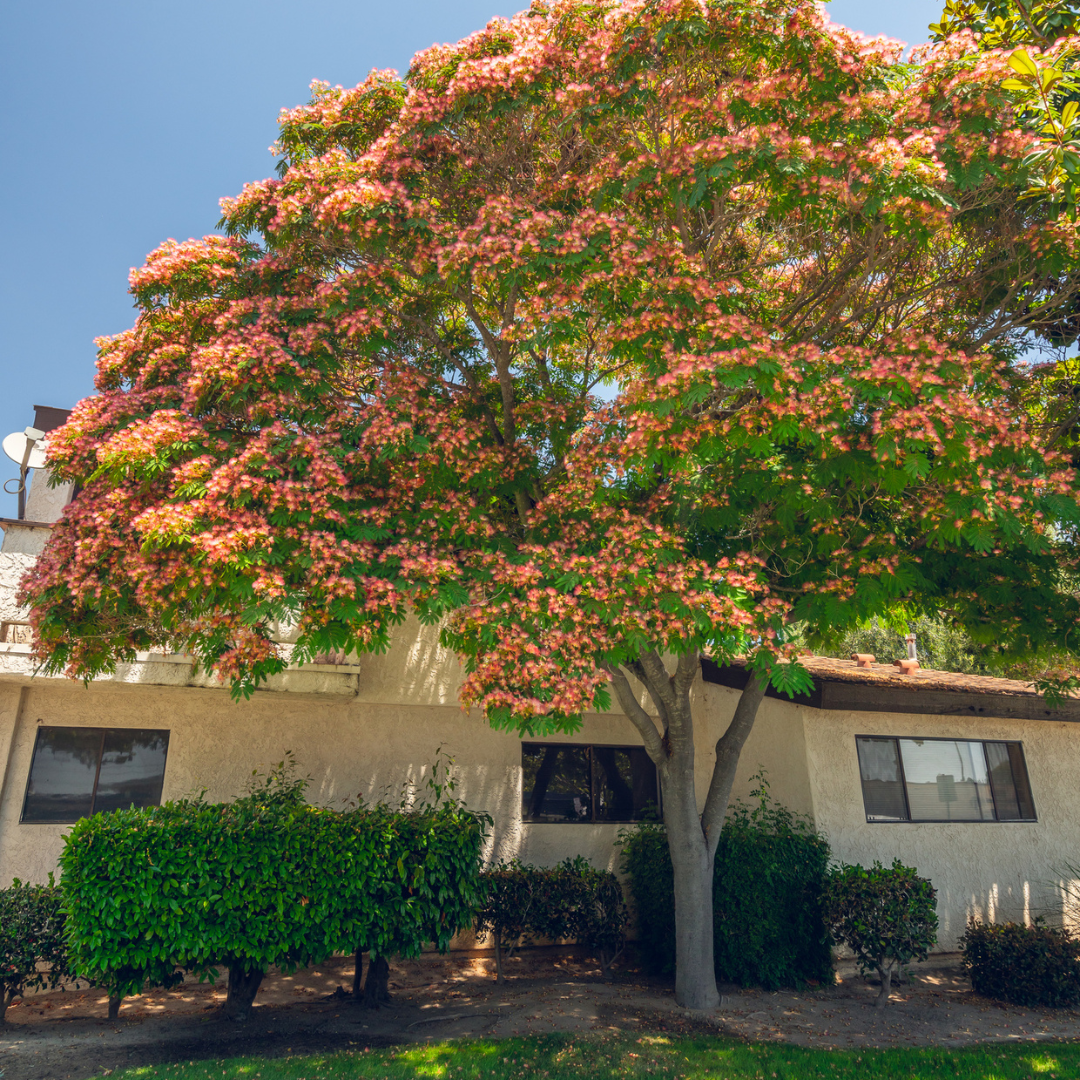
Pink silk flowers in midsummer. The tree that drapes itself in something no other temperate tree can do.
Albizia julibrissin, the Mimosa or Silk Tree, produces flowers unlike anything else in the temperate landscape, dense clusters of silky pink filaments that look more like a tropical confection than a tree flower, emerging in midsummer when most other flowering trees have been finished for months. The feathery, finely divided compound leaves fold at dusk and in rain, giving the tree a quality of responsiveness that makes it seem almost animate. It grows fast, tolerates drought and poor soils, and produces blooms that attract hummingbirds, butterflies, and native bees in numbers that reflect the quantity and quality of nectar the flowers produce. If you are looking to buy Mimosa tree seeds or grow silk tree from seed, this is the tree that brings a genuinely tropical sensibility to temperate gardens with almost no effort.
- Extraordinary silky pink flower clusters in midsummer, unlike any other flowering tree in the temperate world
- Feathery compound leaves that fold in the evening and in rain, giving the tree unusual movement and responsiveness
- Fast-growing and drought-tolerant once established, thriving in poor soils where other trees struggle
- Attracts hummingbirds, swallowtail butterflies, and native bees intensively during its long blooming season
- Seed-grown trees produce natural variation in flower color from pale pink to deep rose
Things you probably did not know about the Mimosa Tree
The leaves move. Albizia julibrissin is thigmonastic and nyctinastic, meaning the leaves fold in response to touch and darkness. The compound leaflets close neatly each evening as light fades and reopen in the morning, a behavior that gives the tree an unusual daily rhythm visible to anyone who pays attention. The same folding response occurs during rain, which is why some rural communities called it the rain tree.
It was introduced to the United States in 1745 by a single botanist. The Persian physician and botanist Filippo degli Albizzi brought Mimosa seeds to Italy from Persia in 1745, and the tree was subsequently introduced to the United States where it has naturalized extensively across the Southeast and Mid-Atlantic. Despite being widely planted for nearly 300 years in North America, it remains native to Asia and is considered invasive in some southeastern states.
Hummingbirds are so attracted to it that plantings near feeders reduce feeder visits. The nectar production of Mimosa flowers is sufficient that hummingbirds in areas with established Mimosa trees often prefer the natural flowers to artificial feeders during the blooming season. Gardeners who plant Mimosa near hummingbird feeders frequently report that the feeder needs refilling far less often because the birds have a better source available.
The wood was used in traditional Persian and Turkish instrument making. The wood of Albizia species native to the Middle East and Central Asia was used for sounding boards and bodies in traditional stringed instruments across the Ottoman and Persian cultural spheres. The combination of density, resonance, and workability made it a preferred tonewood in regional instrument traditions for centuries.
Growing Details
- Botanical Name: Albizia julibrissin
- Stratification: Required, scarification with hot water or sandpaper, then 30 days cold stratification
- USDA Zones: 6 to 9
- Soil: Extremely adaptable, tolerates poor, dry, or disturbed soils
- Light: Full sun
- Height: 20 to 40 feet
- Spread: 20 to 40 feet
- Growth Rate: Fast, 2 to 4 feet per year
Plant it where you will see the flowers from a window in July. Nothing else provides that color at that moment in the summer calendar.
FAQ
FAQ
Do you pre-stratify the seeds?
Most of our seeds are not pre-stratified. They are stored under dry, cold conditions to preserve viability without initiating stratification, allowing you to time germination for your local growing season.
The exception is recalcitrant seeds. Because these seeds must remain moist to stay viable, they are kept in moist, cold storage and are therefore in a pre-stratified state. Depending on how long a particular batch has been stored, some may arrive with an emerging radicle and be ready to plant immediately. Radicle development is not guaranteed.
Please refer to the individual product page and included growing instructions for species-specific requirements.
Do any of your seeds need to stay moist? (Recalcitrant seeds)
Yes. Some species we offer, including Chestnut, Hazelnut, and Paw Paw, are recalcitrant and must remain moist to stay viable.
Please refrigerate these seeds immediately upon arrival unless they have already developed a radicle. Seeds with an emerging radicle should be planted promptly.
Do you ship internationally?
No. We currently ship within the United States only.
We previously shipped to Canada, but tariffs, duties, and import fees resulted in customers receiving significant and unpredictable additional charges upon delivery. Because we cannot reliably calculate or absorb these costs, we have suspended shipping to Canada.
At this time, we do not ship to Canada or other international destinations.
Shipping & What's Included
Shipping & What's Included
Shipping & Packaging
• Hand-packed in resealable kraft paper seed bags
• Stratification and planting instructions included on every seed pack
• Ships within 3–5 business days via USPS within the United States and U.S. territories
Return Policy
Return Policy
Due to the nature of our products, we do not accept returns on seeds.
If your order arrives damaged, contains incorrect items, or is missing items, please contact us within 7 days of delivery so we can resolve the issue.