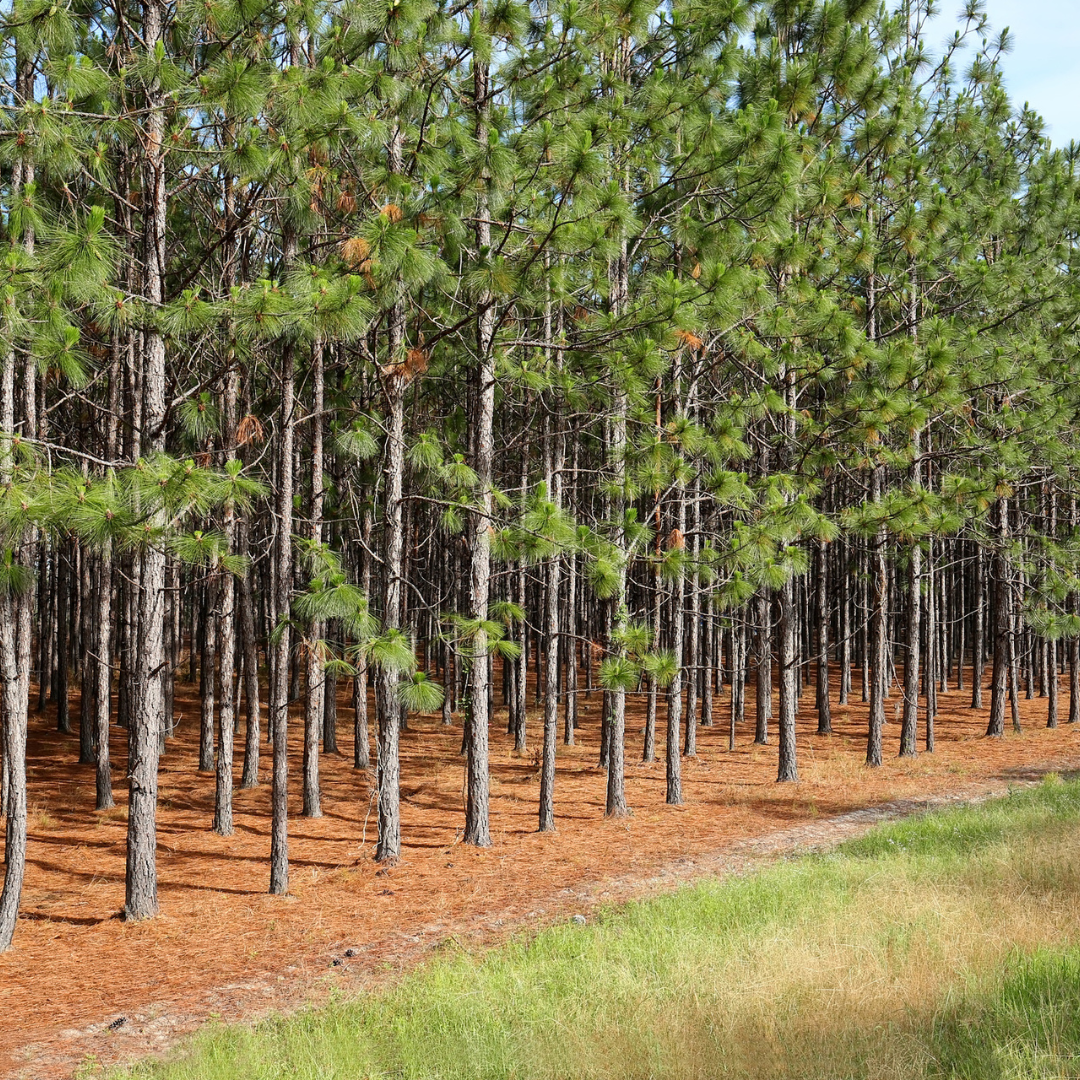


Longleaf Pine Tree Seeds (Pinus palustris)
Longleaf Pine Tree Seeds (Pinus palustris)
The most important tree in the history of the American South. Nearly gone. Worth saving.
Pinus palustris, the Longleaf Pine, once covered over 90 million acres of the southeastern United States in what was the most biodiverse temperate ecosystem in North America. Today less than 3 percent of that original forest remains. The Longleaf Pine ecosystem supported dozens of species found nowhere else on Earth, was the primary timber and naval stores resource of the colonial and early American economy, and took hundreds of years to develop the old-growth structure that made it ecologically irreplaceable. Growing Longleaf Pine from seed is a direct act of restoration for a landscape that shaped the American South for thousands of years and is now one of the most endangered ecosystems in the country. If you are looking to buy Longleaf Pine seeds or grow this historic native pine from seed, every tree matters.
- Native to the southeastern coastal plain, the dominant tree of one of the most biodiverse ecosystems in North America
- The longest needles of any native eastern pine, in clusters of three reaching 12 to 18 inches
- Spends 5 to 10 years in a grass stage before rapid growth, developing a massive root system before height
- Extraordinarily fire-adapted, surviving and thriving in the frequent ground fires that defined the original ecosystem
- Less than 3 percent of the original Longleaf Pine forest remains, making every planted tree a conservation act
Things you probably did not know about the Longleaf Pine
The original Longleaf forests took 300 years to develop their full ecological structure. Old-growth Longleaf Pine savanna, with its open park-like structure of widely spaced large pines over a diverse groundcover of hundreds of grass and wildflower species, developed through centuries of periodic fire and slow growth. The standing dead wood, deep duff layers, and specific light conditions of old-growth Longleaf support species that cannot survive anywhere else. Almost none of it is left.
It spends years as a grass that looks nothing like a tree. Longleaf Pine seeds germinate and then enter a grass stage, producing a dense rosette of long needles at ground level with almost no apparent height gain for 5 to 15 years. During this stage the tree is building an enormous root system and accumulating energy reserves. When it finally begins vertical growth, it can gain 3 to 6 feet per year, going from ground level to 20 feet in a few years after the grass stage ends.
The resin was the economic foundation of the colonial and early American South. Naval stores, the tar, pitch, turpentine, and rosin extracted from Longleaf Pine resin, were among the most valuable exports of colonial North Carolina, South Carolina, and Georgia. The British Royal Navy depended on American naval stores to waterproof and maintain its ships. The industry drove enormous logging pressure on Longleaf forests that continued well into the 20th century.
The Red-cockaded Woodpecker excavates its nest cavities only in old Longleaf Pines. This federally endangered woodpecker requires living old-growth Longleaf Pines with heartwood softened by red heart fungus for cavity excavation. It will not use younger trees or other species. The near-total loss of old-growth Longleaf is the primary reason the Red-cockaded Woodpecker is endangered. Planting Longleaf Pine today begins the centuries-long process of restoring the habitat this bird needs.
Growing Details
- Botanical Name: Pinus palustris
- Stratification: Recommended, 30 to 60 days cold stratification
- USDA Zones: 7 to 10
- Soil: Well-drained, sandy, acidic, tolerates poor and infertile soils
- Light: Full sun
- Height: 80 to 120 feet at maturity
- Spread: 30 to 40 feet
- Growth Rate: Slow during grass stage, fast after, 3 to 6 feet per year once vertical growth begins
Plant it knowing you are starting a process that will take longer than a human lifetime to complete. Some of the most important things work that way.
FAQ
FAQ
Do you pre-stratify the seeds?
Most of our seeds are not pre-stratified. They are stored under dry, cold conditions to preserve viability without initiating stratification, allowing you to time germination for your local growing season.
The exception is recalcitrant seeds. Because these seeds must remain moist to stay viable, they are kept in moist, cold storage and are therefore in a pre-stratified state. Depending on how long a particular batch has been stored, some may arrive with an emerging radicle and be ready to plant immediately. Radicle development is not guaranteed.
Please refer to the individual product page and included growing instructions for species-specific requirements.
Do any of your seeds need to stay moist? (Recalcitrant seeds)
Yes. Some species we offer, including Chestnut, Hazelnut, and Paw Paw, are recalcitrant and must remain moist to stay viable.
Please refrigerate these seeds immediately upon arrival unless they have already developed a radicle. Seeds with an emerging radicle should be planted promptly.
Do you ship internationally?
No. We currently ship within the United States only.
We previously shipped to Canada, but tariffs, duties, and import fees resulted in customers receiving significant and unpredictable additional charges upon delivery. Because we cannot reliably calculate or absorb these costs, we have suspended shipping to Canada.
At this time, we do not ship to Canada or other international destinations.
Shipping & What's Included
Shipping & What's Included
Shipping & Packaging
• Hand-packed in resealable kraft paper seed bags
• Stratification and planting instructions included on every seed pack
• Ships within 3–5 business days via USPS within the United States and U.S. territories
Return Policy
Return Policy
Due to the nature of our products, we do not accept returns on seeds.
If your order arrives damaged, contains incorrect items, or is missing items, please contact us within 7 days of delivery so we can resolve the issue.