

London Plane Tree Seeds | (Platanus × acerifolia)
London Plane Tree Seeds | (Platanus × acerifolia)
The tree that survived the Great Smog. The most planted street tree in the world.
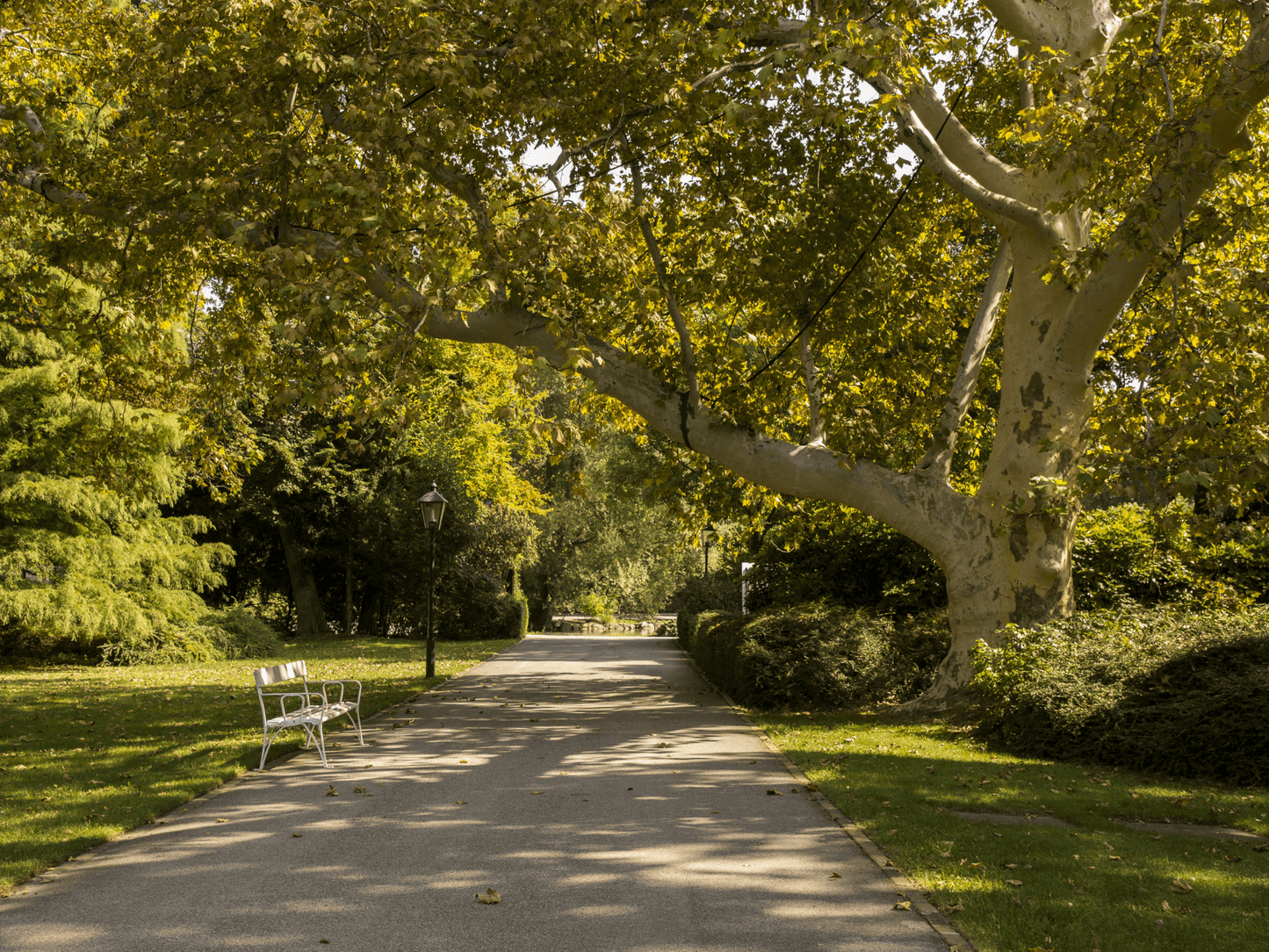
Platanus x acerifolia, the London Plane Tree, is the most widely planted street tree in the world and one of the most pollution-tolerant, heat-tolerant, and urban-adapted large trees ever put into cultivation, a hybrid between the American Sycamore and the Oriental Plane that combines the vigor and adaptability of both parents with an extraordinary tolerance for the compacted soils, vehicle exhaust, heat islands, and aerial pollution that define the urban environment. Its bark is the most immediately recognizable of any street tree, peeling in irregular patches of cream, tan, gray, and olive to create a mottled, camouflage pattern that is visible from blocks away and develops in full ornamental splendor on mature specimens. It lines the boulevards of Paris, shades the piazzas of Rome, canopies the streets of Barcelona, and stands sentinel along the Thames in London where its ability to literally shed contaminated outer bark layers allows it to survive in air quality that would kill most other trees. If you are looking to buy London Plane Tree seeds or grow this urban giant from seed, this is the tree that every great city depends on for its canopy.
- The most widely planted street tree in the world, the dominant large tree in virtually every major European city
- Extraordinary urban tolerance including pollution, compacted soils, heat islands, and limited water
- Spectacular mottled exfoliating bark in cream, tan, gray, and olive, the most recognizable bark of any street tree
- Massive canopy reaching 70 to 100 feet, providing the deepest shade of any commonly planted urban tree
- Sheds its contaminated outer bark annually, a unique adaptation to urban air pollution
Things you probably did not know about the London Plane Tree
The tree literally cleans itself of pollution by shedding its bark. The annual exfoliation of London Plane bark is not merely ornamental but functional. As the outer bark accumulates particulate pollution, heavy metals, and other contaminants from urban air, it is shed in plates that carry the pollutants away from the tree. Studies of London Plane bark in heavily polluted urban environments have found concentrations of lead, cadmium, and other heavy metals in the shed bark plates that are significantly higher than in surrounding soil, demonstrating that the bark is actively accumulating and removing pollution from the urban air. No other common street tree has this self-cleaning mechanism to the same degree.
It is believed to be a hybrid that arose spontaneously in 17th century gardens, not in the wild. The London Plane does not occur naturally anywhere in the world. It is thought to have arisen from chance crossing between American Sycamore, which was introduced to Europe in the early 17th century, and Oriental Plane, which had been growing in European gardens for centuries, at some point in the mid-17th century, possibly in Oxford or Spain. The hybrid proved so vigorous and urban-adapted that it was rapidly propagated and distributed across Europe, eventually becoming the dominant street tree of virtually every major western city.
George Washington and Thomas Jefferson planted London Plane trees. The London Plane was introduced to North America in the 18th century and quickly recognized as a superior urban and estate tree by American horticulturists. Both Washington at Mount Vernon and Jefferson at Monticello planted London Plane trees, reflecting the tree's status as the finest large shade tree available to American planters of the era. Some of these original plantings survived for over a century and established the tradition of London Plane as a premier American estate and street tree.
A single large London Plane can remove 90 pounds of pollution from the air per year. Studies of mature London Plane trees in European cities have measured pollution removal rates through bark shedding, leaf absorption, and stomatal uptake that aggregate to significant annual totals. Beyond the bark-shedding mechanism, the enormous leaf surface area of large specimens absorbs ozone, sulfur dioxide, and nitrogen oxides from urban air throughout the growing season, making a single mature London Plane equivalent to a meaningful urban air purification system.
Growing Details
- Botanical Name: Platanus x acerifolia
- Stratification: Required, 30 to 60 days cold stratification
- USDA Zones: 4 to 8
- Soil: Extremely adaptable, tolerates poor, compacted, wet, alkaline, or contaminated urban soils
- Light: Full sun
- Height: 70 to 100 feet
- Spread: 60 to 80 feet
- Growth Rate: Fast, 3 to 5 feet per year in ideal conditions
Plant it where it has room to become what it is. A London Plane at 100 years old is one of the most magnificent urban trees in existence. Give it the space that investment deserves.
FAQ
FAQ
Do you pre-stratify the seeds?
Most of our seeds are not pre-stratified. They are stored under dry, cold conditions to preserve viability without initiating stratification, allowing you to time germination for your local growing season.
The exception is recalcitrant seeds. Because these seeds must remain moist to stay viable, they are kept in moist, cold storage and are therefore in a pre-stratified state. Depending on how long a particular batch has been stored, some may arrive with an emerging radicle and be ready to plant immediately. Radicle development is not guaranteed.
Please refer to the individual product page and included growing instructions for species-specific requirements.
Do any of your seeds need to stay moist? (Recalcitrant seeds)
Yes. Some species we offer, including Chestnut, Hazelnut, and Paw Paw, are recalcitrant and must remain moist to stay viable.
Please refrigerate these seeds immediately upon arrival unless they have already developed a radicle. Seeds with an emerging radicle should be planted promptly.
Do you ship internationally?
No. We currently ship within the United States only.
We previously shipped to Canada, but tariffs, duties, and import fees resulted in customers receiving significant and unpredictable additional charges upon delivery. Because we cannot reliably calculate or absorb these costs, we have suspended shipping to Canada.
At this time, we do not ship to Canada or other international destinations.
Shipping & What's Included
Shipping & What's Included
Shipping & Packaging
• Hand-packed in resealable kraft paper seed bags
• Stratification and planting instructions included on every seed pack
• Ships within 3–5 business days via USPS within the United States and U.S. territories
Return Policy
Return Policy
Due to the nature of our products, we do not accept returns on seeds.
If your order arrives damaged, contains incorrect items, or is missing items, please contact us within 7 days of delivery so we can resolve the issue.