

Live Oak Tree Seeds | Southern Live Oak | (Quercus virginiana)
Live Oak Tree Seeds | Southern Live Oak | (Quercus virginiana)
The broadest canopy in the South. The tree that built the American navy.
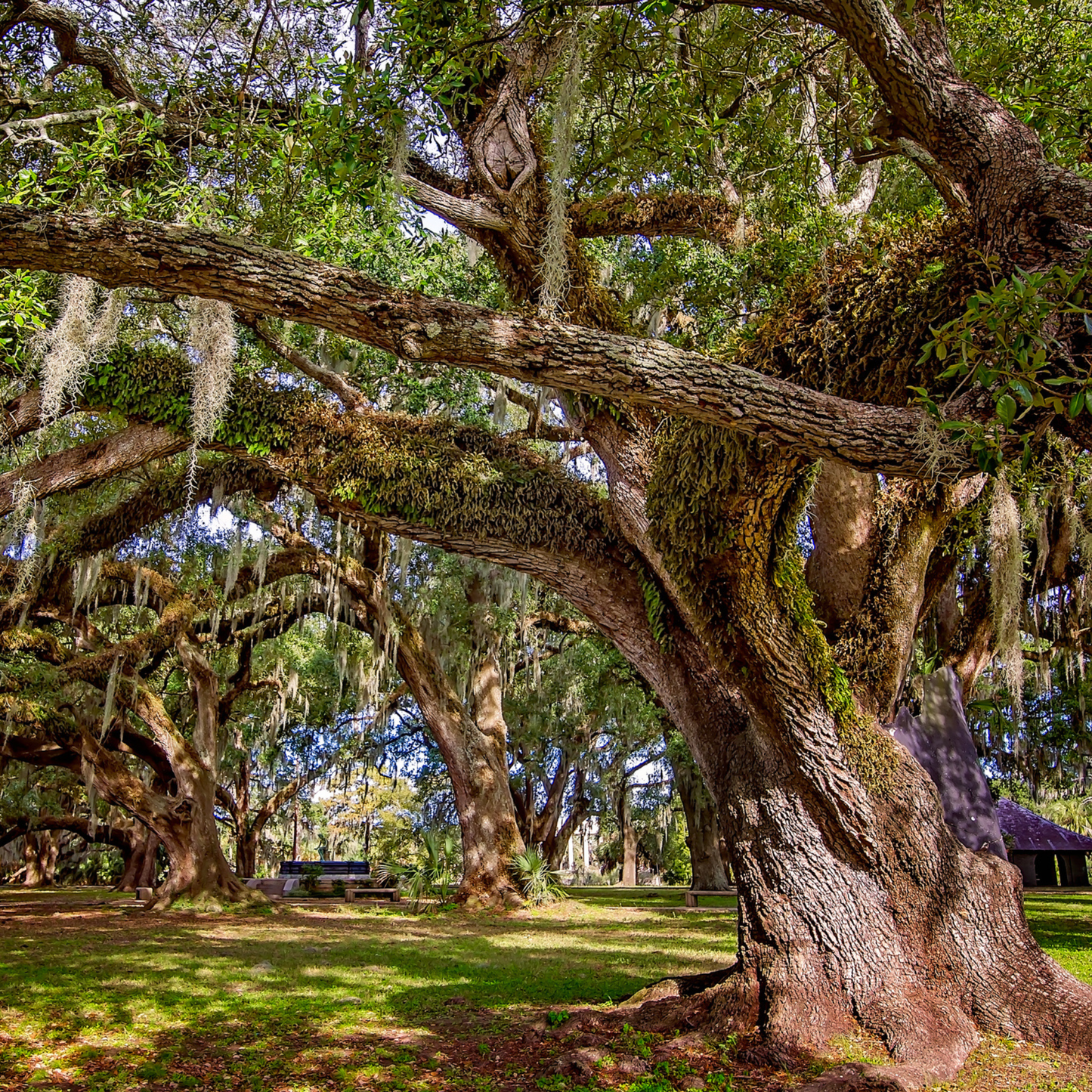
Quercus virginiana, the Southern Live Oak, is the most magnificent and architecturally distinctive native tree in the southeastern United States, developing a massive, low-branching, wide-spreading canopy that can reach 100 feet across while remaining relatively low in height, creating the most dramatic shade structure of any native tree in North America. It is evergreen, holding its small, glossy dark green leaves through winter and replacing them in early spring with fresh growth in a brief period of overlap that gives it continuous green canopy twelve months of the year. Its wood is the densest and most decay-resistant of any native oak, so hard it deflected cannonballs, and so valuable to the early American navy that oak forests were reserved by federal law. If you are looking to buy Live Oak seeds or grow this iconic southern tree from seed, this is the tree that defines the landscape of the South.
- Massive, low-branching, wide-spreading canopy reaching 100 feet across, the broadest of any native tree in the South
- Evergreen, holding its glossy dark green leaves through winter and providing continuous shade year-round
- The densest and most decay-resistant native oak wood, historically critical for naval shipbuilding
- Spanish moss-draped Live Oaks define the visual identity of the southern coastal landscape
- Produces small, dark acorns eaten intensively by wood ducks, deer, turkey, and waterfowl
Things you probably did not know about the Live Oak
The USS Constitution was built from Live Oak frames. Old Ironsides, the oldest commissioned naval vessel still afloat, was framed with Southern Live Oak harvested from the Sea Islands of Georgia. The combination of extraordinary density, resistance to rot, and curved grain structure of Live Oak limbs made it perfectly suited for the knees and frames of wooden warships. The British cannonballs that reportedly bounced off the Constitution's hull struck planking backed by Live Oak frames.
The US government bought an entire island to protect Live Oaks. In 1799, Congress authorized the purchase of Grover Island off the Georgia coast specifically to protect its Live Oak forest for future navy shipbuilding. This was the first federal land purchase made for a conservation purpose in American history, though the purpose was military rather than ecological. The concept of reserving forests for future national use was established by the need to protect Live Oak.
Live Oaks can live for over 500 years and the oldest known specimen may be over 1,000 years old. The Angel Oak on Johns Island near Charleston, South Carolina is estimated to be between 400 and 1,500 years old, with most credible estimates suggesting it is at least 500 years old. Its canopy covers 17,000 square feet and its branches, some reaching 89 feet in length, dip to the ground and rise again. It is one of the most visited natural landmarks in the southeastern United States.
The acorns are among the smallest of any oak but among the most important for waterfowl. Live Oak acorns are tiny, less than an inch long, but they are produced in enormous quantities and fall directly into the wetlands and tidal margins where the tree grows, making them one of the primary food sources for wood ducks, mallards, and other waterfowl in coastal southeastern forests. The small size means more acorns per unit of tree canopy area than larger-acorned species.
Growing Details
- Botanical Name: Quercus virginiana
- Stratification: Required, 30 to 60 days cold moist stratification, recalcitrant seed, keep moist
- USDA Zones: 7 to 10
- Soil: Adaptable, tolerates sandy, acidic, alkaline, and coastal soils, excellent salt tolerance
- Light: Full sun
- Height: 40 to 80 feet
- Spread: 60 to 100 feet
- Growth Rate: Moderate to fast, 2 to 3 feet per year when young
Plant it where it has room to become what it becomes. A Live Oak in full canopy is one of the most powerful natural things you can experience in the American South.
FAQ
FAQ
Do you pre-stratify the seeds?
Most of our seeds are not pre-stratified. They are stored under dry, cold conditions to preserve viability without initiating stratification, allowing you to time germination for your local growing season.
The exception is recalcitrant seeds. Because these seeds must remain moist to stay viable, they are kept in moist, cold storage and are therefore in a pre-stratified state. Depending on how long a particular batch has been stored, some may arrive with an emerging radicle and be ready to plant immediately. Radicle development is not guaranteed.
Please refer to the individual product page and included growing instructions for species-specific requirements.
Do any of your seeds need to stay moist? (Recalcitrant seeds)
Yes. Some species we offer, including Chestnut, Hazelnut, and Paw Paw, are recalcitrant and must remain moist to stay viable.
Please refrigerate these seeds immediately upon arrival unless they have already developed a radicle. Seeds with an emerging radicle should be planted promptly.
Do you ship internationally?
No. We currently ship within the United States only.
We previously shipped to Canada, but tariffs, duties, and import fees resulted in customers receiving significant and unpredictable additional charges upon delivery. Because we cannot reliably calculate or absorb these costs, we have suspended shipping to Canada.
At this time, we do not ship to Canada or other international destinations.
Shipping & What's Included
Shipping & What's Included
Shipping & Packaging
• Hand-packed in resealable kraft paper seed bags
• Stratification and planting instructions included on every seed pack
• Ships within 3–5 business days via USPS within the United States and U.S. territories
Return Policy
Return Policy
Due to the nature of our products, we do not accept returns on seeds.
If your order arrives damaged, contains incorrect items, or is missing items, please contact us within 7 days of delivery so we can resolve the issue.