

Littleleaf Linden Tree Seeds | Small-Leaved Lime | (Tilia cordata)
Littleleaf Linden Tree Seeds | Small-Leaved Lime | (Tilia cordata)
The most fragrant street tree in Europe. The honey that queens demanded. The shade that lasts centuries.
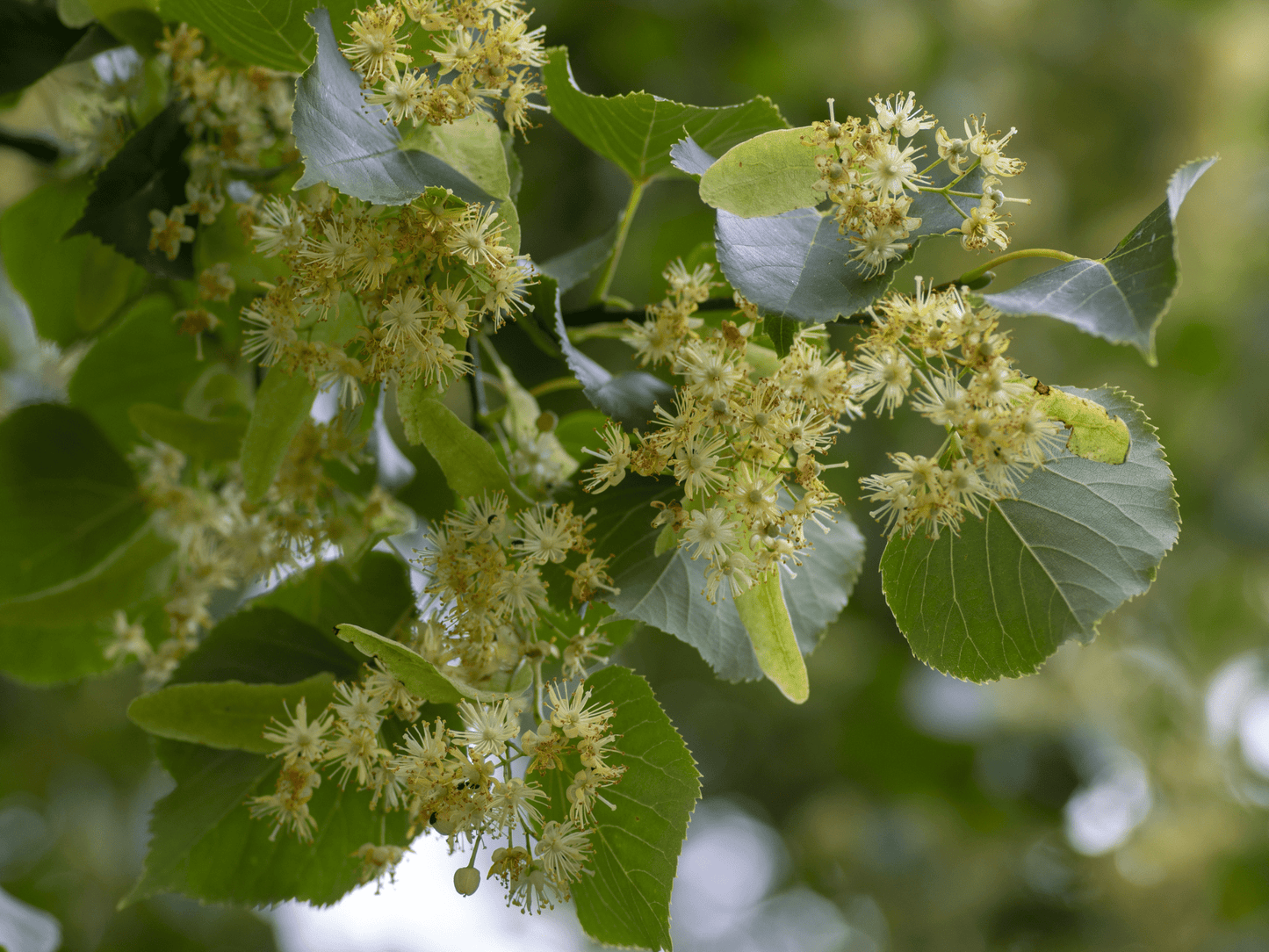
Tilia cordata, the Littleleaf Linden or Small-Leaved Lime, is the most widely planted ornamental linden in temperate horticulture and the source of one of the finest and most celebrated flower fragrances of any temperate tree, a sweet, honey-like, slightly narcotic scent that fills entire neighborhoods when large specimens bloom in midsummer and that has been recognized as one of the defining sensory experiences of the European summer for centuries. It is the linden of the great European boulevard plantings, the tree that lines the Unter den Linden in Berlin and equivalent grand avenues across the continent, developing into a massive, formal specimen of extraordinary longevity and urban tolerance. The flowers produce linden blossom honey considered among the finest in the world, and the dried flowers make the soothing tilleul tea that is one of the most consumed herbal teas in France. If you are looking to buy Littleleaf Linden seeds or grow Tilia cordata from seed, this is the linden of European tradition, with a documented history of cultivation and use that extends over 2,000 years.
- Intensely fragrant midsummer flowers filling entire streets with sweet honey-scented air when large specimens bloom
- The source of linden blossom honey and tilleul herbal tea, used in European tradition for centuries
- Extremely long-lived urban tree tolerating pollution, compaction, and heat better than most large shade trees
- Fine-textured, heart-shaped leaves creating an elegant canopy with distinctive small size relative to other lindens
- Cold-hardy to zone 3, one of the most cold-tolerant large ornamental trees with genuine fragrant flowers
Things you probably did not know about the Littleleaf Linden
The Unter den Linden boulevard in Berlin has been planted with linden trees since 1647. The famous promenade connecting the Brandenburg Gate to the Berlin Palace has been lined with linden trees, specifically Tilia cordata and related species, for nearly 400 years. The trees were destroyed during World War II and the subsequent division of Berlin but were replanted in both East and West Berlin after the war, and the restoration of the full avenue after reunification was considered a significant act of cultural healing. The name Under the Lindens carries the full weight of German cultural identity for the street that witnessed the most consequential moments of German history.
Linden blossom tea, tilleul, was prescribed by physicians across Europe for centuries as a treatment for anxiety, insomnia, and cardiovascular conditions. The pharmacological basis for these traditional uses has been partially validated in modern research. Tilia flowers contain flavonoids including quercetin and kaempferol along with volatile aromatic compounds that have demonstrated mild sedative and anxiolytic effects in laboratory and clinical studies. The tradition of drinking tilleul before bed as a soothing nightcap has been practiced in France continuously since the medieval period.
Bees can become intoxicated by linden nectar in certain conditions. Reports from across Europe describe honeybees and bumblebees becoming disoriented and dying beneath blooming linden trees under certain conditions. The cause appears to be compounds in some linden species' nectar that are harmless to humans but affect bee nervous systems differently, potentially combined with high sugar concentrations that promote excessive consumption. Not all linden species are implicated and the phenomenon is not consistent, but it has been documented enough times to be considered a genuine if uncommon occurrence.
The wood is the finest carving wood available in Europe and has been used by master carvers for 500 years. Linden wood, called limewood in the European carving tradition, is the preferred material for decorative woodcarving across Germanic and Central European craft traditions. Grinling Gibbons, the greatest decorative wood carver in English history, worked almost exclusively in linden wood for his elaborate naturalistic carvings in St. Paul's Cathedral and the royal palaces. The combination of fine, even grain, minimal figure, and ease of cutting in all directions makes linden the most responsive wood available for fine detail carving.
Growing Details
- Botanical Name: Tilia cordata
- Stratification: Required, warm stratification of 90 to 120 days followed by 90 to 120 days cold stratification
- USDA Zones: 3 to 7
- Soil: Well-drained, moist, slightly acidic to slightly alkaline, adaptable to urban soils
- Light: Full sun to partial shade
- Height: 50 to 70 feet
- Spread: 30 to 40 feet
- Growth Rate: Moderate, 1 to 2 feet per year
Plant it where you will be outdoors in July when it blooms. The fragrance on a warm evening from a large specimen is one of the most powerful and pleasant natural scents available in a temperate garden.
FAQ
FAQ
Do you pre-stratify the seeds?
Most of our seeds are not pre-stratified. They are stored under dry, cold conditions to preserve viability without initiating stratification, allowing you to time germination for your local growing season.
The exception is recalcitrant seeds. Because these seeds must remain moist to stay viable, they are kept in moist, cold storage and are therefore in a pre-stratified state. Depending on how long a particular batch has been stored, some may arrive with an emerging radicle and be ready to plant immediately. Radicle development is not guaranteed.
Please refer to the individual product page and included growing instructions for species-specific requirements.
Do any of your seeds need to stay moist? (Recalcitrant seeds)
Yes. Some species we offer, including Chestnut, Hazelnut, and Paw Paw, are recalcitrant and must remain moist to stay viable.
Please refrigerate these seeds immediately upon arrival unless they have already developed a radicle. Seeds with an emerging radicle should be planted promptly.
Do you ship internationally?
No. We currently ship within the United States only.
We previously shipped to Canada, but tariffs, duties, and import fees resulted in customers receiving significant and unpredictable additional charges upon delivery. Because we cannot reliably calculate or absorb these costs, we have suspended shipping to Canada.
At this time, we do not ship to Canada or other international destinations.
Shipping & What's Included
Shipping & What's Included
Shipping & Packaging
• Hand-packed in resealable kraft paper seed bags
• Stratification and planting instructions included on every seed pack
• Ships within 3–5 business days via USPS within the United States and U.S. territories
Return Policy
Return Policy
Due to the nature of our products, we do not accept returns on seeds.
If your order arrives damaged, contains incorrect items, or is missing items, please contact us within 7 days of delivery so we can resolve the issue.