

Lingonberry Tree Seeds | Cowberry | (Vaccinium vitis-idaea)
Lingonberry Tree Seeds | Cowberry | (Vaccinium vitis-idaea)
Tart enough to wake you up. Sweet enough to keep you coming back.
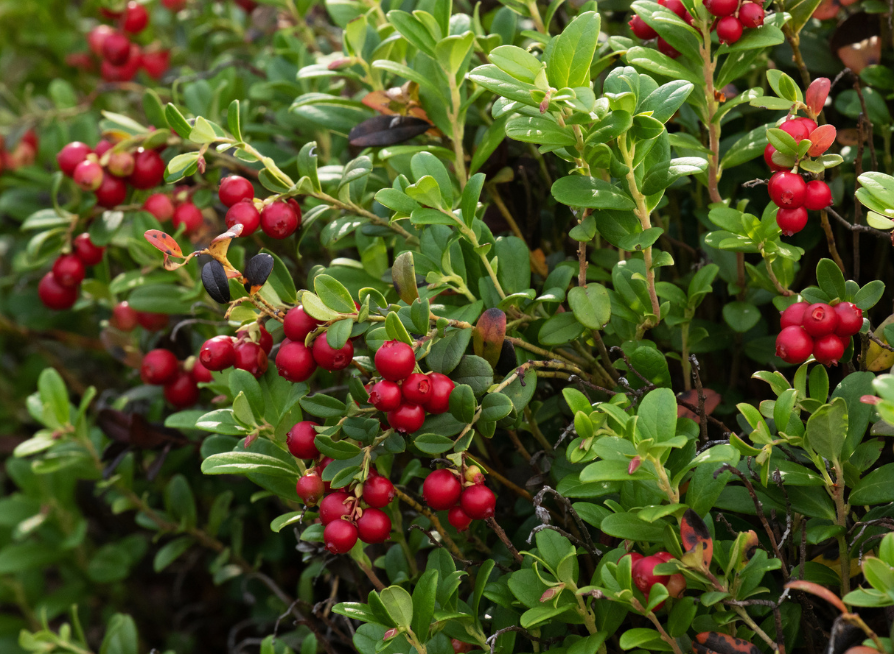
Vaccinium vitis-idaea, the Lingonberry or Cowberry, is one of the most cold-hardy and dependable fruit-bearing plants in the northern hemisphere, a low, creeping evergreen shrub that carpets boreal forests from Scandinavia to Siberia to the mountains of North America and produces one of the most beloved wild fruits in the world. The small, glossy red berries ripen twice a year in many climates, delivering a bright, tart flavor with just enough sweetness to make them irresistible fresh, and a depth of flavor that transforms when cooked into jams, sauces, and preserves. In Sweden, lingonberry jam is as foundational to the table as salt, served alongside meatballs, pancakes, game, and cheese in a tradition that has continued unbroken for centuries. The plant itself is evergreen, low-growing, and exceptionally ornamental, with small, waxy leaves, delicate pink bell-shaped flowers in spring, and clusters of bright red berries that persist into winter. Cold, poor soil, and neglect do not discourage it. If you are looking to buy Lingonberry seeds or grow Vaccinium vitis-idaea from seed, this is the boreal groundcover that produces real, edible fruit in conditions where most plants simply survive.
- Bright red tart berries ripen in summer and again in fall in many climates, producing two harvests per season
- Glossy, dark evergreen foliage provides year-round ornamental interest in the garden or landscape
- Delicate pink bell-shaped flowers in spring attract native bees and early-season pollinators
- Exceptional cold hardiness to Zone 2, thriving in conditions that eliminate most fruiting plants
- Naturally low and spreading habit makes it an ideal edible groundcover under trees or in acidic garden beds
Things you probably did not know about Lingonberry
Lingonberries are among the most antioxidant-dense fruits measured in any food study. Research consistently ranks Vaccinium vitis-idaea among the highest in total polyphenol and anthocyanin content of any fruit tested, exceeding blueberries in several analyses. The deep red pigment in the berries comes from anthocyanins that function as potent antioxidants, and the fruit also contains unusually high concentrations of benzoic acid, a natural preservative that contributes to the berry's long shelf life and its ability to be stored raw under refrigeration without spoiling for weeks.
The berry has been a survival food across the circumpolar north for thousands of years. Archaeological evidence documents Lingonberry consumption across Scandinavia, Finland, Siberia, and subarctic North America dating back thousands of years. In traditional Nordic and Sami cultures, lingonberries were collected in enormous quantities each autumn and stored raw or lightly preserved through the winter months, providing critical vitamin C and micronutrients during seasons when no other fresh fruit was available. The berries' natural benzoic acid content meant they could be stored in cool water or packed in birch bark containers without fermentation or spoilage.
It thrives specifically because of acidic, nutrient-poor soil, not in spite of it. Vaccinium vitis-idaea has evolved alongside mycorrhizal fungi that help it extract phosphorus and trace minerals from thin, acidic soils that would leave most plants deficient and stunted. Attempting to grow Lingonberry in rich, neutral garden soil often produces lush foliage with poor fruiting and reduced hardiness. The plant is genuinely adapted to lean conditions and repays growers who match its preferred pH of 4.5 to 5.5 with consistent fruiting and long-term vigor that can span decades.
Lingonberry and reindeer have a documented ecological relationship spanning thousands of years. Across Scandinavian and Siberian boreal forests, Lingonberry forms a dominant layer of the forest understory and constitutes a significant portion of reindeer and caribou diet through late summer and autumn. The Sami people, who have herded reindeer across Scandinavia for millennia, historically timed autumn migrations to follow both the berry harvest and the animal herds through landscapes carpeted in fruiting Vaccinium. This three-way relationship between people, animals, and plant shaped one of the most enduring subsistence cultures in human history.
Growing Details
- Botanical Name: Vaccinium vitis-idaea
- Seed Treatment: Surface sow on acidic, moist medium; no stratification required but cold stratification of 4 to 6 weeks can improve germination uniformity
- USDA Zones: 2 to 7
- Soil: Acidic, well-drained, sandy or peaty soil with pH 4.5 to 5.5; avoid alkaline or clay-heavy conditions
- Light: Full sun to partial shade; tolerates dappled light under conifers
- Height: 4 to 16 inches
- Spread: 12 to 24 inches, spreading by rhizomes to form a colony over time
- Growth Rate: Slow to moderate; 2 to 3 years to first fruiting from seed
Plant it under pines or in an acidic bed and let it spread. Once established, Lingonberry asks for almost nothing and gives back every year, a carpet of glossy green in summer, white flowers in spring, and small, bright red berries that taste exactly like the northern forests they come from.
FAQ
FAQ
Do you pre-stratify the seeds?
Most of our seeds are not pre-stratified. They are stored under dry, cold conditions to preserve viability without initiating stratification, allowing you to time germination for your local growing season.
The exception is recalcitrant seeds. Because these seeds must remain moist to stay viable, they are kept in moist, cold storage and are therefore in a pre-stratified state. Depending on how long a particular batch has been stored, some may arrive with an emerging radicle and be ready to plant immediately. Radicle development is not guaranteed.
Please refer to the individual product page and included growing instructions for species-specific requirements.
Do any of your seeds need to stay moist? (Recalcitrant seeds)
Yes. Some species we offer, including Chestnut, Hazelnut, and Paw Paw, are recalcitrant and must remain moist to stay viable.
Please refrigerate these seeds immediately upon arrival unless they have already developed a radicle. Seeds with an emerging radicle should be planted promptly.
Do you ship internationally?
No. We currently ship within the United States only.
We previously shipped to Canada, but tariffs, duties, and import fees resulted in customers receiving significant and unpredictable additional charges upon delivery. Because we cannot reliably calculate or absorb these costs, we have suspended shipping to Canada.
At this time, we do not ship to Canada or other international destinations.
Shipping & What's Included
Shipping & What's Included
Shipping & Packaging
• Hand-packed in resealable kraft paper seed bags
• Stratification and planting instructions included on every seed pack
• Ships within 3–5 business days via USPS within the United States and U.S. territories
Return Policy
Return Policy
Due to the nature of our products, we do not accept returns on seeds.
If your order arrives damaged, contains incorrect items, or is missing items, please contact us within 7 days of delivery so we can resolve the issue.