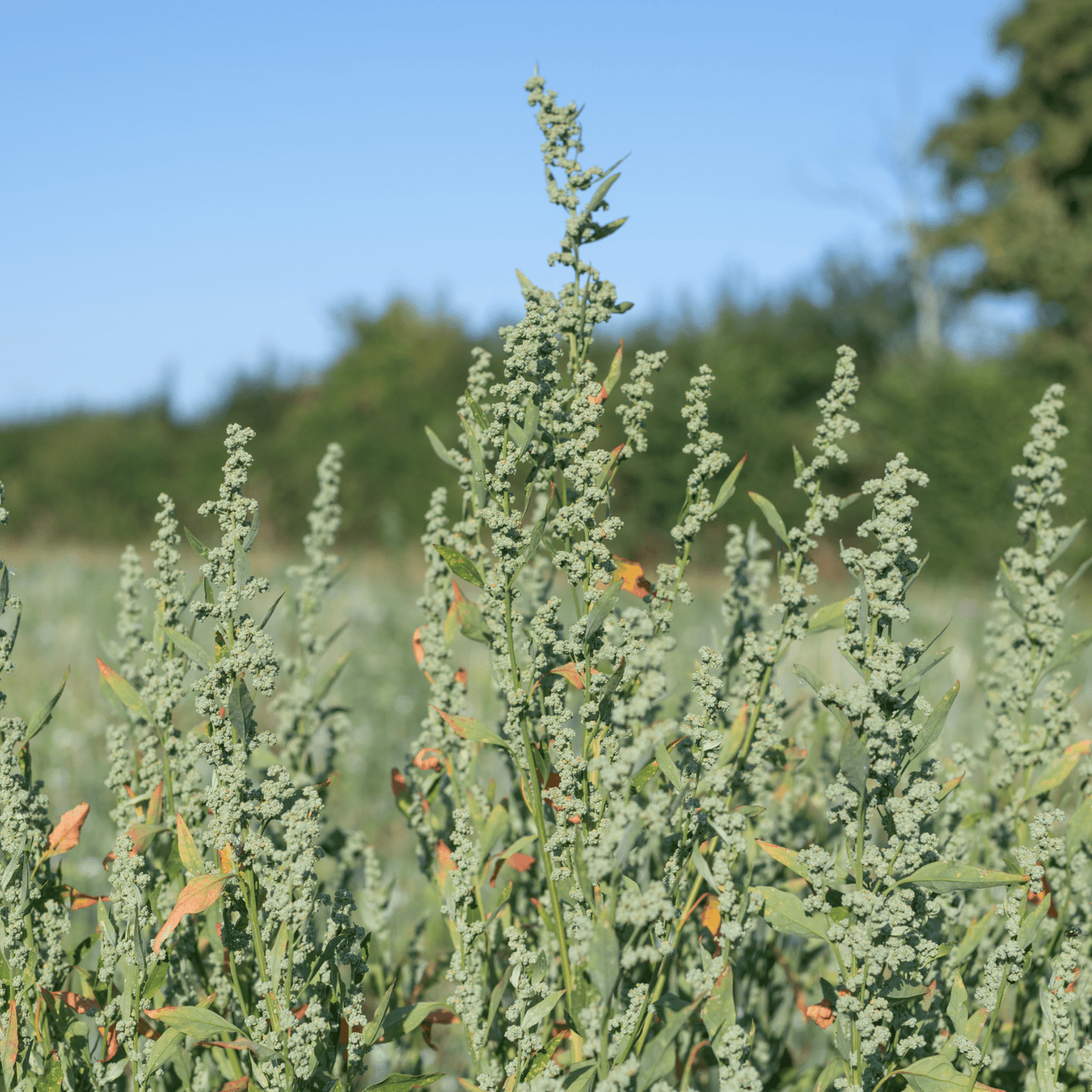


Lamb’s Quarters Seeds | Goosefoot | Wild Hen | (Chenopodium album)
Lamb’s Quarters Seeds | Goosefoot | Wild Hen | (Chenopodium album)
The weed your grandparents ate. The green that grows itself.
Chenopodium album, known as Lamb's Quarters, is one of the most nutritious and widely distributed edible wild greens in the world, a fast-growing annual that appears in gardens, fields, and disturbed ground across every continent except Antarctica. The young leaves taste like a mild spinach with a slightly earthy, mineral richness and are eaten raw in salads, cooked like spinach, or dried and powdered as a nutrient supplement. It is the kind of plant foragers know and gardeners pull out without realizing what they are discarding. Grown intentionally, it is one of the most productive edible greens available for the effort required.
- Highly nutritious edible green comparable to spinach in flavor and superior to it in several nutrients
- Grows quickly from seed in almost any soil with almost no care required
- Young leaves eaten raw or cooked, seeds ground into flour as a traditional grain substitute
- One of the most productive edible plants available for the effort required to grow it
- Historical food plant with a documented culinary tradition spanning thousands of years on multiple continents
Things you probably did not know about Lamb's Quarters
It was a staple food in prehistoric Europe. Lamb's Quarters seeds have been found in the stomachs of bog bodies in Denmark and Germany preserved from the Iron Age, indicating it was eaten as a regular part of the diet in northern Europe thousands of years before modern vegetables arrived. Archaeological sites across Europe consistently turn up Chenopodium seeds in quantities suggesting deliberate cultivation or at least protection of naturally occurring plants.
It is more nutritious than spinach by several measures. Lamb's Quarters contains higher concentrations of calcium, Vitamin A, Vitamin C, and protein per gram than commercial spinach. It also contains more iron than most commercial leafy greens and significant quantities of B vitamins. It is considered a superfood in traditional food systems across Central Asia, South Asia, and indigenous North America.
The seeds were ground into flour long before wheat arrived in the Americas. Chenopodium seeds were harvested and ground into a dark flour by Indigenous peoples across North America for centuries. The closely related Chenopodium quinoa, domesticated in the Andes, is now one of the most commercially valuable grain crops in the world. Lamb's Quarters is its wild relative and produces seeds with similar nutritional properties on a smaller scale.
It self-seeds so enthusiastically you only need to plant it once. A single Lamb's Quarters plant can produce 75,000 seeds per season. Once established in a garden, it will return reliably each spring from seeds that overwinter in the soil. Most gardeners who plant it intentionally find that management quickly becomes more relevant than propagation.
Growing Details
- Botanical Name: Chenopodium album
- Stratification: Not required
- Annual: Grows in a single season
- Soil: Extremely adaptable, grows in almost any soil including poor, disturbed, or compacted conditions
- Light: Full sun to partial shade
- Height: 2 to 6 feet
- Harvest: Begin harvesting young leaves when plants are 6 to 12 inches tall, before flowering for best flavor
Grow it intentionally and harvest it before it grows past you. The most nutritious thing in your garden might be the plant everyone else is pulling out.
FAQ
FAQ
Do you pre-stratify the seeds?
Most of our seeds are not pre-stratified. They are stored under dry, cold conditions to preserve viability without initiating stratification, allowing you to time germination for your local growing season.
The exception is recalcitrant seeds. Because these seeds must remain moist to stay viable, they are kept in moist, cold storage and are therefore in a pre-stratified state. Depending on how long a particular batch has been stored, some may arrive with an emerging radicle and be ready to plant immediately. Radicle development is not guaranteed.
Please refer to the individual product page and included growing instructions for species-specific requirements.
Do any of your seeds need to stay moist? (Recalcitrant seeds)
Yes. Some species we offer, including Chestnut, Hazelnut, and Paw Paw, are recalcitrant and must remain moist to stay viable.
Please refrigerate these seeds immediately upon arrival unless they have already developed a radicle. Seeds with an emerging radicle should be planted promptly.
Do you ship internationally?
No. We currently ship within the United States only.
We previously shipped to Canada, but tariffs, duties, and import fees resulted in customers receiving significant and unpredictable additional charges upon delivery. Because we cannot reliably calculate or absorb these costs, we have suspended shipping to Canada.
At this time, we do not ship to Canada or other international destinations.
Shipping & What's Included
Shipping & What's Included
Shipping & Packaging
• Hand-packed in resealable kraft paper seed bags
• Stratification and planting instructions included on every seed pack
• Ships within 3–5 business days via USPS within the United States and U.S. territories
Return Policy
Return Policy
Due to the nature of our products, we do not accept returns on seeds.
If your order arrives damaged, contains incorrect items, or is missing items, please contact us within 7 days of delivery so we can resolve the issue.