

Kousa Dogwood Tree Seeds (Cornus Kousa)
Kousa Dogwood Tree Seeds (Cornus Kousa)
The dogwood that blooms in June. The one that makes fruit.
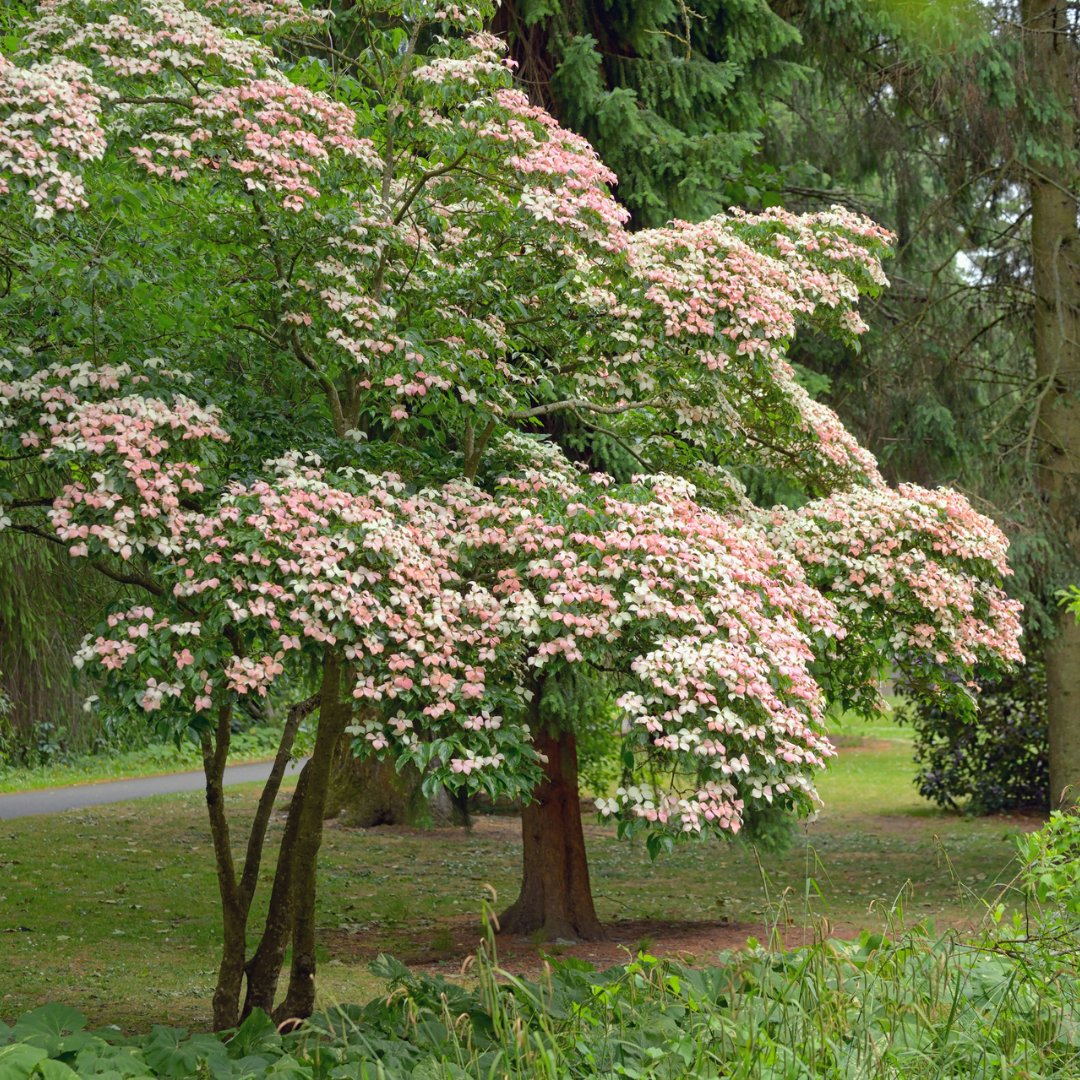
Cornus kousa, the Kousa Dogwood, blooms a full four to six weeks after the native White Flowering Dogwood, extending the dogwood season into early summer with white to pale pink pointed bracts that have a different, more star-like form than the rounded bracts of the native species. It is also more disease-resistant, virtually immune to the dogwood anthracnose that devastates Cornus florida, and produces distinctive red raspberry-like fruits in late summer that are edible, sweet, and relished by birds and wildlife. The exfoliating bark that develops on mature specimens, revealing patches of tan, gray, and cream beneath the outer layer, creates year-round ornamental interest even when the tree is not in flower or fruit. If you are looking to buy Kousa Dogwood seeds or grow this ornamental flowering tree from seed, this is the dogwood with the longest combined season of interest of any ornamental tree in a temperate garden.
- Pointed, star-like white bracts in June, four to six weeks after native dogwoods have finished
- Virtually immune to dogwood anthracnose that devastates the native White Flowering Dogwood
- Red raspberry-like edible fruits in late summer eaten by birds and wildlife
- Exfoliating bark on mature specimens revealing patches of tan, gray, and cream beneath
- Brilliant scarlet and purple fall foliage, one of the most complete four-season ornamental trees available
Things you probably did not know about the Kousa Dogwood
The fruit is edible and has a tropical custard-like flavor when fully ripe. Kousa Dogwood fruit, which looks like a large red raspberry or lychee, has a soft, custard-like flesh with a mild, sweet, slightly tropical flavor when fully ripe in late summer. It can be eaten fresh or used in preserves. The flavor is more interesting and complex than its obscurity in western cuisine suggests, and it is consumed regularly in Japan and Korea where the tree is native.
It was used medicinally in traditional Chinese and Korean medicine. The bark, fruit, and roots of Kousa Dogwood have been used in traditional East Asian medicine for fever, joint pain, and urinary conditions. Modern pharmacological research has identified ursolic acid and other bioactive compounds in Kousa Dogwood fruit and bark that have demonstrated anti-inflammatory, antimicrobial, and anti-tumor properties in laboratory studies.
The bracts are modified leaves not petals. The four white structures that make the Kousa Dogwood display so spectacular are bracts, modified leaves that surround the cluster of actual tiny flowers at the center, exactly as in the native White Flowering Dogwood. The bracts of Kousa Dogwood are more pointed and less rounded than those of the native species, giving the flower head a sharper, more star-like outline that many gardeners find more elegant.
It is significantly longer-lived than the native dogwood in many landscape situations. White Flowering Dogwood, while beautiful, tends to be relatively short-lived in landscape settings outside its natural woodland edge habitat, often declining within 20 to 30 years. Kousa Dogwood routinely survives 50 years or more in similar conditions and maintains its ornamental quality throughout a much longer life, making it a more permanent investment in the landscape.
Growing Details
- Botanical Name: Cornus kousa
- Stratification: Required, warm stratification of 60 days followed by 90 days cold stratification
- USDA Zones: 5 to 8
- Soil: Well-drained, moist, slightly acidic, rich in organic matter
- Light: Full sun to partial shade, best flowering and fruit in full sun
- Height: 15 to 30 feet
- Spread: 15 to 30 feet
- Growth Rate: Slow to moderate, 1 to 1.5 feet per year
Plant it where the June flowers will be visible from a seating area or window. Then notice the bark in January and the fruit in August. Every season gives you something different to look at.
FAQ
FAQ
Do you pre-stratify the seeds?
Most of our seeds are not pre-stratified. They are stored under dry, cold conditions to preserve viability without initiating stratification, allowing you to time germination for your local growing season.
The exception is recalcitrant seeds. Because these seeds must remain moist to stay viable, they are kept in moist, cold storage and are therefore in a pre-stratified state. Depending on how long a particular batch has been stored, some may arrive with an emerging radicle and be ready to plant immediately. Radicle development is not guaranteed.
Please refer to the individual product page and included growing instructions for species-specific requirements.
Do any of your seeds need to stay moist? (Recalcitrant seeds)
Yes. Some species we offer, including Chestnut, Hazelnut, and Paw Paw, are recalcitrant and must remain moist to stay viable.
Please refrigerate these seeds immediately upon arrival unless they have already developed a radicle. Seeds with an emerging radicle should be planted promptly.
Do you ship internationally?
No. We currently ship within the United States only.
We previously shipped to Canada, but tariffs, duties, and import fees resulted in customers receiving significant and unpredictable additional charges upon delivery. Because we cannot reliably calculate or absorb these costs, we have suspended shipping to Canada.
At this time, we do not ship to Canada or other international destinations.
Shipping & What's Included
Shipping & What's Included
Shipping & Packaging
• Hand-packed in resealable kraft paper seed bags
• Stratification and planting instructions included on every seed pack
• Ships within 3–5 business days via USPS within the United States and U.S. territories
Return Policy
Return Policy
Due to the nature of our products, we do not accept returns on seeds.
If your order arrives damaged, contains incorrect items, or is missing items, please contact us within 7 days of delivery so we can resolve the issue.