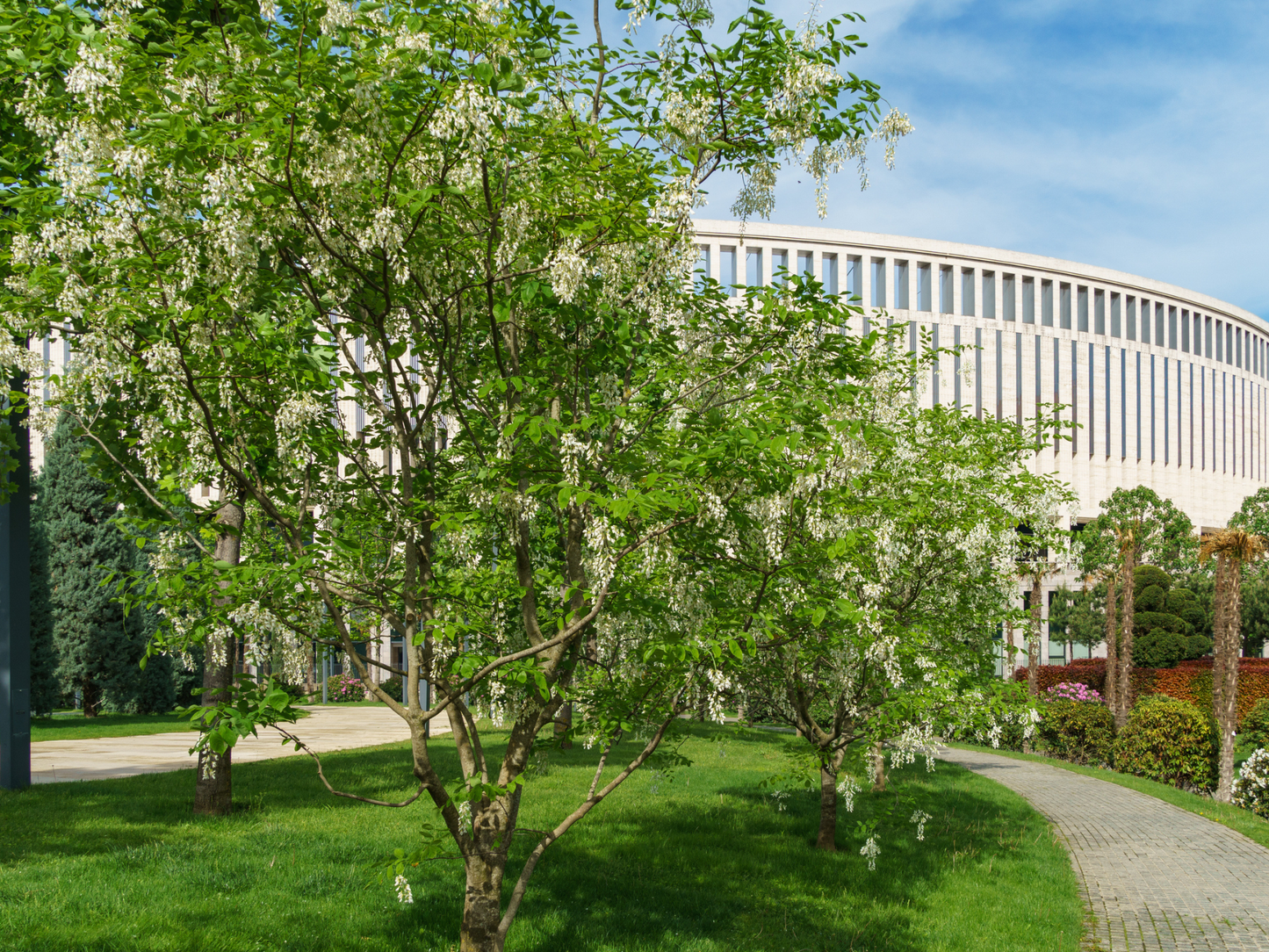


Kentucky Yellowwood Tree Seeds | American Yellowwood | (Cladrastis kentukea)
Kentucky Yellowwood Tree Seeds | American Yellowwood | (Cladrastis kentukea)
White wisteria-like flowers. The rarest native tree most people have never heard of.
Cladrastis kentukea, the Kentucky Yellowwood or American Yellowwood, is one of the most beautiful and most underplanted native flowering trees in North America, producing cascading clusters of fragrant white flowers up to 14 inches long in late spring that hang from every branch in a display that stops traffic and makes visitors demand to know what the tree is. It blooms heavily every other year in an alternating pattern, with a massive year of flowering followed by a relatively quiet year, which makes the heavy bloom years particularly spectacular. Native to a small, disjunct range across the limestone hills of Kentucky, Tennessee, and the Ozarks, it is genuinely rare in the wild but performs beautifully across a wide range of eastern gardens and is completely cold-hardy in zone 3. If you are looking to buy Kentucky Yellowwood seeds or grow this extraordinary native from seed, this is the flowering tree that landscape professionals know and general gardeners discover once and never forget.
- Cascading clusters of fragrant white flowers up to 14 inches long hanging from every branch in late spring
- Flowers in an alternating heavy-light pattern, with spectacular flowering years every other year
- Smooth, beech-like gray bark beautiful in every season including winter
- Native but genuinely rare in the wild, cold-hardy to zone 3 while remaining adapted to southern landscapes
- Brilliant yellow fall color, the most vivid fall display of any white-flowering native tree
Things you probably did not know about the Kentucky Yellowwood
The wood is bright yellow inside. When freshly cut, the heartwood of Kentucky Yellowwood is a vivid canary yellow, produced by the same flavonoid compounds that color the wood of many legume family trees. The wood of Kentucky Yellowwood was historically used for small cabinetry pieces where the yellow color was decorative, though the tree is too rare and slow-growing to have been a commercial timber species. The yellow color fades to brown over time with light exposure.
It belongs to the legume family and fixes nitrogen like beans and peas. Kentucky Yellowwood is a member of the Fabaceae family, the legume family, and like all legumes it forms associations with nitrogen-fixing bacteria in its root nodules that convert atmospheric nitrogen into a form plants can use. This nitrogen-fixing ability means Kentucky Yellowwood enriches the soil around it as it grows, improving conditions for companion plantings and successor plants.
The alternating bloom pattern is not unique to Yellowwood but is more dramatic in it than most trees. Many flowering trees produce heavy bloom crops in alternating years as the energy budget of flowering in a heavy year depletes reserves that require a full season to replenish. In Kentucky Yellowwood this alternating pattern is particularly pronounced, with the heavy years producing such an overwhelming flower display that the light years are noticeably different. The heavy years produce so much flower fragrance that the tree can be smelled from a considerable distance.
It was first documented by European botanists only in 1796. Despite being native to North America, Kentucky Yellowwood was one of the last major native trees to be scientifically described, first documented by the French botanist André Michaux in 1796 during his extensive travels through the American interior. The restricted and scattered native range, entirely within inland areas not frequently visited by early coastal botanists, explains the late discovery of a tree that was known to Indigenous peoples of Kentucky and Tennessee for centuries.
Growing Details
- Botanical Name: Cladrastis kentukea
- Stratification: Required, scarification followed by 30 to 60 days cold stratification
- USDA Zones: 3 to 8
- Soil: Well-drained, adaptable to limestone and calcareous soils, tolerates a range of conditions
- Light: Full sun to partial shade
- Height: 30 to 50 feet
- Spread: 40 to 55 feet
- Growth Rate: Moderate, 1 to 1.5 feet per year
Plant it where you will see it from outside in May during a heavy bloom year. The first time you see it in full flower you will understand why every arborist who knows it plants it given the chance.
FAQ
FAQ
Do you pre-stratify the seeds?
Most of our seeds are not pre-stratified. They are stored under dry, cold conditions to preserve viability without initiating stratification, allowing you to time germination for your local growing season.
The exception is recalcitrant seeds. Because these seeds must remain moist to stay viable, they are kept in moist, cold storage and are therefore in a pre-stratified state. Depending on how long a particular batch has been stored, some may arrive with an emerging radicle and be ready to plant immediately. Radicle development is not guaranteed.
Please refer to the individual product page and included growing instructions for species-specific requirements.
Do any of your seeds need to stay moist? (Recalcitrant seeds)
Yes. Some species we offer, including Chestnut, Hazelnut, and Paw Paw, are recalcitrant and must remain moist to stay viable.
Please refrigerate these seeds immediately upon arrival unless they have already developed a radicle. Seeds with an emerging radicle should be planted promptly.
Do you ship internationally?
No. We currently ship within the United States only.
We previously shipped to Canada, but tariffs, duties, and import fees resulted in customers receiving significant and unpredictable additional charges upon delivery. Because we cannot reliably calculate or absorb these costs, we have suspended shipping to Canada.
At this time, we do not ship to Canada or other international destinations.
Shipping & What's Included
Shipping & What's Included
Shipping & Packaging
• Hand-packed in resealable kraft paper seed bags
• Stratification and planting instructions included on every seed pack
• Ships within 3–5 business days via USPS within the United States and U.S. territories
Return Policy
Return Policy
Due to the nature of our products, we do not accept returns on seeds.
If your order arrives damaged, contains incorrect items, or is missing items, please contact us within 7 days of delivery so we can resolve the issue.