

Judas Tree Tree Seeds | European Redbud | (Cercis siliquastrum)
Judas Tree Tree Seeds | European Redbud | (Cercis siliquastrum)
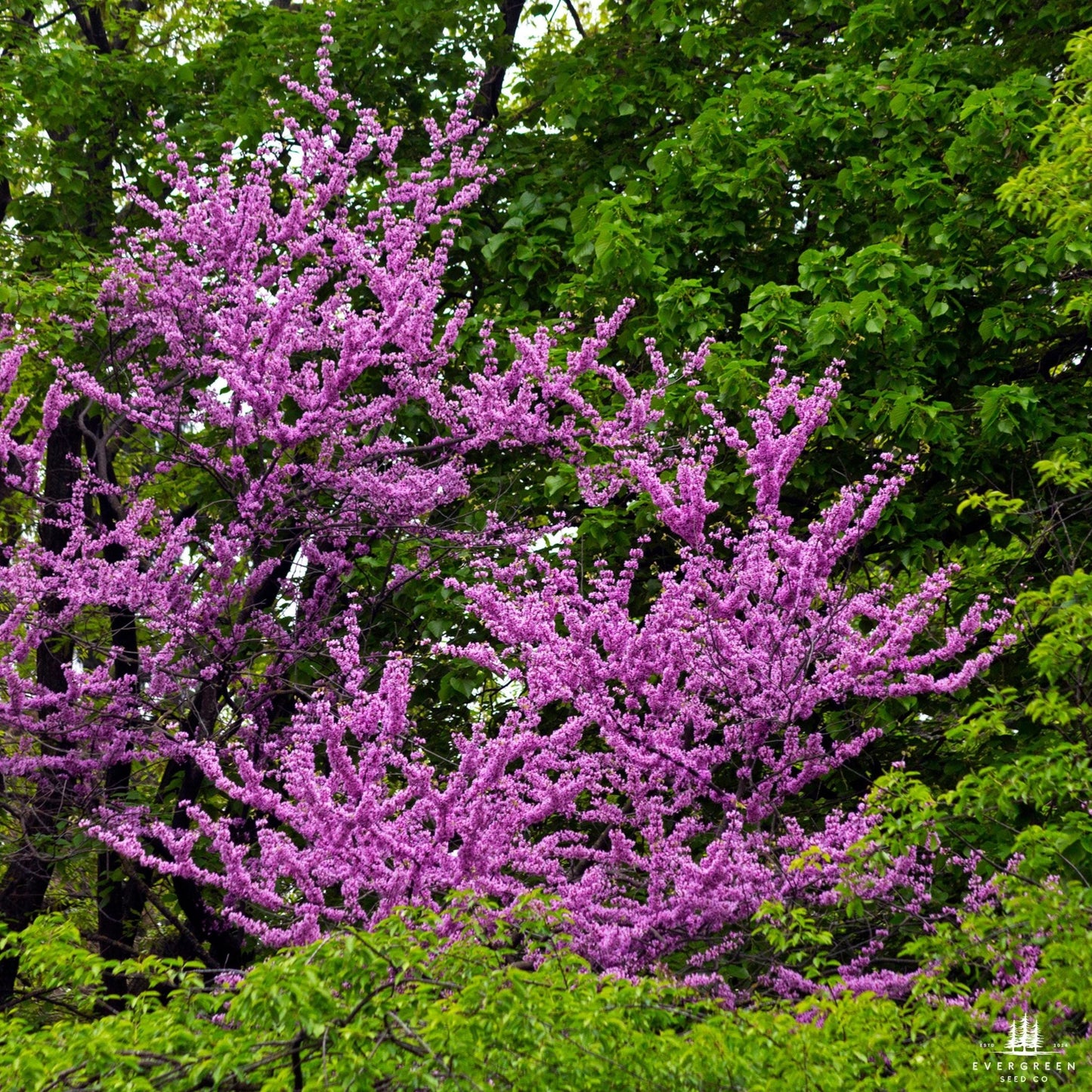
Intense purple-pink flowers covering the bare trunk and branches. The most dramatic spring display in the Mediterranean garden.
Cercis siliquastrum, the Judas Tree, is the Old World counterpart of the Eastern Redbud, a Mediterranean and Middle Eastern native that produces one of the most dramatic spring flowering displays of any ornamental tree, covering its bare trunk, branches, and twigs in dense clusters of intense purple-pink flowers that emerge directly from the wood in a phenomenon called cauliflory, the same trait as Redbud but displayed even more intensely on a tree that has been cultivated in gardens for over 2,000 years. The flowers appear in early to mid-spring before the heart-shaped leaves, covering every surface from the highest branch to the base of the trunk in a purple-pink cloud that is visible from considerable distances. It is more drought-tolerant than Eastern Redbud, better suited to alkaline soils, and more adapted to hot, dry Mediterranean-style climates. If you are looking to buy Judas Tree seeds or grow this Mediterranean native from seed, this is the spring tree for dry, warm-climate gardens where Eastern Redbud underperforms.
- Dense clusters of intense purple-pink flowers covering trunk, branches, and twigs in early spring before leaves
- More drought-tolerant and alkaline-soil-adapted than Eastern Redbud, better for Mediterranean climates
- Heart-shaped leaves following the flowers in a clean green that holds through summer
- Flat, ornamental seed pods that persist through winter providing additional seasonal interest
- Has been cultivated in Mediterranean and Middle Eastern gardens for over 2,000 years
Things you probably did not know about the Judas Tree
The legend that Judas Iscariot hanged himself from this tree is almost certainly false but the name persisted for a specific reason. The tree that bore Judas is the legendary source of the common name, but botanists and biblical scholars agree the Judas Tree does not grow in the regions of the Levant where the events described in the New Testament took place. The more likely origin of the name is a corruption of the French name Arbre de Judée, meaning tree of Judea, which referred to the tree's association with the region of the Middle East rather than any specific person. Arbre de Judée became Judas Tree in English.
The flowers are edible and have been eaten in Mediterranean cuisines for centuries. Judas Tree flowers have a slightly tart, slightly sweet flavor with a fresh acidity and have been used in Mediterranean cooking as a salad ingredient, a garnish, and a flavor accent in spring dishes for centuries. In Turkey and Lebanon, the flowers are eaten raw in salads, battered and fried, or pickled in vinegar as a condiment. The young seed pods are also edible when very young and tender, prepared similarly to snow peas in some regional traditions.
It was one of the most important ornamental trees in ancient Rome and Persia. The Judas Tree appears in Roman and Persian garden records and is described by classical authors as one of the most beautiful spring-flowering trees in the Mediterranean landscape. Gardens of the Islamic Golden Age in Andalusia and Persia featured it prominently, and its use in formal garden design influenced the European garden tradition when Renaissance travelers returned from the Middle East with descriptions and seeds.
The tree produces flowers before it produces leaves because it experiences spring warming before the soil has warmed enough for root activity to supply leaf production. The early spring temperature increase warms the above-ground wood of Judas Tree sufficiently to trigger flowering before the soil at root level has reached temperatures that drive significant water and nutrient uptake. The flowers, which require minimal resources compared to leaf production, open on the stored energy available in the wood before full metabolic resumption can support leaf expansion.
Growing Details
- Botanical Name: Cercis siliquastrum
- Stratification: Required, scarification followed by 30 to 60 days cold stratification
- USDA Zones: 6 to 9
- Soil: Well-drained, tolerates poor, dry, and alkaline soils better than Eastern Redbud
- Light: Full sun
- Height: 15 to 25 feet
- Spread: 15 to 25 feet
- Growth Rate: Moderate, 1 to 1.5 feet per year
Plant it where the spring flowers will be seen against a wall, fence, or dark background that maximizes the contrast of the purple-pink against something solid. In March it becomes the most-photographed thing in the garden.
FAQ
FAQ
Do you pre-stratify the seeds?
Most of our seeds are not pre-stratified. They are stored under dry, cold conditions to preserve viability without initiating stratification, allowing you to time germination for your local growing season.
The exception is recalcitrant seeds. Because these seeds must remain moist to stay viable, they are kept in moist, cold storage and are therefore in a pre-stratified state. Depending on how long a particular batch has been stored, some may arrive with an emerging radicle and be ready to plant immediately. Radicle development is not guaranteed.
Please refer to the individual product page and included growing instructions for species-specific requirements.
Do any of your seeds need to stay moist? (Recalcitrant seeds)
Yes. Some species we offer, including Chestnut, Hazelnut, and Paw Paw, are recalcitrant and must remain moist to stay viable.
Please refrigerate these seeds immediately upon arrival unless they have already developed a radicle. Seeds with an emerging radicle should be planted promptly.
Do you ship internationally?
No. We currently ship within the United States only.
We previously shipped to Canada, but tariffs, duties, and import fees resulted in customers receiving significant and unpredictable additional charges upon delivery. Because we cannot reliably calculate or absorb these costs, we have suspended shipping to Canada.
At this time, we do not ship to Canada or other international destinations.
Shipping & What's Included
Shipping & What's Included
Shipping & Packaging
• Hand-packed in resealable kraft paper seed bags
• Stratification and planting instructions included on every seed pack
• Ships within 3–5 business days via USPS within the United States and U.S. territories
Return Policy
Return Policy
Due to the nature of our products, we do not accept returns on seeds.
If your order arrives damaged, contains incorrect items, or is missing items, please contact us within 7 days of delivery so we can resolve the issue.