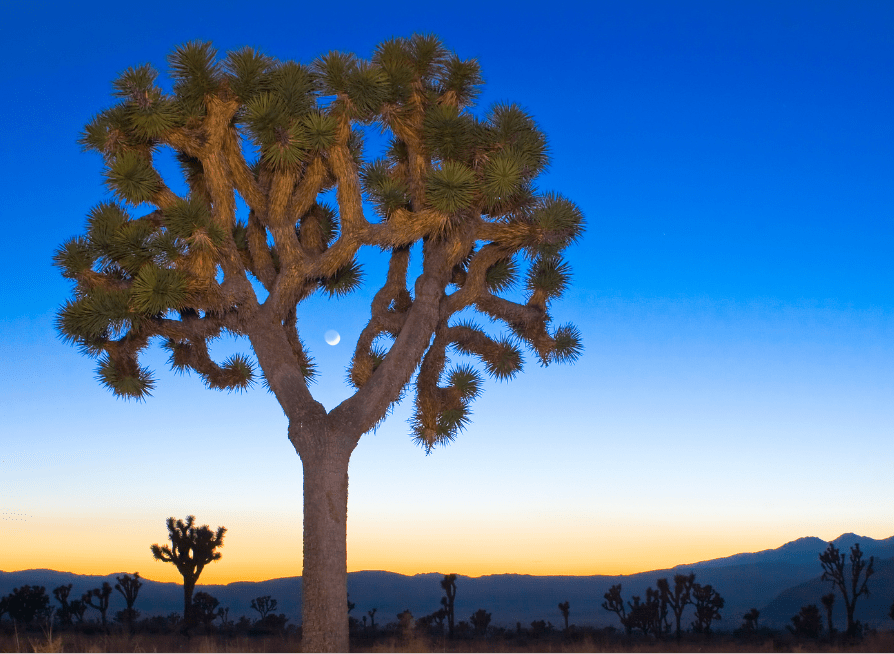


Joshua Tree Tree Seeds | Yucca Palm | (Yucca brevifolia)
Joshua Tree Tree Seeds | Yucca Palm | (Yucca brevifolia)
A desert icon. A survivor. Something your garden has never seen before.
The Joshua Tree is not a tree, not a palm, and not easy to forget. It is the defining silhouette of the American Mojave — arms outstretched, leaves like daggers, growing slowly and living for centuries. Growing one from seed is a long game, and it is absolutely worth it. If you are looking to buy Joshua Tree seeds or grow Yucca brevifolia from seed, you have found the right place.
5 reasons to grow Joshua Tree from seed:
- One of the most iconic and recognizable plants in North America
- Extremely drought-tolerant once established — thrives on neglect
- Slow-growing but long-lived, with some specimens exceeding 500 years
- Produces stunning cream-colored flower clusters in late winter to early spring
- Striking sculptural form that works as a statement plant in dry gardens and xeriscape landscapes
Things you probably did not know about Joshua Trees
Named by Mormon pioneers crossing the Mojave in the 1800s, they believed the tree's outstretched branches resembled the biblical Joshua raising his arms toward the promised land. The name stuck, and so did the legend.
Joshua Trees and yucca moths have one of the most famous co-dependent relationships in the natural world. The Tegeticula moth is the only pollinator that can fertilize the flowers — and the only place the moth can lay its eggs is inside those same flowers. Neither survives without the other. It is one of the clearest examples of co-evolution on the planet.
Joshua Trees do not grow rings like true trees. Because they are monocots — closer to grasses and lilies than to oaks or pines — scientists estimate their age by height, factoring in the highly variable growth rate of 1 to 3 inches per year. A 30-foot specimen could be anywhere from 150 to over 500 years old.
Climate change is pushing Joshua Trees out of the southern portions of their range faster than they can migrate north. Seeds are dispersed by ground squirrels and packrats, not wind — and those animals don't move fast enough to keep up. Growing Joshua Trees in new, suitable locations is genuinely conservation work.
Growing Details
- Botanical Name: Yucca brevifolia
- Stratification: Scarify seed coat lightly, then sow in warm (70-85°F) sandy mix — no cold stratification required
- USDA Zones: 7–10
- Soil: Sandy, rocky, extremely well-drained — tolerates poor, dry soils
- Light: Full sun
- Height: 15–40 feet
- Spread: 10–15 feet
- Growth Rate: Slow (1–3 inches per year)
There are plants you grow for a season, and there are plants you grow for a lifetime. Joshua Tree falls into a third category entirely — you grow it and it outlives you. Start one now and give someone a century from now something worth stopping for.
FAQ
FAQ
Do you pre-stratify the seeds?
Most of our seeds are not pre-stratified. They are stored under dry, cold conditions to preserve viability without initiating stratification, allowing you to time germination for your local growing season.
The exception is recalcitrant seeds. Because these seeds must remain moist to stay viable, they are kept in moist, cold storage and are therefore in a pre-stratified state. Depending on how long a particular batch has been stored, some may arrive with an emerging radicle and be ready to plant immediately. Radicle development is not guaranteed.
Please refer to the individual product page and included growing instructions for species-specific requirements.
Do any of your seeds need to stay moist? (Recalcitrant seeds)
Yes. Some species we offer, including Chestnut, Hazelnut, and Paw Paw, are recalcitrant and must remain moist to stay viable.
Please refrigerate these seeds immediately upon arrival unless they have already developed a radicle. Seeds with an emerging radicle should be planted promptly.
Do you ship internationally?
No. We currently ship within the United States only.
We previously shipped to Canada, but tariffs, duties, and import fees resulted in customers receiving significant and unpredictable additional charges upon delivery. Because we cannot reliably calculate or absorb these costs, we have suspended shipping to Canada.
At this time, we do not ship to Canada or other international destinations.
Shipping & What's Included
Shipping & What's Included
Shipping & Packaging
• Hand-packed in resealable kraft paper seed bags
• Stratification and planting instructions included on every seed pack
• Ships within 3–5 business days via USPS within the United States and U.S. territories
Return Policy
Return Policy
Due to the nature of our products, we do not accept returns on seeds.
If your order arrives damaged, contains incorrect items, or is missing items, please contact us within 7 days of delivery so we can resolve the issue.