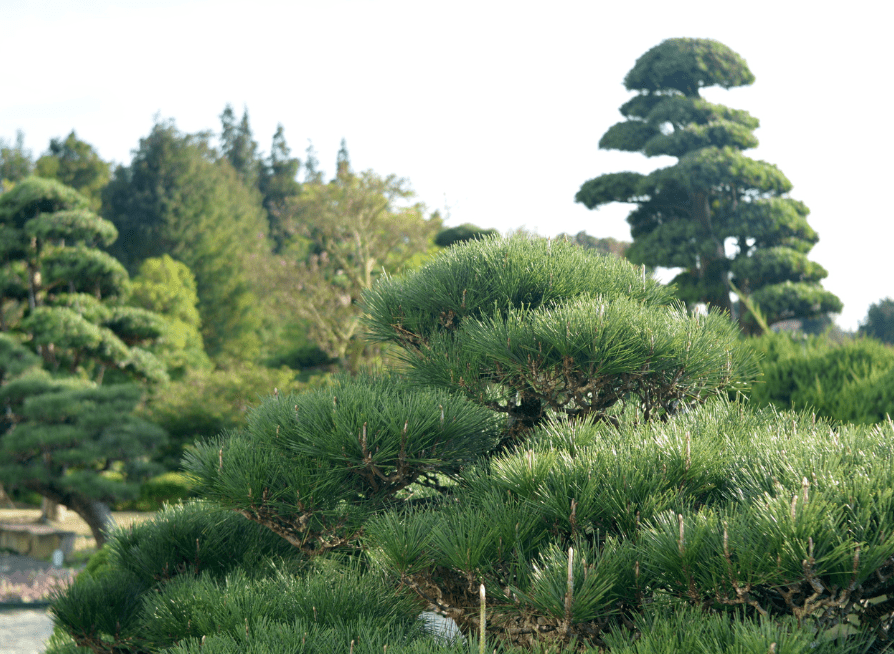


Japanese Red Pine Tree Seeds | Red Pine | (Pinus densiflora)
Japanese Red Pine Tree Seeds | Red Pine | (Pinus densiflora)
The most graceful pine in Asia. Brilliant orange-red bark. Windswept character from the first year.
Pinus densiflora, the Japanese Red Pine, is the most culturally significant pine in Japan and one of the most ornamentally elegant conifers in temperate horticulture, developing a naturally asymmetrical, picturesque growth habit with bright orange-red bark on the upper trunk and branches that catches winter light in a way no other pine can replicate. It is the dominant pine of the coastal and mountain forests of Japan and Korea, the tree whose windswept silhouette against a stormy sea defines the visual identity of Japanese landscape painting and garden design for a thousand years, and the primary pine used in traditional Japanese bonsai practice alongside Japanese Black Pine. The paired blue-green needles create a soft texture that makes it among the most graceful of all two-needled pines, and the orange-red bark that develops on established trees is the most distinctive and beautiful bark coloring of any pine in temperate cultivation. If you are looking to buy Japanese Red Pine seeds or grow Akamatsu from seed, this is the pine that carries the full weight of Japanese landscape aesthetics in its growth habit and bark.
- Brilliant orange-red bark on the upper trunk and branches, the most distinctive and beautiful bark of any pine
- Naturally asymmetrical, picturesque growth habit that develops individual character unlike the symmetrical form of most conifers
- Soft, blue-green paired needles creating the finest and most graceful texture of any two-needled pine
- The dominant pine of Japanese coastal and mountain forest, defining the visual landscape of Japan for a thousand years
- One of the two primary pines in traditional Japanese bonsai practice, known in Japanese as Akamatsu or red pine
Things you probably did not know about the Japanese Red Pine
The orange-red bark develops gradually and is most vivid in the upper canopy. Young Japanese Red Pine trees have grayish-brown bark similar to many other pines, and the characteristic orange-red color develops slowly over decades, appearing first in the upper branches and eventually covering more of the trunk as the tree matures. The bark is most brilliantly colored in winter when low sunlight strikes it at an angle, creating a glow that makes large specimens of considerable age among the most spectacular pines in the winter landscape.
It hybridizes naturally with Japanese Black Pine where the two species grow together. Where Pinus densiflora and Pinus thunbergii grow in proximity in coastal Japan and Korea, natural hybrids occur that combine characteristics of both parents. These hybrids, sometimes called Akakuromatsu, are recognized in Japanese horticulture and have been used in some breeding and bonsai work. The natural hybridization zone between the two species creates a continuum of intermediate forms that complicate species identification in some Japanese coastal populations.
The tree appears in more Japanese woodblock prints than any other single species. The windswept Japanese Red Pine silhouette is one of the most reproduced images in the history of Japanese visual art. Hokusai, Hiroshige, and virtually every major ukiyo-e artist of the Edo period depicted Japanese Red Pine repeatedly in their landscape prints. The association of the tree with the dramatic coastal and mountain landscapes of Japan made it the default symbol of the Japanese natural world in the printmaking tradition that defined Japanese visual culture for centuries.
The pine forests of Matsushima, considered one of the three most scenic views in Japan, are almost entirely Japanese Red Pine. The bay of Matsushima in Miyagi Prefecture, where hundreds of small islands covered in wind-sculpted Japanese Red Pines rise from the sea, has been considered one of the most beautiful natural scenes in Japan since at least the 17th century. Matsuo Basho, the greatest haiku poet of the Edo period, famously wrote about Matsushima and the Japanese Red Pine forests that define its character.
Growing Details
- Botanical Name: Pinus densiflora
- Stratification: Recommended, 30 to 60 days cold stratification
- USDA Zones: 3 to 7
- Soil: Well-drained, slightly acidic to neutral, tolerates poor and sandy soils
- Light: Full sun
- Height: 40 to 70 feet
- Spread: 20 to 40 feet
- Growth Rate: Moderate, 1 to 2 feet per year
Plant it in full sun where the developing orange-red upper bark will catch the winter afternoon light. Give it two decades to begin developing the characteristic silhouette and three to four decades to develop the full bark color. Every year of patience is visible in the tree.
FAQ
FAQ
Do you pre-stratify the seeds?
Most of our seeds are not pre-stratified. They are stored under dry, cold conditions to preserve viability without initiating stratification, allowing you to time germination for your local growing season.
The exception is recalcitrant seeds. Because these seeds must remain moist to stay viable, they are kept in moist, cold storage and are therefore in a pre-stratified state. Depending on how long a particular batch has been stored, some may arrive with an emerging radicle and be ready to plant immediately. Radicle development is not guaranteed.
Please refer to the individual product page and included growing instructions for species-specific requirements.
Do any of your seeds need to stay moist? (Recalcitrant seeds)
Yes. Some species we offer, including Chestnut, Hazelnut, and Paw Paw, are recalcitrant and must remain moist to stay viable.
Please refrigerate these seeds immediately upon arrival unless they have already developed a radicle. Seeds with an emerging radicle should be planted promptly.
Do you ship internationally?
No. We currently ship within the United States only.
We previously shipped to Canada, but tariffs, duties, and import fees resulted in customers receiving significant and unpredictable additional charges upon delivery. Because we cannot reliably calculate or absorb these costs, we have suspended shipping to Canada.
At this time, we do not ship to Canada or other international destinations.
Shipping & What's Included
Shipping & What's Included
Shipping & Packaging
• Hand-packed in resealable kraft paper seed bags
• Stratification and planting instructions included on every seed pack
• Ships within 3–5 business days via USPS within the United States and U.S. territories
Return Policy
Return Policy
Due to the nature of our products, we do not accept returns on seeds.
If your order arrives damaged, contains incorrect items, or is missing items, please contact us within 7 days of delivery so we can resolve the issue.