

Japanese Larch Tree Seeds (Larix kaempferi)
Japanese Larch Tree Seeds (Larix kaempferi)
The conifer that turns gold. The only deciduous pine you will ever need.
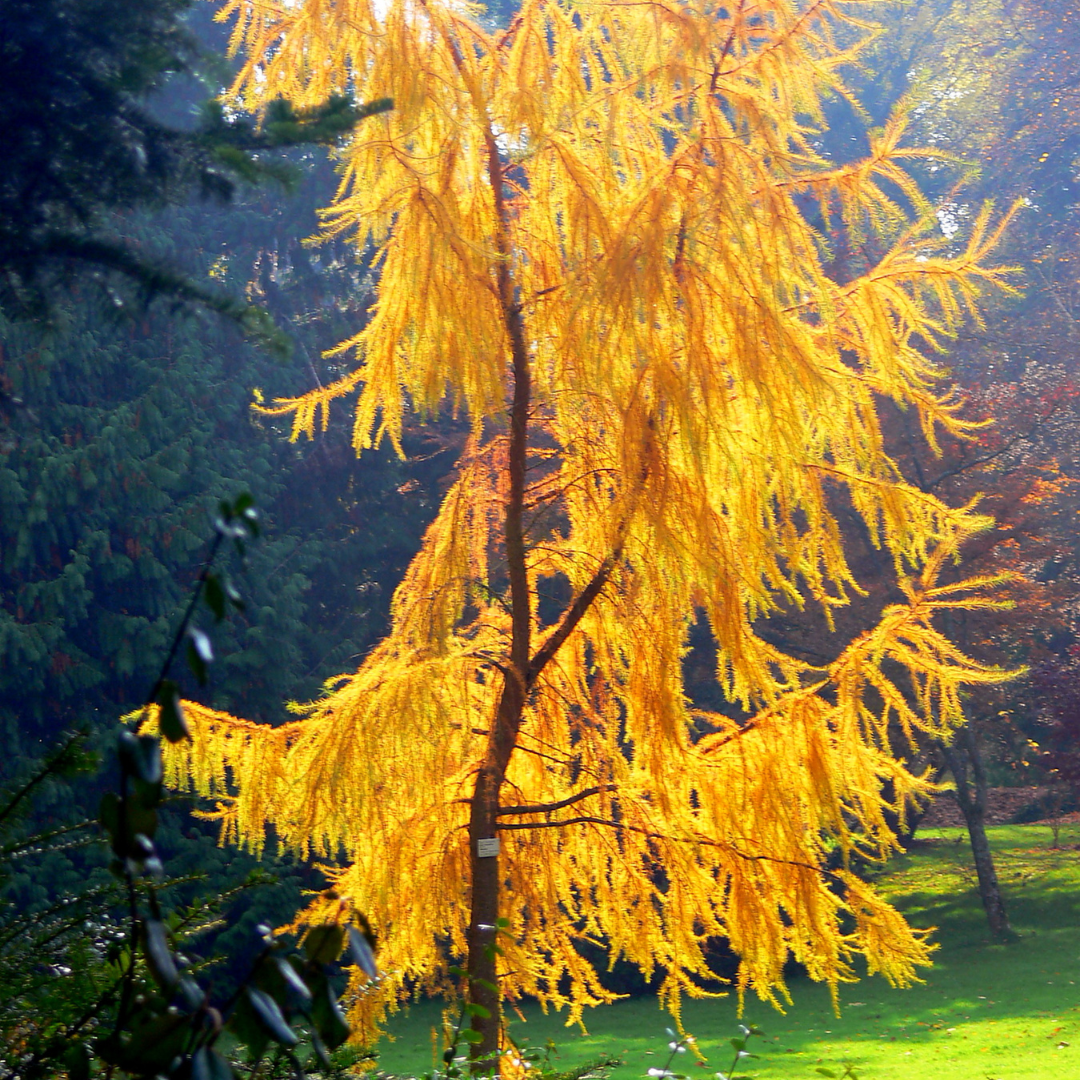
Larix kaempferi, the Japanese Larch, is one of the most unusual and visually spectacular conifers available to temperate growers, a needle-bearing tree that behaves like a deciduous hardwood, dropping all its needles every fall in a stunning display of gold and amber before standing bare through winter and emerging in the softest, brightest spring green of any conifer in the landscape. It is fast-growing, cold-hardy, adaptable to a wide range of soils, and one of the most prized species in traditional bonsai cultivation worldwide. Native to the mountains of central Japan, it has been planted across Europe and North America for timber, landscape use, and bonsai practice for over a century. If you are looking to buy Japanese Larch seeds or grow larch from seed, this is the tree that surprises everyone who sees it change.
- The only commonly planted deciduous conifer with both spring and fall visual interest
- Brilliant gold and amber fall color before needles drop, followed by bare sculptural winter form
- Soft, bright spring green needles in tufted rosettes, completely distinctive among conifers
- One of the most important and widely used species in traditional Japanese and European bonsai
- Fast-growing and cold-hardy, tolerating a wide range of soils and climates
Things you probably did not know about the Japanese Larch
It was introduced to Britain in 1861 and transformed the British forestry industry. Japanese Larch was brought to Britain as an ornamental specimen tree but was quickly recognized as a superior timber producer, growing faster and more disease-resistant than the European Larch it replaced. Within decades it became one of the most planted timber trees in Britain. Hybrids between Japanese and European Larch, called Dunkeld Larch, are now among the most important commercial forestry trees in northern Europe.
Bonsai masters consider it the most forgiving larch for beginners. Unlike many conifers that respond poorly to aggressive pruning, Japanese Larch tolerates dramatic cutting back and responds with dense, fine branching that develops quickly into convincing aged forms. It is one of the few species that beginners can work on aggressively without killing, which is why it appears in virtually every serious bonsai collection and school.
The bare winter silhouette reveals structure that no other tree shows. When Japanese Larch drops its needles, the fine, delicate branching structure of the tree becomes fully visible in a way that no evergreen conifer ever reveals. The combination of spreading branch architecture and reddish-orange twig color creates a winter display that is arguably as beautiful as the fall gold.
It hybridizes naturally when planted near European Larch. Wherever Japanese and European Larch grow in proximity, natural hybrids called Dunkeld Larch appear and typically outgrow both parents in a phenomenon called hybrid vigor. The Dunkeld Larch is one of the most vigorous and disease-resistant larches in cultivation as a result.
Growing Details
- Botanical Name: Larix kaempferi
- Stratification: Required, 30 to 60 days cold stratification
- USDA Zones: 4 to 7
- Soil: Well-drained, moist, slightly acidic, tolerates a range of soil types
- Light: Full sun
- Height: 70 to 100 feet in native conditions, typically 50 to 70 feet in cultivation
- Spread: 25 to 40 feet
- Growth Rate: Fast, 2 to 3 feet per year when young
Plant it where you will see it from inside in November when everything else is bare and it is standing in gold. That is the moment this tree was made for.
FAQ
FAQ
Do you pre-stratify the seeds?
Most of our seeds are not pre-stratified. They are stored under dry, cold conditions to preserve viability without initiating stratification, allowing you to time germination for your local growing season.
The exception is recalcitrant seeds. Because these seeds must remain moist to stay viable, they are kept in moist, cold storage and are therefore in a pre-stratified state. Depending on how long a particular batch has been stored, some may arrive with an emerging radicle and be ready to plant immediately. Radicle development is not guaranteed.
Please refer to the individual product page and included growing instructions for species-specific requirements.
Do any of your seeds need to stay moist? (Recalcitrant seeds)
Yes. Some species we offer, including Chestnut, Hazelnut, and Paw Paw, are recalcitrant and must remain moist to stay viable.
Please refrigerate these seeds immediately upon arrival unless they have already developed a radicle. Seeds with an emerging radicle should be planted promptly.
Do you ship internationally?
No. We currently ship within the United States only.
We previously shipped to Canada, but tariffs, duties, and import fees resulted in customers receiving significant and unpredictable additional charges upon delivery. Because we cannot reliably calculate or absorb these costs, we have suspended shipping to Canada.
At this time, we do not ship to Canada or other international destinations.
Shipping & What's Included
Shipping & What's Included
Shipping & Packaging
• Hand-packed in resealable kraft paper seed bags
• Stratification and planting instructions included on every seed pack
• Ships within 3–5 business days via USPS within the United States and U.S. territories
Return Policy
Return Policy
Due to the nature of our products, we do not accept returns on seeds.
If your order arrives damaged, contains incorrect items, or is missing items, please contact us within 7 days of delivery so we can resolve the issue.