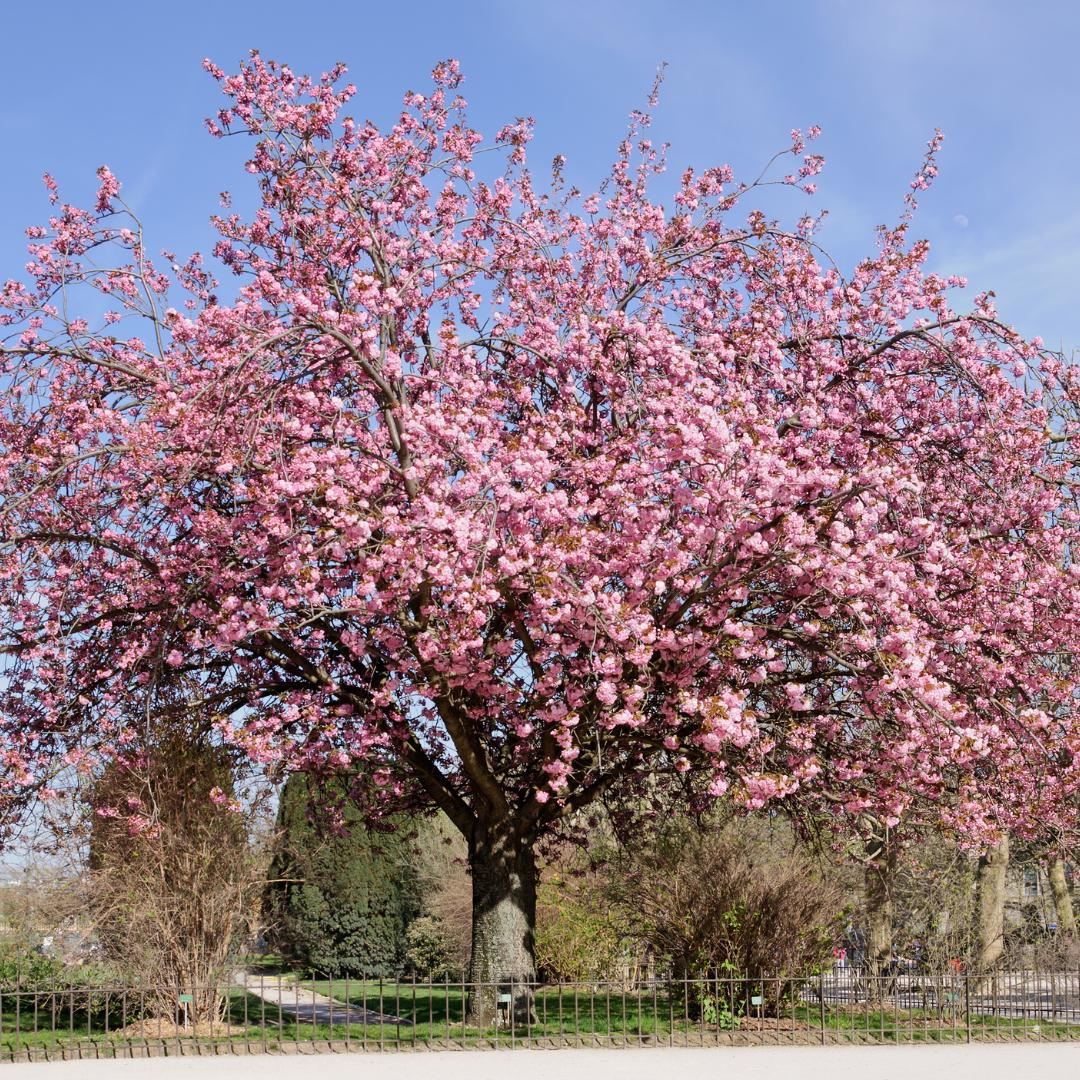


Japanese Hill Cherry Tree Seeds (Prunus serrulata)
Japanese Hill Cherry Tree Seeds (Prunus serrulata)
The cultivated cherry of Japan. Grown from seed, it becomes something entirely its own.
Prunus serrulata, the Japanese Hill Cherry, is the species at the heart of Japan's centuries-long tradition of ornamental cherry cultivation, the parent or ancestor of the great majority of named Japanese cherry cultivars and the tree whose wild form grows on mountain slopes throughout Japan, Korea, and China with flowers ranging from pure white through every shade of pink to near-red depending on the individual. Growing Japanese Hill Cherry from seed produces trees with natural genetic variation that no grafted nursery cultivar can provide, each seedling developing its own flower color, bloom timing, leaf color, and growth form that will not be known until the tree first flowers. It is also one of the most widely used cherry species in bonsai practice worldwide and produces the finest Japanese-quality cherry wood used in traditional craft. If you are looking to buy Japanese Hill Cherry seeds or grow ornamental cherry from seed, this is the most important cherry species in the history of ornamental horticulture.
- The parent species of the great majority of named Japanese ornamental cherry cultivars
- Natural variation in seed-grown plants from pure white through all shades of pink to near-red flowers
- One of the most important species in traditional Japanese and East Asian bonsai cultivation
- Brilliant copper-orange to crimson fall color that rivals the spring flower display in intensity
- Named for its characteristic serrated leaf margins, serrulata, that distinguish it from other cherries
Things you probably did not know about the Japanese Hill Cherry
The Japanese word for cherry blossom, sakura, originally referred specifically to this species. While sakura is now used broadly for ornamental cherries in general, the original meaning of the term in classical Japanese literature referred specifically to the flowers of Prunus serrulata growing wild on mountain slopes. The cherry blossom viewing tradition called hanami began as a practice of walking into the mountains in spring to appreciate the wild sakura, not the cultivated street plantings that modern hanami primarily involves.
The wood has been used for traditional Japanese lacquerware for over a thousand years. Japanese Cherry wood, called yamazakura, is prized by woodworkers for its fine grain, warm pink-brown color, and ability to take a high polish. Traditional Japanese lacquerware chests, known for being among the most refined decorative art objects in Japanese craft history, use yamazakura as the substrate beneath the lacquer. The warmth and grain of the wood contribute to the overall aesthetic even where covered by lacquer.
The first Washington DC cherry trees were this species before they were replaced. The original cherry trees donated by Japan to Washington DC in 1912 included Prunus serrulata specimens. Many did not survive the subsequent decades, and subsequent plantings have been dominated by the Yoshino Cherry cultivar which is easier to propagate and more uniform in appearance. The wild species, with its greater genetic diversity and variability, represents what the original tree gift was drawn from.
Growing from seed takes longer to bloom than grafted trees but produces longer-lived specimens. Grafted Japanese cherry trees typically bloom in 3 to 5 years. Seed-grown Prunus serrulata may require 7 to 10 years to produce its first flowers, but the trees develop on their own roots and routinely outlive grafted specimens by decades. The patience required for seed-grown cherries is proportional to the longevity and character of the resulting trees.
Growing Details
- Botanical Name: Prunus serrulata
- Stratification: Required, 90 to 120 days cold moist stratification
- USDA Zones: 5 to 8
- Soil: Well-drained, fertile, slightly acidic
- Light: Full sun
- Height: 25 to 50 feet
- Spread: 25 to 40 feet
- Growth Rate: Moderate to fast, 1 to 2 feet per year
Grow it knowing the flower color is unknown until it blooms. That first spring it opens, whatever color it produces, will be a color that belongs to your tree alone.
FAQ
FAQ
Do you pre-stratify the seeds?
Most of our seeds are not pre-stratified. They are stored under dry, cold conditions to preserve viability without initiating stratification, allowing you to time germination for your local growing season.
The exception is recalcitrant seeds. Because these seeds must remain moist to stay viable, they are kept in moist, cold storage and are therefore in a pre-stratified state. Depending on how long a particular batch has been stored, some may arrive with an emerging radicle and be ready to plant immediately. Radicle development is not guaranteed.
Please refer to the individual product page and included growing instructions for species-specific requirements.
Do any of your seeds need to stay moist? (Recalcitrant seeds)
Yes. Some species we offer, including Chestnut, Hazelnut, and Paw Paw, are recalcitrant and must remain moist to stay viable.
Please refrigerate these seeds immediately upon arrival unless they have already developed a radicle. Seeds with an emerging radicle should be planted promptly.
Do you ship internationally?
No. We currently ship within the United States only.
We previously shipped to Canada, but tariffs, duties, and import fees resulted in customers receiving significant and unpredictable additional charges upon delivery. Because we cannot reliably calculate or absorb these costs, we have suspended shipping to Canada.
At this time, we do not ship to Canada or other international destinations.
Shipping & What's Included
Shipping & What's Included
Shipping & Packaging
• Hand-packed in resealable kraft paper seed bags
• Stratification and planting instructions included on every seed pack
• Ships within 3–5 business days via USPS within the United States and U.S. territories
Return Policy
Return Policy
Due to the nature of our products, we do not accept returns on seeds.
If your order arrives damaged, contains incorrect items, or is missing items, please contact us within 7 days of delivery so we can resolve the issue.