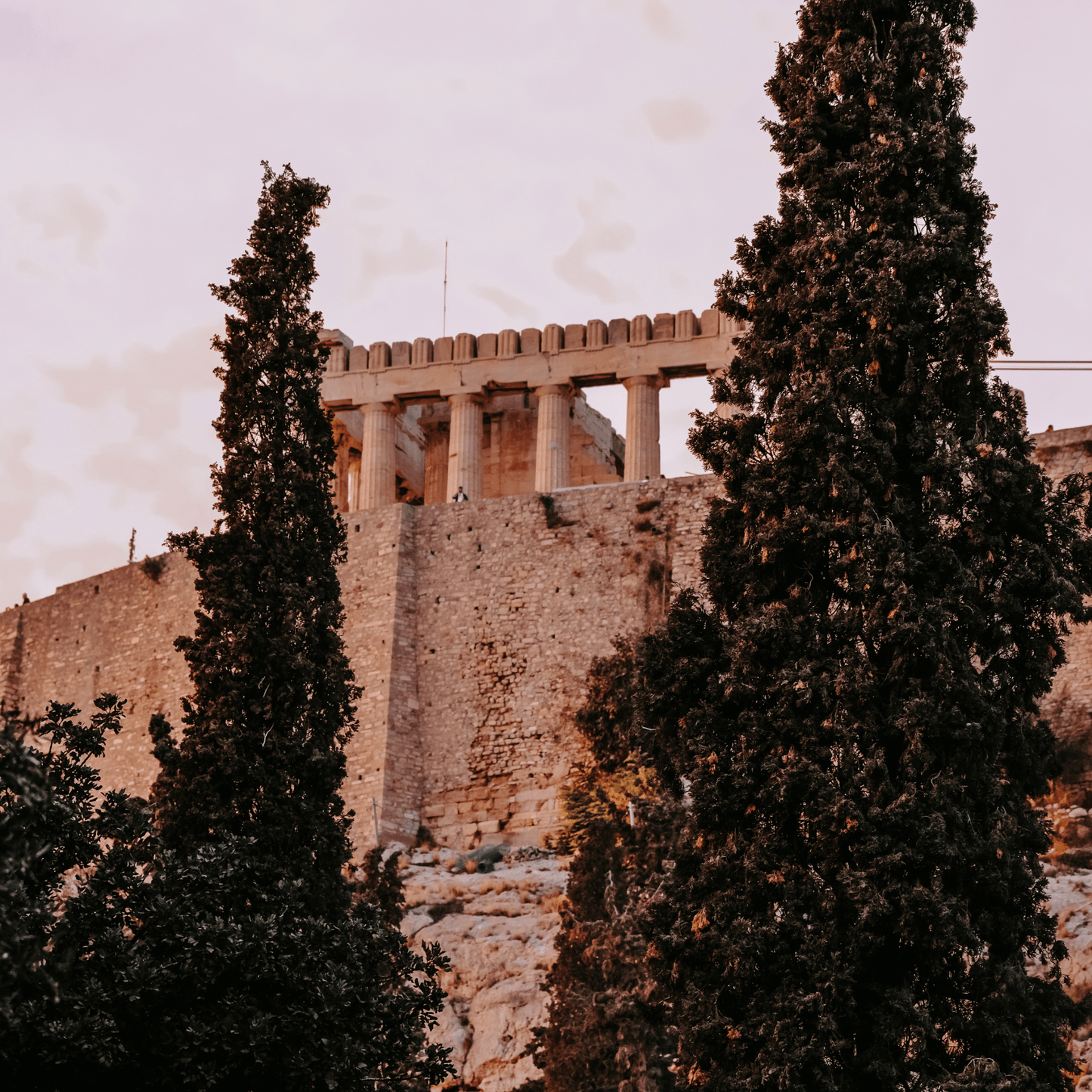


Italian Cypress Tree Seeds | (Cupressus sempervirens ‘Stricta’)
Italian Cypress Tree Seeds | (Cupressus sempervirens ‘Stricta’)
The exclamation point of the Mediterranean landscape. Narrow. Dramatic. Timeless.
Cupressus sempervirens 'Stricta', the Italian Cypress, is the most architecturally distinctive conifer in the world, its narrow columnar form rising straight and dark against the sky in a silhouette so specific that it has defined the visual identity of Tuscany, Provence, and the Mediterranean coast for thousands of years. In a landscape dominated by horizontal lines, the Italian Cypress provides vertical punctuation unlike anything else available to the gardener. It is drought-tolerant, heat-loving, deer-resistant, and virtually maintenance-free once established. If you are looking to buy Italian Cypress seeds or grow these iconic columnar conifers from seed, this is the tree that transforms a garden into something with presence and intention.
- Narrow, strictly columnar form providing dramatic vertical accent unlike any other conifer
- Extremely drought-tolerant and heat-loving, thriving in conditions that challenge most other conifers
- Deer-resistant, low-maintenance, and long-lived once established in well-drained soil
- Seed-grown trees produce natural variation in column tightness, form, and shade of green
- The defining tree of the Mediterranean landscape, immediately recognizable anywhere in the world
Things you probably did not know about the Italian Cypress
It has been cultivated in the Mediterranean for over 3,000 years. Italian Cypress appears in ancient Assyrian, Persian, and Greek art and architecture dating back to at least 1000 BC. It was planted at tombs, temples, and royal gardens across the ancient Mediterranean world where its evergreen nature and upward-pointing form symbolized immortality and the soul's ascent. The cypress-lined road to a Tuscan villa is a tradition with roots thousands of years deeper than Tuscany itself.
Van Gogh painted it obsessively during his year in Saint-Rémy. During his confinement at the Saint-Paul-de-Mausole asylum in 1889 and 1890, Vincent van Gogh painted the cypress trees in the surrounding landscape over a dozen times. He described them in letters as beautiful as an Egyptian obelisk and as a dark stain in a sunlit landscape. The Starry Night, arguably the most recognized painting in Western art, features a massive Italian Cypress in the foreground.
The fragrant wood has been used for sacred purposes across civilizations. Italian Cypress wood is aromatic, durable, and resistant to rot and insects. The ancient Egyptians used it for sarcophagi. The Greeks built temple doors from it. The doors of Saint Peter's Basilica in Rome, according to tradition, were made from Italian Cypress and reportedly lasted over a thousand years before being replaced in the 15th century.
Seed-grown trees are never perfectly identical to each other. The strictly columnar form of the Stricta variety shows natural variation when grown from seed, with some seedlings developing slightly broader or more open habits than others. This variation means seed-grown groves have subtle differences in width and shade of green that give them a more natural, less regimented appearance than clonally propagated nursery stock.
Growing Details
- Botanical Name: Cupressus sempervirens 'Stricta'
- Stratification: Recommended, 30 to 60 days cold stratification
- USDA Zones: 7 to 11
- Soil: Well-drained, tolerates poor, rocky, or alkaline soils, does not tolerate wet or waterlogged conditions
- Light: Full sun
- Height: 40 to 70 feet
- Spread: 3 to 6 feet
- Growth Rate: Moderate, 1 to 2 feet per year
Plant them in pairs flanking an entrance or in a row defining a drive or garden axis. Nothing else makes a statement with such complete economy of space
FAQ
FAQ
Do you pre-stratify the seeds?
Most of our seeds are not pre-stratified. They are stored under dry, cold conditions to preserve viability without initiating stratification, allowing you to time germination for your local growing season.
The exception is recalcitrant seeds. Because these seeds must remain moist to stay viable, they are kept in moist, cold storage and are therefore in a pre-stratified state. Depending on how long a particular batch has been stored, some may arrive with an emerging radicle and be ready to plant immediately. Radicle development is not guaranteed.
Please refer to the individual product page and included growing instructions for species-specific requirements.
Do any of your seeds need to stay moist? (Recalcitrant seeds)
Yes. Some species we offer, including Chestnut, Hazelnut, and Paw Paw, are recalcitrant and must remain moist to stay viable.
Please refrigerate these seeds immediately upon arrival unless they have already developed a radicle. Seeds with an emerging radicle should be planted promptly.
Do you ship internationally?
No. We currently ship within the United States only.
We previously shipped to Canada, but tariffs, duties, and import fees resulted in customers receiving significant and unpredictable additional charges upon delivery. Because we cannot reliably calculate or absorb these costs, we have suspended shipping to Canada.
At this time, we do not ship to Canada or other international destinations.
Shipping & What's Included
Shipping & What's Included
Shipping & Packaging
• Hand-packed in resealable kraft paper seed bags
• Stratification and planting instructions included on every seed pack
• Ships within 3–5 business days via USPS within the United States and U.S. territories
Return Policy
Return Policy
Due to the nature of our products, we do not accept returns on seeds.
If your order arrives damaged, contains incorrect items, or is missing items, please contact us within 7 days of delivery so we can resolve the issue.