

Honey Mesquite Tree Seeds | (Prosopis glandulosa)
Honey Mesquite Tree Seeds | (Prosopis glandulosa)
Slow to smoke. Worth every minute.
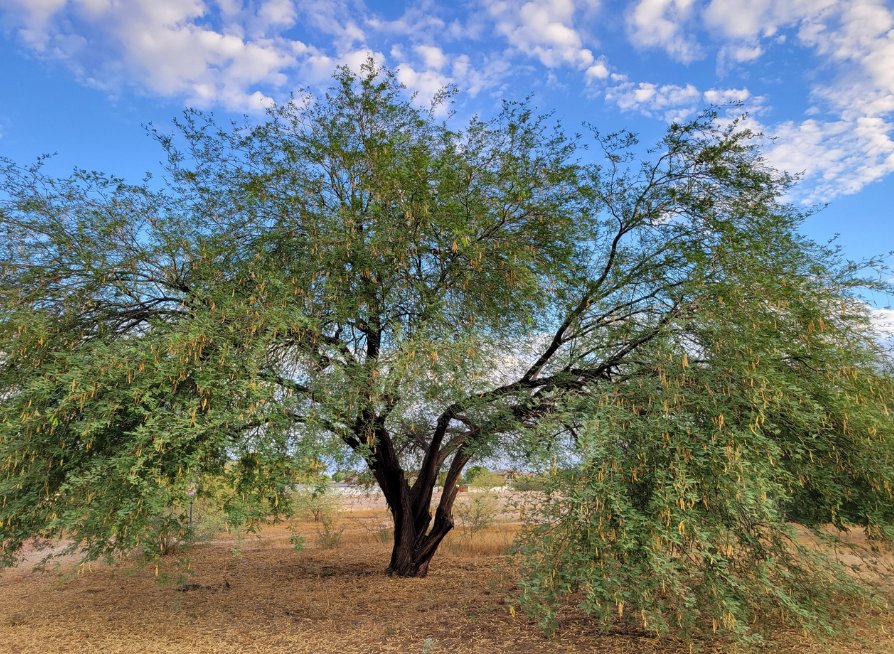
Prosopis glandulosa, the Honey Mesquite, is the defining tree of the American Southwest, a thorned, deep-rooted desert giant that has fed people, supported wildlife, and shaped landscapes from Texas to California for thousands of years. The tree produces long, golden seed pods packed with sweet, sugary pulp that Native peoples ground into flour, pressed into cakes, and fermented into drinks long before European contact. Above ground it grows as a wide-spreading, feathery-leaved tree with fragrant yellow catkin flowers that produce some of the most prized honey in North America. Below ground it is extraordinary, developing one of the deepest root systems of any tree on earth, capable of tapping water sources that no other plant can reach. Dense, reddish-brown heartwood makes Honey Mesquite the most sought-after BBQ smoking wood in Texas barbecue tradition, imparting a distinctive sweet, earthy smoke that has defined a regional cuisine. If you are looking to buy Honey Mesquite seeds or grow Prosopis glandulosa from seed, this is the desert tree that earns its place in any xeriscape, food forest, or native planting.
- Fragrant yellow catkin flowers bloom in spring and summer, attracting bees that produce distinctively flavored mesquite honey
- Sweet, edible seed pods ripen golden-tan in summer and can be dried and ground into high-protein, naturally sweet flour
- Exceptional drought tolerance once established, surviving on rainfall alone in arid and semi-arid climates
- Extremely hard, dense reddish-brown wood prized for furniture, tool handles, and BBQ smoking
- Nitrogen-fixing legume that actively improves soil fertility while providing shade and wildlife habitat
Things you probably did not know about Honey Mesquite
The taproot of a Honey Mesquite can reach over 160 feet into the earth. Researchers studying Honey Mesquite root systems have documented taproots descending more than 160 feet to access deep groundwater, making it one of the deepest-rooted trees ever recorded. This extraordinary adaptation allows Honey Mesquite to survive in regions that receive as little as eight inches of annual rainfall, reaching water sources completely inaccessible to most plants. Once a tree is established and its taproot has found a reliable water source, it becomes nearly impossible to kill through drought alone.
Honey Mesquite is a nitrogen-fixing legume, not just a desert survivor. As a member of the family Fabaceae, Honey Mesquite forms symbiotic relationships with soil bacteria that fix atmospheric nitrogen directly into the soil. This means the tree actively enriches the ground around it, making it a natural soil builder in landscapes where fertility is low. In traditional and permaculture food forests, Honey Mesquite serves as a support species, improving conditions for neighboring plants while simultaneously producing food and biomass.
The seed pods were a dietary staple for dozens of Native American peoples across the Southwest. The pods of Honey Mesquite contain up to 25 percent sugar and significant protein, making them one of the most nutritionally dense wild foods in North America. Indigenous peoples of the Sonoran and Chihuahuan Deserts harvested the ripe pods, dried them, and ground them into a fine flour called pinole, used to make flatbreads, porridges, and fermented beverages. Mesquite flour has a naturally sweet, caramel-like flavor and a low glycemic index compared to grain flours, and it has seen a significant revival as a specialty ingredient in modern artisan baking.
The reputation of Honey Mesquite as an invasive weed is largely a consequence of overgrazing, not natural behavior. While Honey Mesquite is frequently blamed for taking over rangeland, researchers have established that the tree's aggressive expansion across Texas and the Southwest began primarily after the introduction of large-scale cattle ranching in the 19th century. Cattle consumed and dispersed the seeds, grazing eliminated the grasses that once carried fire across the landscape, and without periodic burning the tree spread unchecked. In balanced, undisturbed ecosystems, Honey Mesquite grows as a scattered, keystone tree rather than a monoculture, and its ecological value as food and shelter for hundreds of wildlife species is well documented.
Growing Details
- Botanical Name: Prosopis glandulosa
- Seed Treatment: Scarification required; soak in boiling water and allow to cool for 24 hours, or nick the seed coat with a file before sowing
- USDA Zones: 6 to 9
- Soil: Well-drained to sandy, tolerates alkaline and poor soils, avoid consistently wet conditions
- Light: Full sun
- Height: 20 to 30 feet
- Spread: 20 to 40 feet
- Growth Rate: Moderate to fast once established, 2 to 3 feet per year
Plant it where it has room to spread and deep soil to explore. Give it a dry summer and a little patience, and Honey Mesquite will reward you with flowers that fill the air with sweetness, pods that feed everything from deer to songbirds, and eventually a tree that outlasts the people who planted it.
FAQ
FAQ
Do you pre-stratify the seeds?
Most of our seeds are not pre-stratified. We ship them unstratified so you can control germination timing based on your local growing season. We sell to all 50 U.S. states and Canadian provinces, and since each region has different planting windows, pre-stratifying would risk seeds germinating in transit or before you're ready to plant.
True stratification requires cold, moist conditions, which can lead to premature sprouting or mold if not timed properly. To avoid this, we store most seeds in dry cold conditions to preserve viability — but this does not initiate stratification.
Do any of your seeds need to stay moist? (Recalcitrant seeds)
Yes — some species we offer are recalcitrant, meaning they must remain moist to stay viable and cannot be dried out. Examples include: Chestnut, Hazelnut, Paw Paw, etc.
These seeds are shipped in moist cold storage and are clearly labeled on the product page when applicable. Please refrigerate immediately upon arrival and follow included care instructions.
Do you ship internationally?
We currently ship to the United States and Canada only. Unfortunately, we cannot ship to other countries without a phytosanitary certificate, which is required by most international customs agencies.
If you're interested in shipping outside North America, please contact us. Note that a phytosanitary certificate typically adds $60–$80 USD per seed type and must be arranged in advance.
Shipping & What's Included
Shipping & What's Included
Shipping & Packaging
Hand-packed in resealable zipper kraft paper seed bags
Stratification and planting instructions included with every order
1 free bonus seed pack included with every order
Ships within 3–5 business days via USPS
Return Policy
Return Policy
Due to the nature of our products, we do not accept returns on seeds.
However, if your order arrives damaged or incorrect, please contact us within 7 days and we’ll make it right.