

Heartnut Tree Seeds (Juglans ailantifolia var. cordiformis)
Heartnut Tree Seeds (Juglans ailantifolia var. cordiformis)
The easy-open walnut. Rich flavor. Heart-shaped and remarkable.
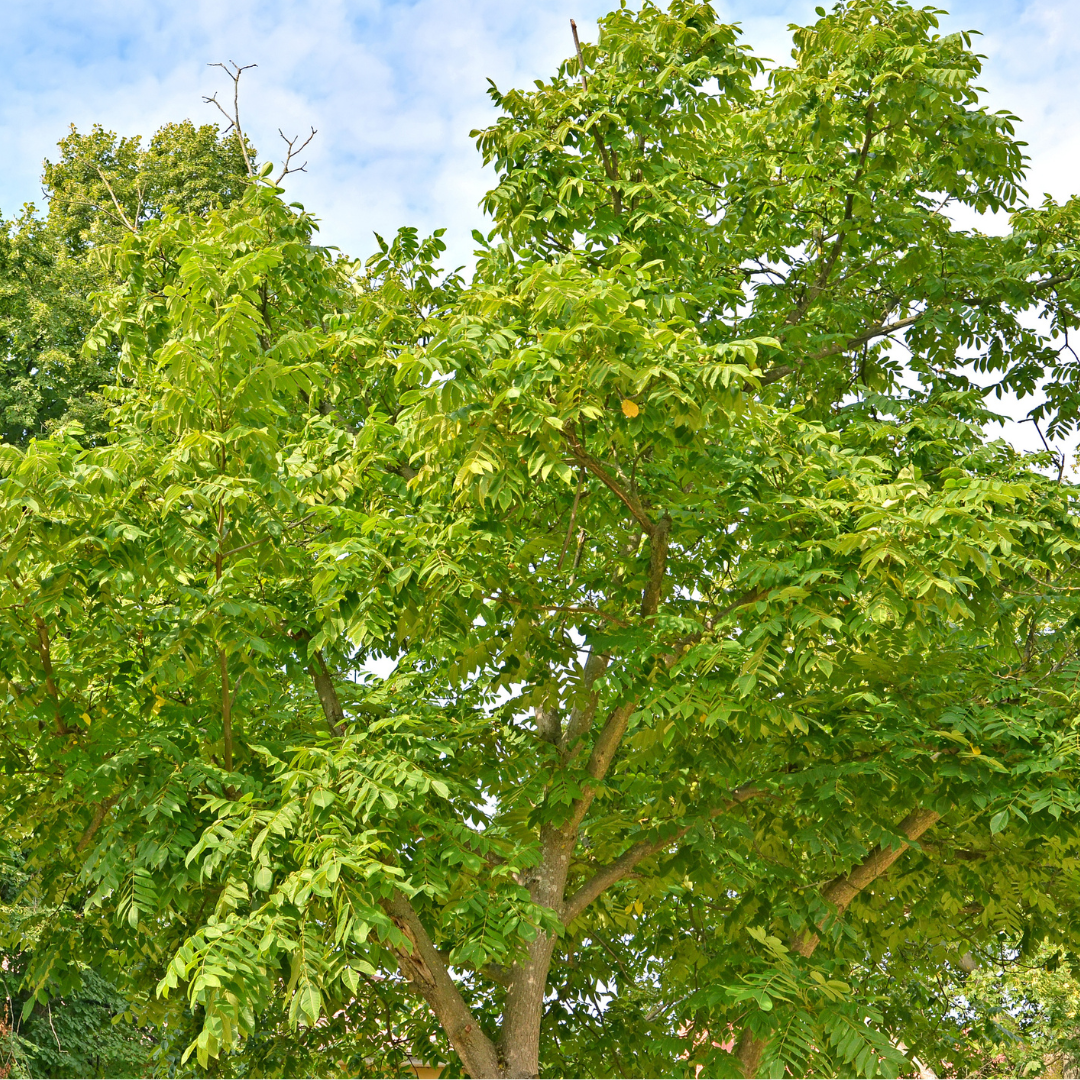
Juglans ailantifolia var. cordiformis, the Heartnut, is a variety of the Japanese Walnut selected for its distinctive heart-shaped nuts that crack cleanly in half and release the kernel whole rather than in fragments, a characteristic that makes it the most user-friendly walnut available for fresh eating and cooking. The flavor is milder and sweeter than Black Walnut, richer than English Walnut, with a distinctive quality that regular walnut enthusiasts find genuinely different and often preferable for fresh eating. The tree grows faster than both Black Walnut and English Walnut, produces nuts earlier, and is more cold-hardy than most English Walnut varieties. The large compound leaves, up to 3 feet long, and the wide-spreading canopy create excellent shade and a bold, tropical-looking summer presence. If you are looking to buy Heartnut seeds or grow this unusual walnut from seed, this is the nut that converts people who claim not to like walnuts.
- Heart-shaped nuts that crack cleanly in half, releasing the kernel whole without the frustrating fragment problem of most walnuts
- Milder, sweeter flavor than Black Walnut with distinctive quality preferred by many for fresh eating
- More cold-hardy than most English Walnut varieties, thriving in zones 4 to 8
- Faster-growing than Black Walnut or English Walnut, reaching nut-producing size sooner
- Large compound leaves up to 3 feet long creating dramatic tropical-looking summer shade
Things you probably did not know about the Heartnut
The clean-cracking characteristic that defines the Heartnut was discovered in a Japanese orchard. The Heartnut is a selected variety of Japanese Walnut that was identified for its unusual heart-shaped nuts and the specific shell structure that allows them to crack in two perfect halves. This clean-cracking characteristic, called free-cracking in nut breeding terminology, results from a specific relationship between shell thickness, kernel shape, and the suture line between the two halves. Most walnuts shatter into fragments when cracked because the kernel fills the shell irregularly. The Heartnut's kernel shape and shell structure avoid this problem.
Japanese Walnut has the most robust root system of any temperate walnut. Juglans ailantifolia is recognized by orchardists as producing an exceptionally vigorous and deep root system that anchors the tree in challenging soils and provides superior water and nutrient uptake compared to other walnut species. This vigor is one of the reasons it is sometimes used as a rootstock for grafting other walnut varieties, similar to the way Poncirus is used as rootstock for citrus.
The nuts fall from the husks more readily than Black Walnut. Black Walnut husks can be extremely difficult to remove from the shell, requiring driving over them with a vehicle or specialized equipment to separate the fibrous green husk from the shell. Heartnut husks are thinner and release from the shell more readily, making harvest and processing significantly easier than Black Walnut and comparable to English Walnut.
The juglone produced by the roots is somewhat less allelopathic than Black Walnut. All Juglans species produce juglone from their roots, which inhibits the growth of many plants in the surrounding soil. The juglone production of Japanese Walnut and Heartnut is generally considered to be less intense than that of Black Walnut, though sensitivity among garden plants varies and some care in plant selection near any walnut species is advisable.
Growing Details
- Botanical Name: Juglans ailantifolia var. cordiformis
- Stratification: Required, 90 to 120 days cold moist stratification, recalcitrant seed, keep moist
- USDA Zones: 4 to 8
- Soil: Deep, well-drained, slightly acidic to neutral, similar to Black Walnut requirements
- Light: Full sun
- Height: 40 to 60 feet
- Spread: 40 to 60 feet
- Growth Rate: Moderate to fast, 2 to 3 feet per year
Plant it where the large compound leaves will provide bold shade and where you can harvest nuts from the ground in fall. Crack one in half when it's fresh and see why people who grow them rarely grow anything else.
FAQ
FAQ
Do you pre-stratify the seeds?
Most of our seeds are not pre-stratified. They are stored under dry, cold conditions to preserve viability without initiating stratification, allowing you to time germination for your local growing season.
The exception is recalcitrant seeds. Because these seeds must remain moist to stay viable, they are kept in moist, cold storage and are therefore in a pre-stratified state. Depending on how long a particular batch has been stored, some may arrive with an emerging radicle and be ready to plant immediately. Radicle development is not guaranteed.
Please refer to the individual product page and included growing instructions for species-specific requirements.
Do any of your seeds need to stay moist? (Recalcitrant seeds)
Yes. Some species we offer, including Chestnut, Hazelnut, and Paw Paw, are recalcitrant and must remain moist to stay viable.
Please refrigerate these seeds immediately upon arrival unless they have already developed a radicle. Seeds with an emerging radicle should be planted promptly.
Do you ship internationally?
No. We currently ship within the United States only.
We previously shipped to Canada, but tariffs, duties, and import fees resulted in customers receiving significant and unpredictable additional charges upon delivery. Because we cannot reliably calculate or absorb these costs, we have suspended shipping to Canada.
At this time, we do not ship to Canada or other international destinations.
Shipping & What's Included
Shipping & What's Included
Shipping & Packaging
• Hand-packed in resealable kraft paper seed bags
• Stratification and planting instructions included on every seed pack
• Ships within 3–5 business days via USPS within the United States and U.S. territories
Return Policy
Return Policy
Due to the nature of our products, we do not accept returns on seeds.
If your order arrives damaged, contains incorrect items, or is missing items, please contact us within 7 days of delivery so we can resolve the issue.