

Hardy Rubber Tree Seeds | Gutta-Percha Tree | (Eucommia ulmoides)
Hardy Rubber Tree Seeds | Gutta-Percha Tree | (Eucommia ulmoides)
The only rubber tree that laughs at a hard frost.
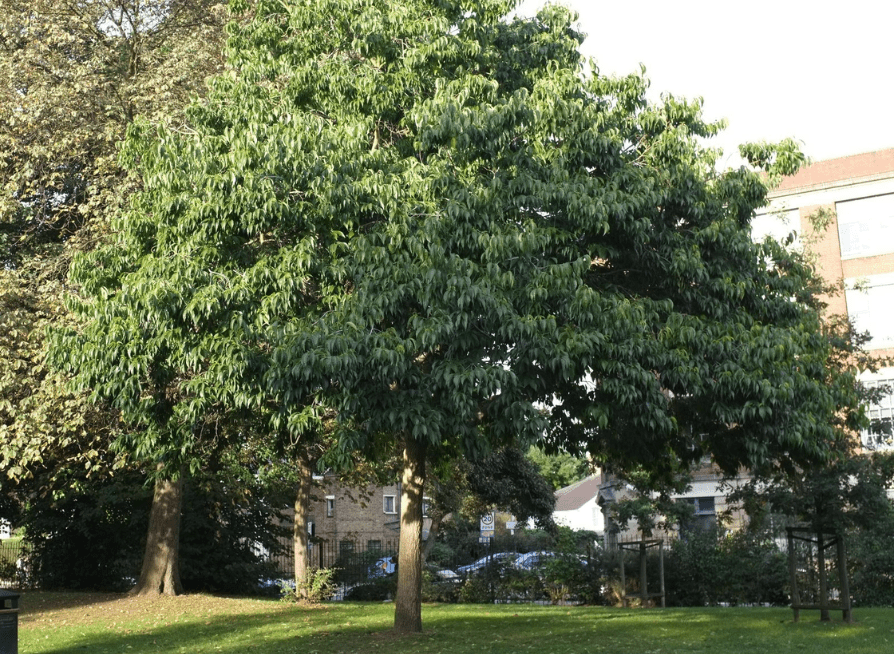
Eucommia ulmoides, the Hardy Rubber Tree or Gutta-Percha Tree, is one of the most remarkable and underplanted trees in temperate horticulture, a handsome, medium to large deciduous tree native to central China that produces genuine elastic rubber in its leaves, bark, and stems and does so in climates cold enough to kill tropical rubber plants outright. Pull a leaf slowly apart and fine, silvery threads of latex stretch between the torn edges, a visible demonstration of the rubber compounds running through every part of the tree. It is the only known temperate tree in the world with this property, and it has no close living relatives, a sole surviving species of an ancient lineage. In the landscape it is quietly beautiful, producing glossy, elm-like foliage on a broadly rounded crown that turns golden in autumn, with no serious pest or disease problems reported anywhere in its cultivated range. Chinese herbal medicine has used the bark of Eucommia for over two thousand years, and modern research has confirmed a remarkable range of bioactive compounds in the tree's tissues. If you are looking to buy Hardy Rubber Tree seeds or grow Eucommia ulmoides from seed, this is the rare conversation tree that earns its place in the landscape on every level.
- Tear a leaf in half and elastic rubber threads visibly stretch between the pieces, one of the most striking demonstrations in the plant world
- Completely hardy to Zone 4, making it the only rubber-producing tree reliably suited to cold temperate gardens
- Handsome elm-like foliage on a broadly rounded crown with excellent golden fall color
- No serious pest or disease problems recorded across its entire cultivated range in North America and Europe
- A living relic with no close relatives, the sole surviving member of an ancient plant family
Things you probably did not know about Hardy Rubber Tree
The rubber in Eucommia ulmoides is chemically identical to natural rubber but is arranged differently at the molecular level. The latex compounds found throughout the tree's tissues are composed of trans-polyisoprene rather than the cis-polyisoprene found in Hevea brasiliensis, the tropical rubber tree. This structural difference makes Eucommia rubber naturally harder and less elastic at room temperature, similar to gutta-percha, the material historically used to insulate the first transatlantic telegraph cables and to manufacture early golf balls. While not commercially harvested at scale today, the rubber content of Eucommia has attracted renewed research interest as a potential cold-climate alternative to tropical rubber sources.
The bark has been a foundational herb in Chinese medicine for more than two thousand years and remains widely used today. Known in Chinese medicine as Du Zhong, the dried bark of Eucommia ulmoides appears in the Shennong Bencao Jing, one of the oldest Chinese pharmacopeias, compiled roughly two thousand years ago. It has been used traditionally to support kidney function, strengthen tendons and bones, and address hypertension. Modern pharmacological research has isolated dozens of bioactive compounds from the bark including eucommiol, aucubin, and chlorogenic acid, and clinical studies have investigated its effects on blood pressure regulation, with results that support some of the traditional claims.
Eucommia ulmoides is the sole living member of its entire plant family, Eucommiaceae. The family once had a wider distribution across the northern hemisphere, with fossil relatives found across Europe and North America dating to the Tertiary period. As climates shifted and glaciations progressed, the family contracted to a single surviving species in a limited area of central China. This makes Eucommia a genuine botanical relict, a living representative of a lineage that was once widespread and is now reduced to a single species clinging to one corner of its former range. Closely related trees vanished from Europe and North America millions of years ago.
The tree is dioecious, meaning individual plants are either male or female, and seed production requires both. Eucommia ulmoides produces inconspicuous, petal-less flowers in early spring before the leaves emerge, wind-pollinated and easily overlooked. Female trees produce small, winged fruits resembling elm samaras that ripen in autumn and contain a single seed. In cultivation, trees grown from seed will be a roughly equal mix of male and female individuals, and fruit production requires at least one tree of each sex within pollination range. Trees begin flowering after roughly ten years of growth from seed.
Growing Details
- Botanical Name: Eucommia ulmoides
- Seed Treatment: Cold stratification recommended, 60 to 90 days at 34 to 40 degrees Fahrenheit in moist medium; sow in spring after stratification
- USDA Zones: 4 to 7
- Soil: Adaptable to a wide range of soils; prefers well-drained, moderately fertile loam; tolerates clay and occasional drought once established
- Light: Full sun to partial shade
- Height: 40 to 60 feet at maturity
- Spread: 30 to 50 feet
- Growth Rate: Moderate, 1 to 2 feet per year under good conditions
Plant it where it has room to develop its full, rounded canopy and give it a decade of patience. The tree that rewards you will be one of the most unusual and conversation-worthy specimens in any temperate garden, a quietly beautiful tree carrying two thousand years of history in its bark and a property that no other cold-hardy tree on earth can claim.
FAQ
FAQ
Do you pre-stratify the seeds?
Most of our seeds are not pre-stratified. They are stored under dry, cold conditions to preserve viability without initiating stratification, allowing you to time germination for your local growing season.
The exception is recalcitrant seeds. Because these seeds must remain moist to stay viable, they are kept in moist, cold storage and are therefore in a pre-stratified state. Depending on how long a particular batch has been stored, some may arrive with an emerging radicle and be ready to plant immediately. Radicle development is not guaranteed.
Please refer to the individual product page and included growing instructions for species-specific requirements.
Do any of your seeds need to stay moist? (Recalcitrant seeds)
Yes. Some species we offer, including Chestnut, Hazelnut, and Paw Paw, are recalcitrant and must remain moist to stay viable.
Please refrigerate these seeds immediately upon arrival unless they have already developed a radicle. Seeds with an emerging radicle should be planted promptly.
Do you ship internationally?
No. We currently ship within the United States only.
We previously shipped to Canada, but tariffs, duties, and import fees resulted in customers receiving significant and unpredictable additional charges upon delivery. Because we cannot reliably calculate or absorb these costs, we have suspended shipping to Canada.
At this time, we do not ship to Canada or other international destinations.
Shipping & What's Included
Shipping & What's Included
Shipping & Packaging
• Hand-packed in resealable kraft paper seed bags
• Stratification and planting instructions included on every seed pack
• Ships within 3–5 business days via USPS within the United States and U.S. territories
Return Policy
Return Policy
Due to the nature of our products, we do not accept returns on seeds.
If your order arrives damaged, contains incorrect items, or is missing items, please contact us within 7 days of delivery so we can resolve the issue.