

Golden Rain Tree Tree Seeds | Varnish Tree | (Koelreuteria paniculata)
Golden Rain Tree Tree Seeds | Varnish Tree | (Koelreuteria paniculata)
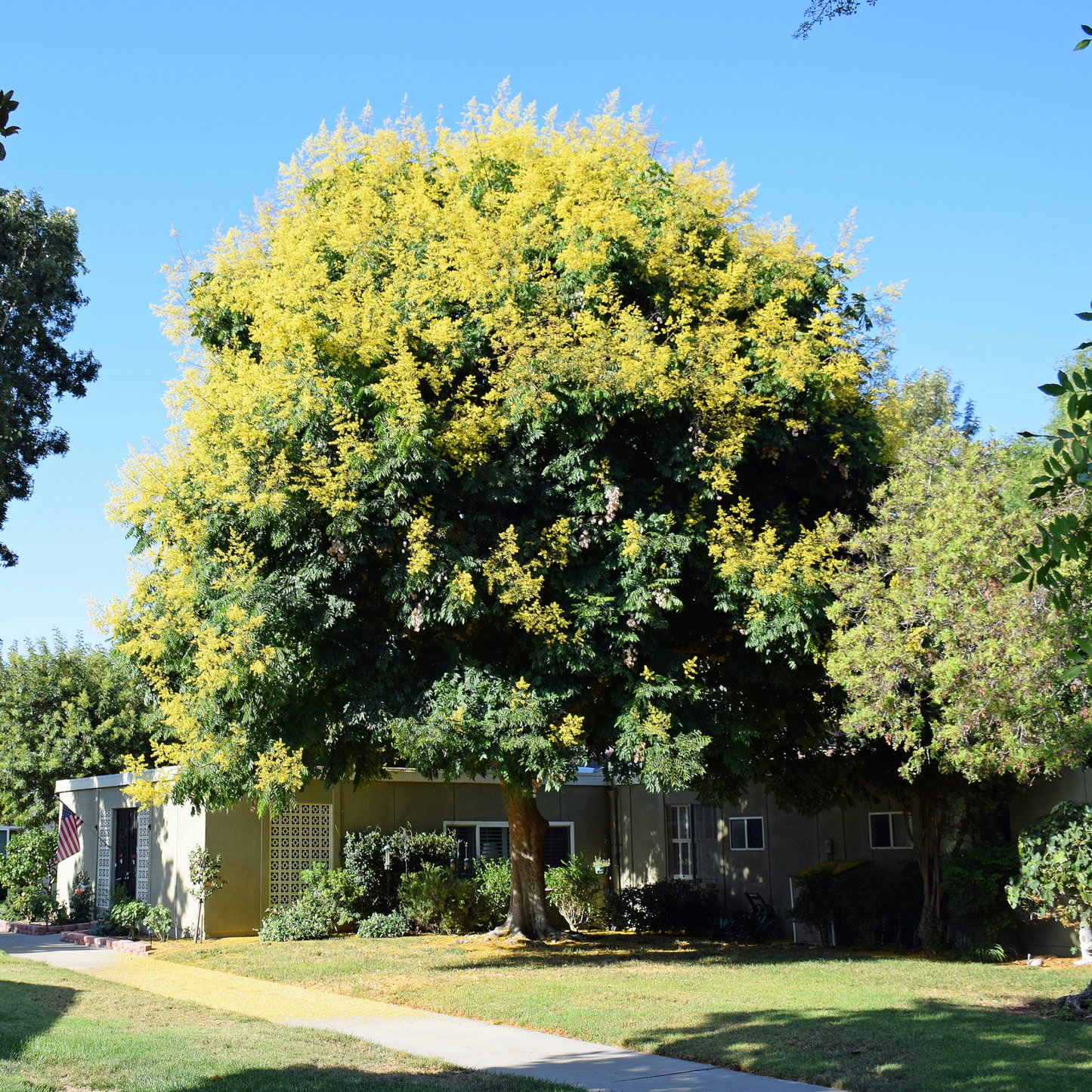
Yellow flowers in midsummer. Pink lantern seed pods in fall. The tree that earns attention in July.
Koelreuteria paniculata, the Golden Rain Tree, is one of the few trees that produces a truly spectacular flowering display in midsummer when most other flowering trees have been finished for months, covering itself in large, branching clusters of yellow flowers in July that give way to distinctive inflated pink to rose-red papery seed pods that hang like lanterns from the branches through late summer and fall. It is drought-tolerant, adaptable to poor alkaline soils, and completely unfazed by the urban conditions that stress most ornamental trees. Native to China and Korea, it has been cultivated in western gardens since the 18th century and is fully naturalized in temperate climates worldwide. If you are looking to buy Golden Rain Tree seeds or grow Koelreuteria from seed, this is the tree that provides flowers and ornamental interest in the summer gap when almost nothing else in the landscape is showing its best.
- Large clusters of yellow flowers in July, providing a major flowering display when most other trees have finished
- Distinctive inflated pink to rose-red papery seed pods hanging like lanterns through late summer and fall
- Extremely drought-tolerant and adaptable to poor, alkaline, compacted urban soils
- Brilliant orange to gold fall foliage, extending the ornamental season through autumn
- One of the few trees that performs all four visual seasons with genuinely distinctive displays in each
Things you probably did not know about the Golden Rain Tree
In China the tree is associated with Confucian tradition and was planted at the graves of scholars and officials. The Golden Rain Tree was considered a scholar's tree in traditional Chinese culture, associated with intelligence, distinction, and refinement. It was planted at the graves of ministers and high officials as a mark of honor, a tradition recorded in Chinese literature dating back over 2,000 years. The association of the tree with scholarly achievement is so deeply embedded in Chinese tradition that it influenced the planting of Golden Rain Trees at schools and academies throughout the country.
The seed pods were traditionally used as a yellow dye for fabric in parts of China. The papery seed pods of Golden Rain Tree contain compounds that produce a yellow dye when boiled, a dye that was used in traditional Chinese textile production for specific applications where the warm yellow tone was desired. The flowers were also used for yellow dye in some regional traditions, contributing to the commercial value of the tree beyond its ornamental qualities.
The seeds were used as beads and decorative elements in jewelry across East Asia for centuries. The hard, round seeds of Golden Rain Tree are naturally glossy and smooth with an attractive appearance that made them useful as beads in traditional jewelry and decorative items across China, Korea, and Japan. They were collected after the pods opened naturally, polished if desired, and drilled for stringing. The practice of using Koelreuteria seeds as beads has been documented across the tree's Asian range for over a thousand years.
It is one of the most widely naturalized ornamental trees in the world. Golden Rain Tree produces seeds prolifically and germinates readily in a wide range of disturbed and natural habitats, making it one of the most successfully naturalized ornamental trees outside its native range. It has established wild populations in the southeastern United States, Europe, and Australia, and is classified as invasive in some states. Growing it in controlled conditions where seed dispersal can be managed is advisable in regions where naturalization is a concern.
Growing Details
- Botanical Name: Koelreuteria paniculata
- Stratification: Required, scarification followed by 30 to 60 days cold stratification
- USDA Zones: 5 to 9
- Soil: Extremely adaptable, tolerates poor, dry, alkaline, or compacted soils
- Light: Full sun
- Height: 25 to 40 feet
- Spread: 25 to 40 feet
- Growth Rate: Moderate to fast, 1.5 to 2.5 feet per year
Plant it where you will see the yellow flowers from a window in July and the pink lantern pods from a path in September. It earns its space in the most underserved part of the ornamental calendar.
FAQ
FAQ
Do you pre-stratify the seeds?
Most of our seeds are not pre-stratified. They are stored under dry, cold conditions to preserve viability without initiating stratification, allowing you to time germination for your local growing season.
The exception is recalcitrant seeds. Because these seeds must remain moist to stay viable, they are kept in moist, cold storage and are therefore in a pre-stratified state. Depending on how long a particular batch has been stored, some may arrive with an emerging radicle and be ready to plant immediately. Radicle development is not guaranteed.
Please refer to the individual product page and included growing instructions for species-specific requirements.
Do any of your seeds need to stay moist? (Recalcitrant seeds)
Yes. Some species we offer, including Chestnut, Hazelnut, and Paw Paw, are recalcitrant and must remain moist to stay viable.
Please refrigerate these seeds immediately upon arrival unless they have already developed a radicle. Seeds with an emerging radicle should be planted promptly.
Do you ship internationally?
No. We currently ship within the United States only.
We previously shipped to Canada, but tariffs, duties, and import fees resulted in customers receiving significant and unpredictable additional charges upon delivery. Because we cannot reliably calculate or absorb these costs, we have suspended shipping to Canada.
At this time, we do not ship to Canada or other international destinations.
Shipping & What's Included
Shipping & What's Included
Shipping & Packaging
• Hand-packed in resealable kraft paper seed bags
• Stratification and planting instructions included on every seed pack
• Ships within 3–5 business days via USPS within the United States and U.S. territories
Return Policy
Return Policy
Due to the nature of our products, we do not accept returns on seeds.
If your order arrives damaged, contains incorrect items, or is missing items, please contact us within 7 days of delivery so we can resolve the issue.