

Full Moon Japanese Maple Tree Seeds (Acer japonicum ‘Oisami’)
Full Moon Japanese Maple Tree Seeds (Acer japonicum ‘Oisami’)
The widest maple leaves in the world. The most spectacular fall color of any maple.
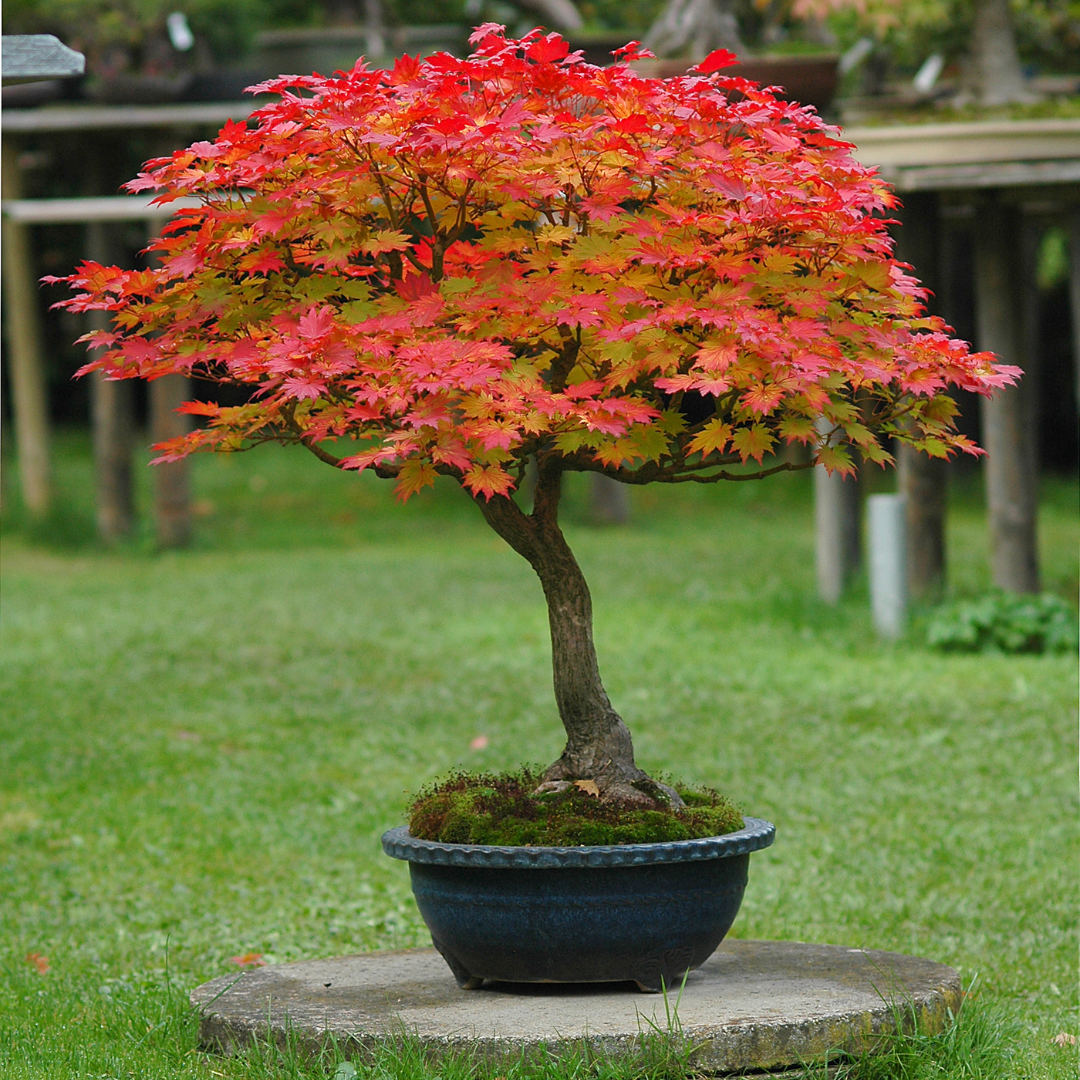
Acer japonicum, the Full Moon Maple, is the larger, more boldly leaved relative of the Japanese Maple, producing round, deeply lobed leaves with 9 to 11 lobes that can reach 6 inches across and turn the most vivid shades of scarlet, crimson, and orange in fall of any maple species in cultivation. The Full Moon Maple is less commonly grown than its relative Acer palmatum but is considered by serious maple collectors to produce superior fall color and a more substantial, architectural presence in the garden. The 'Oisami' selection develops into an upright, spreading small tree with leaves that unfurl in spring tinged with red before settling into fresh green for summer. Seed-grown Full Moon Maples express the natural genetic variation of the species, producing trees with individual character that no grafted nursery selection can match. If you are looking to buy Full Moon Maple seeds or grow Japanese Full Moon Maple from seed, this is the maple that redefines what fall color means.
- The largest-leaved native maple of Japan, with round, 9 to 11-lobed leaves reaching 6 inches across
- Among the most vivid fall color displays of any maple in cultivation, deep scarlet to crimson
- Develops a more substantial, architectural form than Acer palmatum, suited to larger garden spaces
- Seed-grown specimens produce individual genetic variation in leaf form, color intensity, and growth habit
- Prized by Japanese maple collectors worldwide as a more dramatic alternative to the more common species
Things you probably did not know about the Full Moon Maple
It is named for the shape of its leaves. The Japanese name for Acer japonicum is Hauchiwa kaede, meaning round fan maple, referring to the nearly circular leaf outline that resembles a full moon. The leaf is so distinctive in its rounded, fan-like form that it has been used as a design motif in Japanese textile and ceramic art for centuries.
The fall color transition happens faster than almost any other maple. Full Moon Maple fall color often develops in a matter of days rather than the gradual progression seen in Sugar Maple or Red Maple. A tree that is entirely green on a Monday morning can be fully crimson by Thursday after the first cold night of autumn. The speed and intensity of the color change makes it one of the most dramatic events in any autumn garden.
It is significantly rarer in cultivation than Acer palmatum. While hundreds of Acer palmatum cultivars fill nursery catalogs, Acer japonicum remains much less commonly grown in western horticulture. The combination of superior fall color and relative scarcity makes it genuinely sought after by collectors and serious Japanese maple enthusiasts. Growing from seed is often the most accessible way to acquire it.
The leaves are edible in Japan. Young Full Moon Maple leaves are battered and deep-fried in a Japanese confection called momiji tempura, a traditional autumn treat sold at temples and festivals in Osaka and throughout the Kansai region. The leaves are sometimes salt-preserved for up to a year before frying. The resulting tempura is delicate, crisp, and mildly sweet, one of the most unusual edible leaf preparations in any culinary tradition.
Growing Details
- Botanical Name: Acer japonicum 'Oisami'
- Stratification: Required, 90 to 120 days cold moist stratification
- USDA Zones: 5 to 7
- Soil: Well-drained, moist, slightly acidic, rich in organic matter
- Light: Full sun to partial shade, best fall color with some direct sun
- Height: 20 to 30 feet
- Spread: 20 to 30 feet
- Growth Rate: Slow to moderate, 1 to 1.5 feet per year
Plant it where you will see it from inside the house in October. The color it produces in a good fall is the kind of thing people stop and photograph from the sidewalk.
FAQ
FAQ
Do you pre-stratify the seeds?
Most of our seeds are not pre-stratified. They are stored under dry, cold conditions to preserve viability without initiating stratification, allowing you to time germination for your local growing season.
The exception is recalcitrant seeds. Because these seeds must remain moist to stay viable, they are kept in moist, cold storage and are therefore in a pre-stratified state. Depending on how long a particular batch has been stored, some may arrive with an emerging radicle and be ready to plant immediately. Radicle development is not guaranteed.
Please refer to the individual product page and included growing instructions for species-specific requirements.
Do any of your seeds need to stay moist? (Recalcitrant seeds)
Yes. Some species we offer, including Chestnut, Hazelnut, and Paw Paw, are recalcitrant and must remain moist to stay viable.
Please refrigerate these seeds immediately upon arrival unless they have already developed a radicle. Seeds with an emerging radicle should be planted promptly.
Do you ship internationally?
No. We currently ship within the United States only.
We previously shipped to Canada, but tariffs, duties, and import fees resulted in customers receiving significant and unpredictable additional charges upon delivery. Because we cannot reliably calculate or absorb these costs, we have suspended shipping to Canada.
At this time, we do not ship to Canada or other international destinations.
Shipping & What's Included
Shipping & What's Included
Shipping & Packaging
• Hand-packed in resealable kraft paper seed bags
• Stratification and planting instructions included on every seed pack
• Ships within 3–5 business days via USPS within the United States and U.S. territories
Return Policy
Return Policy
Due to the nature of our products, we do not accept returns on seeds.
If your order arrives damaged, contains incorrect items, or is missing items, please contact us within 7 days of delivery so we can resolve the issue.