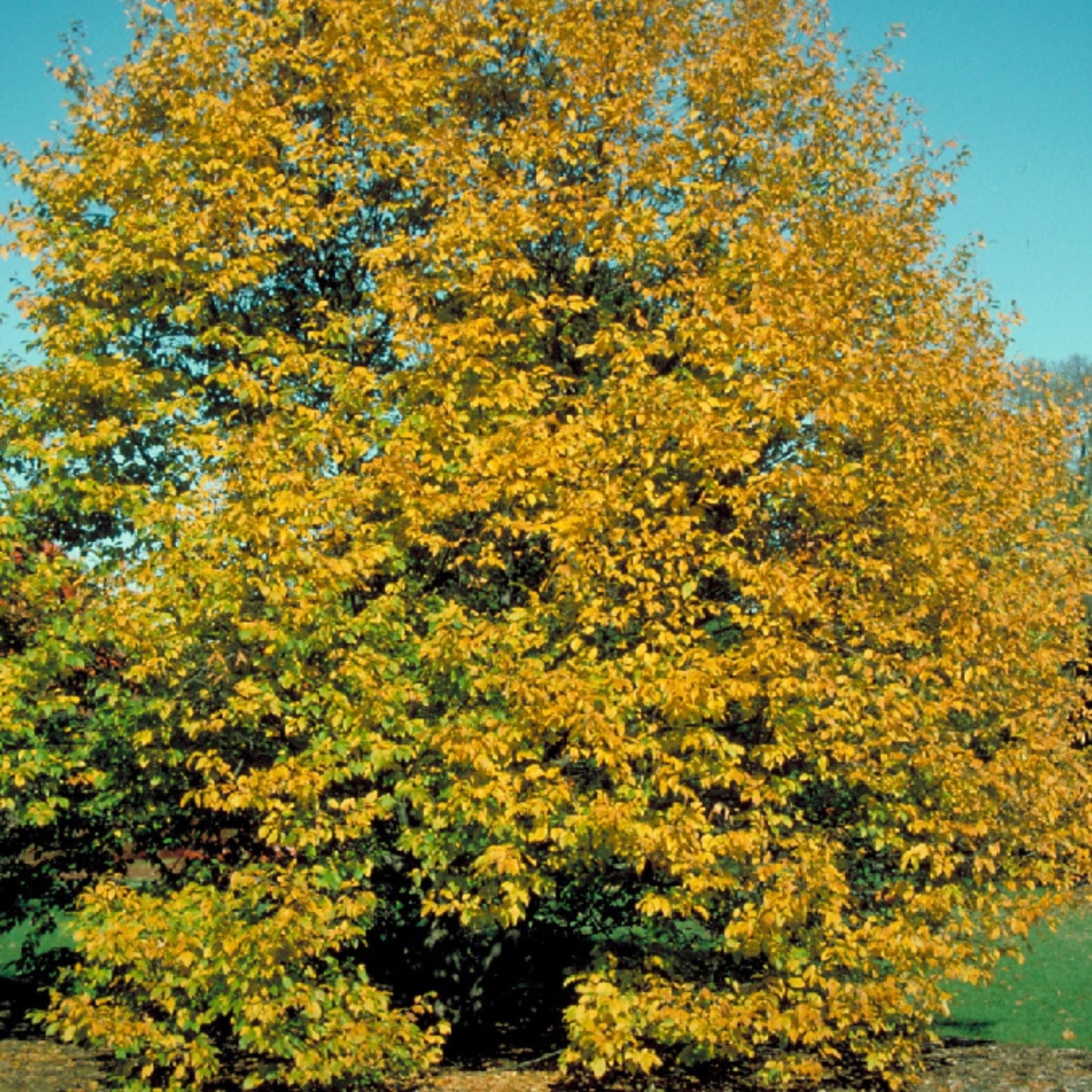


Ironwood Tree Seeds | American Hophornbeam | (Ostrya virginiana)
Ironwood Tree Seeds | American Hophornbeam | (Ostrya virginiana)
The toughest wood in the eastern forest. The tree nobody notices until they need it.
Ostrya virginiana, the American Hophornbeam or Ironwood, is one of the most overlooked native trees in eastern North America and one of the most ecologically valuable. Its wood is the hardest of any native hardwood in the eastern United States, so dense it sinks in water and was used for axe handles, tool heads, and fence posts for centuries. As a small to medium understory tree it tolerates deep shade, poor soils, and steep dry slopes where virtually no other tree establishes and it persists for decades contributing to wildlife, soil stability, and forest structure with almost no recognition. The hop-like seed clusters it produces in fall give it its common name and a distinctive ornamental quality through late summer and autumn. If you are looking to buy Ironwood seeds or grow American Hophornbeam from seed, this is the native tree that earns its place everywhere it grows.
- The hardest native hardwood in eastern North America, wood so dense it sinks in water
- Extremely shade-tolerant understory tree that grows where few others establish
- Distinctive papery hop-like seed clusters providing fall ornamental interest and wildlife food
- Deep-rooted and drought-tolerant once established on dry rocky slopes and poor soils
- Long-lived and extremely low-maintenance, requiring almost no care after establishment
Things you probably did not know about Ironwood
The wood is literally named for its density. Ironwood is among the densest hardwoods in North America with a specific gravity exceeding 0.70, comparable to water. A dry piece of Ironwood will not float. This density made it the preferred material for axe handles, tool heads, levers, and any application requiring a wood that would not split under repeated impact loading. Before manufactured metal tools became universal, Ironwood handles and parts were irreplaceable.
It can live in the shade of other trees for over a century before finding light. American Hophornbeam is extraordinarily patient. It grows slowly in the understory of mature forests, sometimes waiting decades for a gap in the canopy created by a fallen tree before accelerating its growth into the available light. Dendrochronologists have found Ironwood stems over 100 years old with trunk diameters of only a few inches because they spent their entire life in deep shade.
The seed clusters were used as a musical instrument. The papery inflated sacs surrounding the seeds of American Hophornbeam rattle when dry, and Indigenous peoples in the northeast used clusters of them as a natural percussion instrument in ceremonial contexts. The same characteristic that makes the seed clusters ornamentally attractive in a fall garden made them musically useful for thousands of years before that.
Ruffed grouse depend on it through winter. The buds and catkins of American Hophornbeam are a primary winter food source for Ruffed Grouse across the northeastern United States and Canada. In areas where Ironwood is abundant, Grouse populations are consistently higher than in comparable areas without it. Wildlife managers consider its presence an indicator of high-quality Grouse habitat.
Growing Details
- Botanical Name: Ostrya virginiana
- Stratification: Required, warm stratification of 60 days followed by 90 to 120 days cold stratification
- USDA Zones: 3 to 9
- Soil: Adaptable, tolerates poor, dry, rocky, or shallow soils
- Light: Full sun to full shade
- Height: 25 to 40 feet
- Spread: 20 to 30 feet
- Growth Rate: Slow, 6 to 12 inches per year
Plant it in the difficult spot where nothing else wants to grow and let it quietly become the most interesting tree on the property over the next thirty years.
FAQ
FAQ
Do you pre-stratify the seeds?
Most of our seeds are not pre-stratified. They are stored under dry, cold conditions to preserve viability without initiating stratification, allowing you to time germination for your local growing season.
The exception is recalcitrant seeds. Because these seeds must remain moist to stay viable, they are kept in moist, cold storage and are therefore in a pre-stratified state. Depending on how long a particular batch has been stored, some may arrive with an emerging radicle and be ready to plant immediately. Radicle development is not guaranteed.
Please refer to the individual product page and included growing instructions for species-specific requirements.
Do any of your seeds need to stay moist? (Recalcitrant seeds)
Yes. Some species we offer, including Chestnut, Hazelnut, and Paw Paw, are recalcitrant and must remain moist to stay viable.
Please refrigerate these seeds immediately upon arrival unless they have already developed a radicle. Seeds with an emerging radicle should be planted promptly.
Do you ship internationally?
No. We currently ship within the United States only.
We previously shipped to Canada, but tariffs, duties, and import fees resulted in customers receiving significant and unpredictable additional charges upon delivery. Because we cannot reliably calculate or absorb these costs, we have suspended shipping to Canada.
At this time, we do not ship to Canada or other international destinations.
Shipping & What's Included
Shipping & What's Included
Shipping & Packaging
• Hand-packed in resealable kraft paper seed bags
• Stratification and planting instructions included on every seed pack
• Ships within 3–5 business days via USPS within the United States and U.S. territories
Return Policy
Return Policy
Due to the nature of our products, we do not accept returns on seeds.
If your order arrives damaged, contains incorrect items, or is missing items, please contact us within 7 days of delivery so we can resolve the issue.