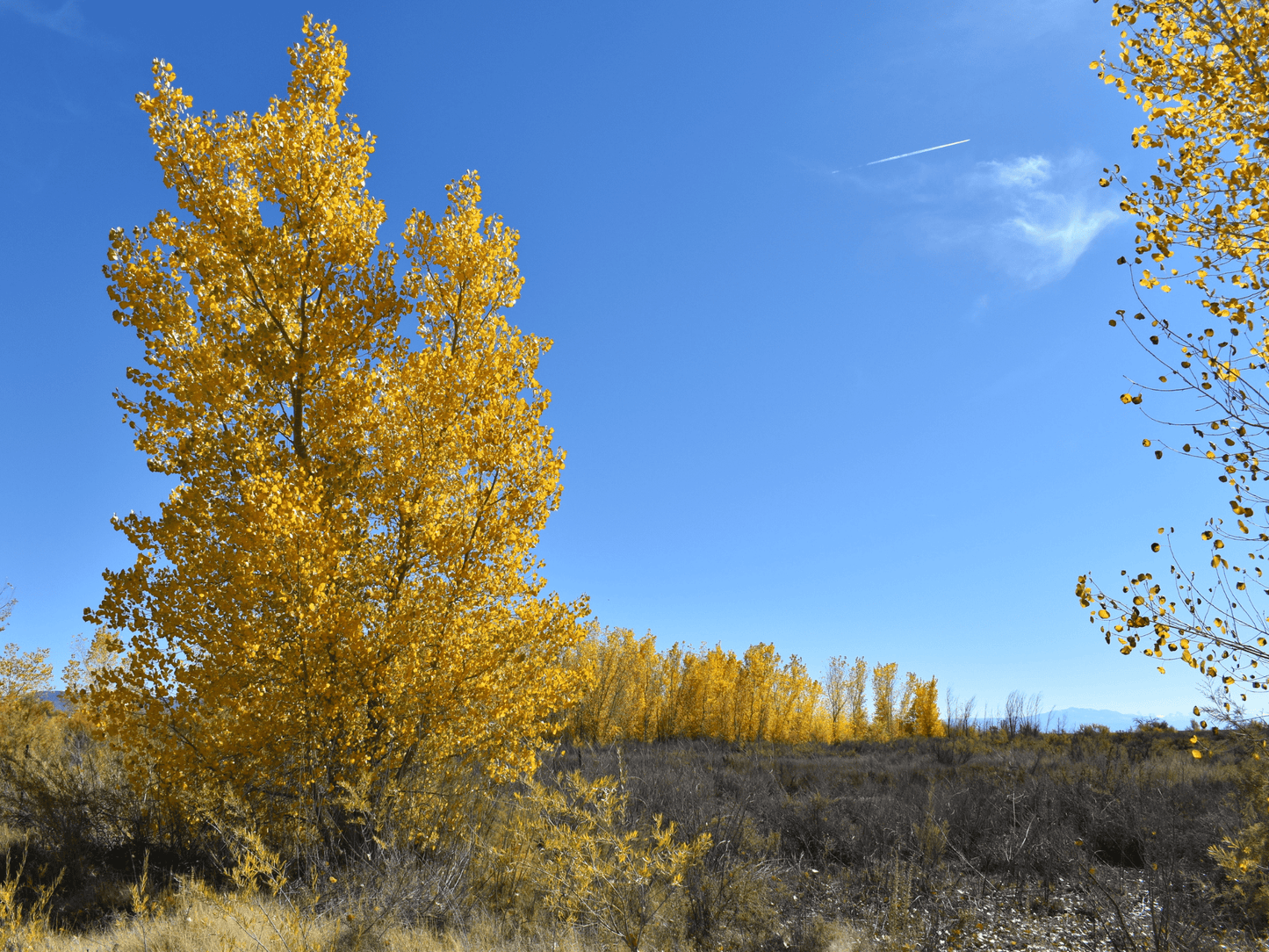


Eastern Cottonwood Tree Seeds | Cottonwood | (Populus deltoides)
Eastern Cottonwood Tree Seeds | Cottonwood | (Populus deltoides)
The fastest growing native hardwood in North America. The tree that built the Great Plains.
Populus deltoides, the Eastern Cottonwood, is the fastest growing native hardwood tree in North America, capable of gaining 6 to 8 feet of height per year in ideal conditions along river banks, floodplain margins, and moist lowlands where it grows naturally from the Rockies to the Atlantic coast. It is the dominant canopy tree of the Great Plains river corridor, the living anchor of every major river system from the Missouri to the Rio Grande, and the tree that provided the only significant shade, fuel, and structural timber available to the people who crossed the treeless plains for centuries. The soft, cotton-like seeds that drift on summer air in June and July, filling the atmosphere with floating white fluff, are one of the most distinctive natural spectacles of the American summer. If you are looking to buy Eastern Cottonwood seeds or grow this native giant from seed, this is the fastest available native hardwood and the tree that defined the American frontier landscape.
- The fastest growing native hardwood in North America, gaining 6 to 8 feet per year in ideal bottomland conditions
- The dominant canopy tree of the Great Plains river corridor, providing shade where no other large tree grows
- Cotton-like seeds drifting on summer air creating one of the most distinctive seasonal spectacles in the American landscape
- Extremely adaptable to wet, flooded, and disturbed soils along river banks and floodplain margins
- Critical wildlife tree providing nesting habitat for bald eagles, great blue herons, and dozens of other species
Things you probably did not know about the Eastern Cottonwood
The floating cottony seeds can travel hundreds of miles on wind. The seeds of Eastern Cottonwood are attached to long silky fibers that act as parachutes, allowing them to remain airborne for days in calm conditions and travel extraordinary distances from the parent tree. The sheer quantity of seeds produced by a single large female cottonwood, literally millions per season, combined with the airborne dispersal mechanism, is why cottonwood colonizes new sandbars, gravel bars, and disturbed floodplain areas within weeks of their formation.
The Lakota and other Plains peoples used every part of the cottonwood. Eastern Cottonwood was the most important tree species for Plains Indigenous peoples because of its presence along the rivers that were the only reliable water sources in the treeless Great Plains. The bark was fed to horses during winter when grass was unavailable. The inner bark was eaten by humans as an emergency food. The wood was used for shelter construction and fuel. The cottony seed fibers were woven into insulation material. Sun Dance ceremonies were conducted around a central cottonwood pole. No tree was more central to Plains Indigenous life.
The tree was used as a landmark and navigation aid by travelers crossing the plains. Before roads, maps, and GPS, the presence of cottonwood trees along river courses was the primary navigational landmark for travelers crossing the Great Plains. The tall cottonwoods marking river channels were visible from miles away across the flat grassland, guiding wagon trains to water and shelter. The journals of Lewis and Clark, Kit Carson, and virtually every major western explorer describe using cottonwood groves as navigation markers.
The wood was the primary fuel for steamboats on the Missouri and Mississippi rivers. Eastern Cottonwood grows so fast along river banks that it was the most reliable and renewable fuel source for the wood-burning steamboats that traveled the Missouri and Mississippi rivers in the 19th century. Woodcutting stations along the rivers maintained cottonwood stands specifically for steamboat fueling, harvesting the fast-growing trees on short rotation cycles that the species's growth rate made economically practical.
Growing Details
- Botanical Name: Populus deltoides
- Stratification: Not required, seeds must be sown immediately after collection as they lose viability within days
- USDA Zones: 2 to 9
- Soil: Prefers moist, well-drained to wet bottomland soils, tolerates flooding and disturbed sites
- Light: Full sun
- Height: 80 to 100 feet
- Spread: 50 to 75 feet
- Growth Rate: Very fast, 6 to 8 feet per year in ideal conditions, one of the fastest native hardwoods available
Plant it in the wettest, sunniest site available and give it room to become what it is. In ten years you will have a 70-foot tree. In fifty years you will have something that was here before almost everything built around it.
FAQ
FAQ
Do you pre-stratify the seeds?
Most of our seeds are not pre-stratified. They are stored under dry, cold conditions to preserve viability without initiating stratification, allowing you to time germination for your local growing season.
The exception is recalcitrant seeds. Because these seeds must remain moist to stay viable, they are kept in moist, cold storage and are therefore in a pre-stratified state. Depending on how long a particular batch has been stored, some may arrive with an emerging radicle and be ready to plant immediately. Radicle development is not guaranteed.
Please refer to the individual product page and included growing instructions for species-specific requirements.
Do any of your seeds need to stay moist? (Recalcitrant seeds)
Yes. Some species we offer, including Chestnut, Hazelnut, and Paw Paw, are recalcitrant and must remain moist to stay viable.
Please refrigerate these seeds immediately upon arrival unless they have already developed a radicle. Seeds with an emerging radicle should be planted promptly.
Do you ship internationally?
No. We currently ship within the United States only.
We previously shipped to Canada, but tariffs, duties, and import fees resulted in customers receiving significant and unpredictable additional charges upon delivery. Because we cannot reliably calculate or absorb these costs, we have suspended shipping to Canada.
At this time, we do not ship to Canada or other international destinations.
Shipping & What's Included
Shipping & What's Included
Shipping & Packaging
• Hand-packed in resealable kraft paper seed bags
• Stratification and planting instructions included on every seed pack
• Ships within 3–5 business days via USPS within the United States and U.S. territories
Return Policy
Return Policy
Due to the nature of our products, we do not accept returns on seeds.
If your order arrives damaged, contains incorrect items, or is missing items, please contact us within 7 days of delivery so we can resolve the issue.