

Dove Tree Seeds | Handkerchief Tree | (Davidia involucrata)
Dove Tree Seeds | Handkerchief Tree | (Davidia involucrata)
The most spectacular flowering tree discovered in the 19th century. Worth every year of waiting.
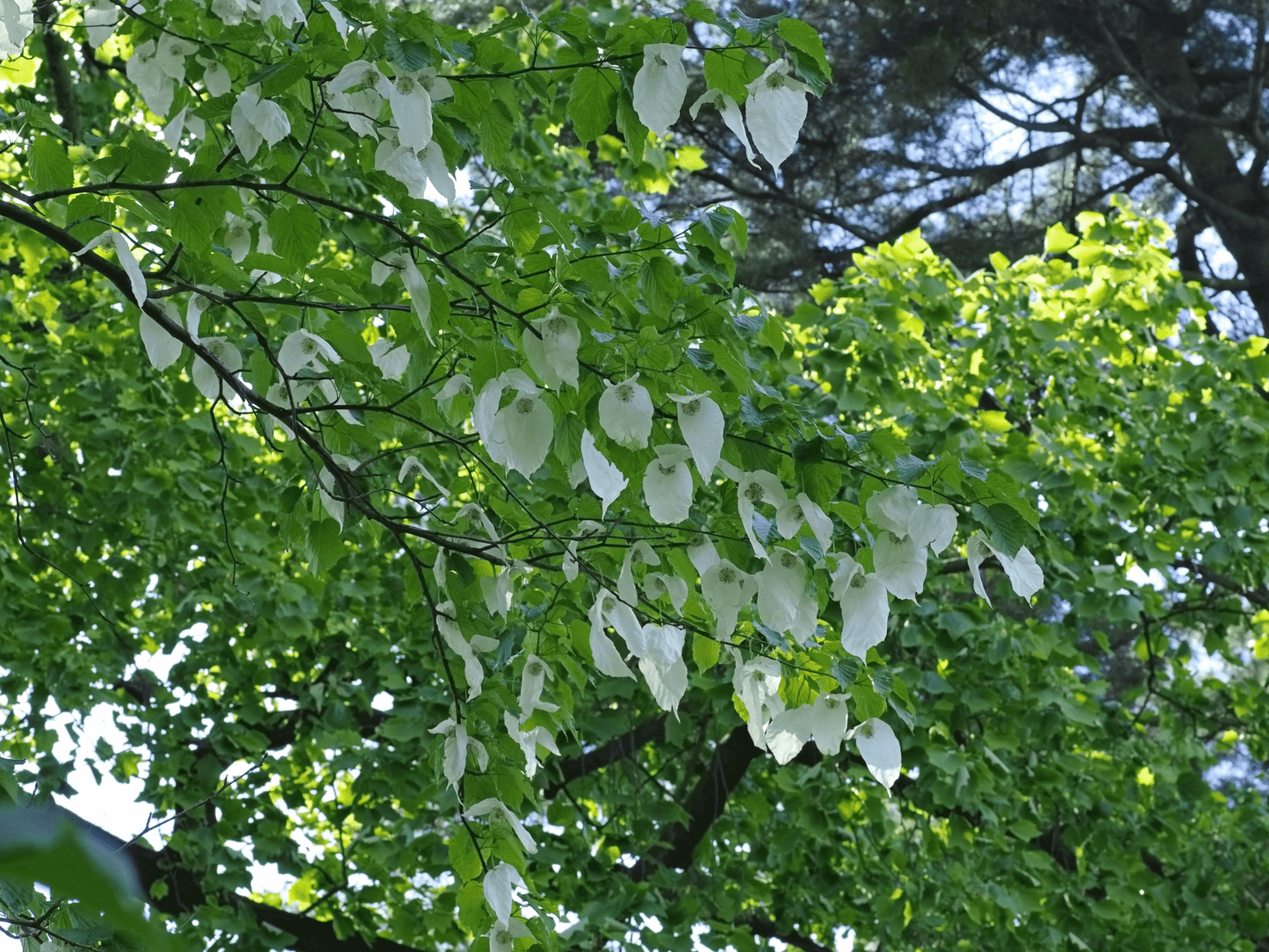
Davidia involucrata, the Dove Tree or Handkerchief Tree, is widely considered the most spectacular flowering tree discovered during the great age of Chinese plant exploration, a native of the mountain forests of western China that produces flowers surrounded by two enormous white bracts of dramatically unequal size, the larger reaching 7 inches in length, that flutter in the slightest breeze like white handkerchiefs or the wings of a dove. The actual flowers are small and inconspicuous. The bracts are everything, hanging from every branch in May in a display so unique and so striking that it prompted three separate expeditions to China in the 1890s and 1900s by competing botanical collectors, each racing to be the first to bring it into western cultivation. It is the only species in its genus and one of the most distinctive trees in temperate horticulture. If you are looking to buy Dove Tree seeds or grow Davidia from seed, this is the tree that plant hunters risked their lives to find and that gardens still covet over a century after its introduction.
- Two large white bracts of dramatically unequal size surrounding each flower, the smaller 3 to 4 inches and the larger up to 7 inches
- The bracts flutter in the breeze like white doves or handkerchiefs, creating a moving display in May unlike any other tree
- The only species in its genus, with no close relatives in temperate or tropical horticulture
- Prompted three competing plant exploration expeditions to China in the 1890s and 1900s
- Seed-grown trees require 10 to 15 years to produce their first flowers, but the wait is the stuff of legend among tree collectors
Things you probably did not know about the Dove Tree
The race to introduce it to western horticulture was one of the most competitive events in botanical history. After Père Armand David first collected specimens in Sichuan in 1869 and the herbarium specimens reached Paris, the impossibly beautiful dried bracts created an immediate demand from botanical gardens and nurseries across Europe to have living plants. Augustine Henry located a single wild tree in Hubei in 1888. Veitch nurseries sent E.H. Wilson to China specifically to find and collect Dove Tree seeds in 1899. Wilson arrived to find that the single tree Henry had marked had been cut down and a house built on the site. He eventually found further trees and returned with seeds, but he was preceded by a French missionary, Père Farges, who had sent seeds to a French nursery in 1897 which were the first to flower in western cultivation in 1906.
E.H. Wilson nearly died collecting it. During his first expedition to collect the Dove Tree in 1900, Wilson was caught in a landslide on a narrow mountain path in Hubei and severely injured his leg. He completed his plant collection while lying in a makeshift stretcher for days before reaching medical care, refusing to abandon his collected seeds despite the injury. The leg never fully healed and Wilson walked with a slight limp for the rest of his life. He described the experience in his plant hunting memoir alongside his account of finding the Dove Tree.
The tree grows naturally in mixed broadleaf forests at 1,500 to 3,000 meters elevation in western China. Wild Dove Trees grow in the cool, moist, mountainous forests of Hubei, Sichuan, Guizhou, and Yunnan provinces, primarily in the mixed broadleaf forest zone dominated by oaks, maples, and other hardwoods. The conditions of cool summers, moist acidic soils, and winter cold that define this habitat translate well to the conditions of temperate gardens in zones 6 through 8, explaining why the tree performs well in Britain, the Pacific Northwest, and similar maritime climates.
The seeds have multiple dormancy layers requiring extended warm and cold stratification. Davidia seeds are notoriously slow to germinate, often requiring 18 months to 2 years from sowing to first emergence. The seeds have deep morphophysiological dormancy requiring an extended warm period to allow embryo development followed by cold stratification to break dormancy, a two-stage process that makes impatient sowing unrewarding. Collectors who understand this two-year germination timeline and plan accordingly consistently achieve germination. Those who expect spring sowing to produce summer seedlings are consistently disappointed.
Growing Details
- Botanical Name: Davidia involucrata
- Stratification: Required, warm stratification of 90 to 120 days followed by 90 to 120 days cold stratification, total process 18 to 24 months before germination
- USDA Zones: 6 to 8
- Soil: Well-drained, moist, slightly acidic, rich in organic matter
- Light: Full sun to partial shade
- Height: 40 to 60 feet
- Spread: 25 to 35 feet
- Growth Rate: Moderate, 1 to 1.5 feet per year
Plant it and mark the date clearly. The first flowering in 10 to 15 years will be one of the most anticipated events in your gardening life. There are trees worth waiting for. The Dove Tree is the most famous example.
FAQ
FAQ
Do you pre-stratify the seeds?
Most of our seeds are not pre-stratified. They are stored under dry, cold conditions to preserve viability without initiating stratification, allowing you to time germination for your local growing season.
The exception is recalcitrant seeds. Because these seeds must remain moist to stay viable, they are kept in moist, cold storage and are therefore in a pre-stratified state. Depending on how long a particular batch has been stored, some may arrive with an emerging radicle and be ready to plant immediately. Radicle development is not guaranteed.
Please refer to the individual product page and included growing instructions for species-specific requirements.
Do any of your seeds need to stay moist? (Recalcitrant seeds)
Yes. Some species we offer, including Chestnut, Hazelnut, and Paw Paw, are recalcitrant and must remain moist to stay viable.
Please refrigerate these seeds immediately upon arrival unless they have already developed a radicle. Seeds with an emerging radicle should be planted promptly.
Do you ship internationally?
No. We currently ship within the United States only.
We previously shipped to Canada, but tariffs, duties, and import fees resulted in customers receiving significant and unpredictable additional charges upon delivery. Because we cannot reliably calculate or absorb these costs, we have suspended shipping to Canada.
At this time, we do not ship to Canada or other international destinations.
Shipping & What's Included
Shipping & What's Included
Shipping & Packaging
• Hand-packed in resealable kraft paper seed bags
• Stratification and planting instructions included on every seed pack
• Ships within 3–5 business days via USPS within the United States and U.S. territories
Return Policy
Return Policy
Due to the nature of our products, we do not accept returns on seeds.
If your order arrives damaged, contains incorrect items, or is missing items, please contact us within 7 days of delivery so we can resolve the issue.